When protecting property values is the main goal of zoning, equity suffers.


This piece is an excerpt from "An Even Better Way to Zone: Achieving More Affordable, Equitable, and Sustainable Communities," published by Island Press in 2025.
One important flaw in our thinking about zoning is ignoring economic equity. We ignore the fact that every regulation, standard or procedural step we add to development regulations makes it more difficult for small property owners, small investors, small contractors and historically disadvantaged businesses to upgrade their properties or participate in the development process. Instead of assuming that the current property owners should be able to make their way through the development process without professional assistance, we sometimes assume that redevelopment will occur when a new owner (with more money) buys the property or invests to help the existing owner build something more or better.
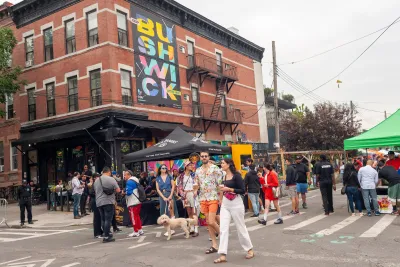
The rising tide of concern over this issue is long overdue. For decades — in fact, since the advent of urban planning as a profession — most planners have assumed that their job was to make neighborhoods nicer than they were before. And until recently, citizens and residents who attended public meetings to make the new neighborhood plan assumed that they would be the ones to benefit from the better neighborhood that resulted from the plan. As a result, neighborhood plans often called for more public and private investment to make the place "nicer." But both planners and neighborhood residents have increasingly realized that with each notch of neighborhood quality improvement, we increase the chance that some of the existing residents will no longer be able to afford to live there. We have begun to see public meetings in which neighborhood residents ask the city to please not make further investments that can only attract more money into a lower-income neighborhood.
Responses to the challenge of gentrification tend to fall into two categories. The first says, "That’s just how the process works. People are always moving around in a city, and the poor are often forced to move out when rents increase, even if the change occurs due to market forces that have nothing to do with planning or zoning. The planner’s job is to improve the city, and it’s naïve to assume that people won’t move around as different neighborhoods become 'better' or 'worse.'" The second insists, "Planners should care about people as well as buildings. It is the planner’s job to consider who can afford to live in different neighborhoods, as well as the quality of the buildings in those neighborhoods. While people may always move around by choice, the government should not be spending taxpayers’ money to make improvements that will make citizens move when they don’t want to." It is high time we adopted the latter approach.
The dynamics of displacement
In recent years, urban neighborhoods near bus and rail transit have become more popular with empty nesters, retirees and those who do not want to own a car. The current urban renters displaced by those who can pay higher rents have often had to move farther from the center of our cities, which generally have fewer bus and rail transit lines. As a result, regardless of whether the new rent is higher or lower than it was in the old urban neighborhood, the displaced family often faces higher travel time or costs that may offset any rent savings.
Although these dynamics of displacement play out differently in different neighborhoods, the overall result is a well-documented "suburbanization of poverty." It is likely that the United States is moving toward the spatial distributions of poverty often found in large Asian, African and South American countries. Throughout the world, more affluent households tend to live in central locations and in distributed neighborhoods that are desirable because of topography (e.g., high ground and views) or amenities (e.g., parks, trails or transit). In contrast, lower-income households are generally found further away from the center and in the tendrils of less desirable land (e.g., low-lying and flood-prone areas, or polluted lands or land involved in title disputes) closer to the center.
Through much of its recent history the United States has been the exception to this rule. During the postwar years, households with money often moved out to new developments and suburbs far from the city center. The poorest neighborhoods were often those located near city centers where residents could not or did not move out to the newer neighborhoods. Income maps looked like irregularly shaped donuts, but the poorest urban neighborhoods were usually somewhere near the center. Some of those poor neighborhoods were in terrible shape, but others were fine, affordable places to live. They make up what some have called naturally occurring affordable housing, places where housing was affordable not because of legal income limits or subsidies but because the property values and rents, and sometimes housing quality, were low.
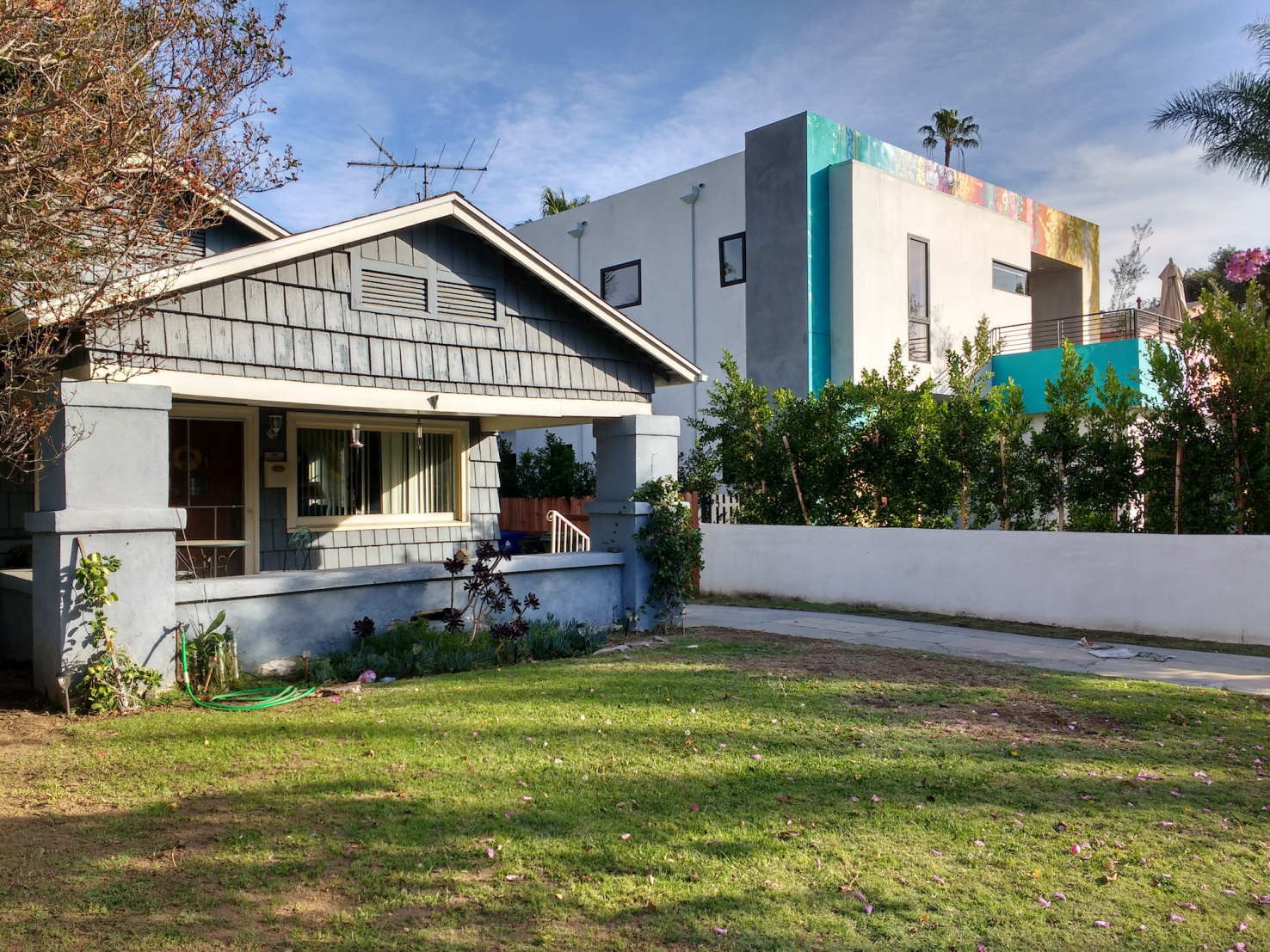
Now we are watching the donut hole of less affluent households breaking up and being pushed into neighborhoods further away from the center and its greater concentration of transit and services. In recent years, this has been exacerbated by the high concentration of wealth in White, non-Hispanic households, and particularly in older households that are past their child-rearing ages and free to choose where they want to live without worrying about the size of their yard or the quality of neighborhood schools. Since about the year 2000, those more affluent, often White, often older households have shown a remarkable desire to move into urban neighborhoods near transit, and they often have the money to outbid existing renters or to buy naturally occurring affordable housing and rebuild it as something less affordable. The point is that plans and zoning regulations that raise the bar of redevelopment quality tend to reinforce these trends by making it harder for current property-owning residents to reinvest in their own properties and by increasing the incentives for outside buyers and investors to purchase and redevelop properties and charge higher rents than the current residents can afford.
When revenue is the goal, residential development suffers
Unfortunately, wealthy thinking has often been used to protect privilege in the United States. From the earliest days of zoning, many ordinances have stated that one of their key purposes is to "protect property values," and there is little doubt that they can do so. But as zoning controls over building forms, uses and development review procedures become more complex over time, allowing opportunities for new forms of housing, new types of employment or creative designs becomes more difficult. The original goal of zoning was to avoid major differences between nearby uses that differed significantly in size, scale, character or impacts but stopped far short of defining required minimum qualities or forms of development. The early New York City distinction between "residential," "commercial," and "industrial" zones, for example, stabilized the investment climate while leaving significant flexibility for unexpected development within each of those categories. In contrast, many newer codes seem designed to ensure that no one nearby will build a building that is less beautiful — or less expensive — than yours. The goal of protecting property values has been used to justify zoning that tends to lock in the economic and social level of both residential neighborhoods and commercial or mixed-use areas.
A final form of wealthy thinking is the assumption that new development can somehow be made to pay its own way. That is seldom the case. In most communities, state restrictions on local abilities to levy taxes and fees or political opposition to paying higher fees, assessments and taxes mean that most development does not pay its own way.
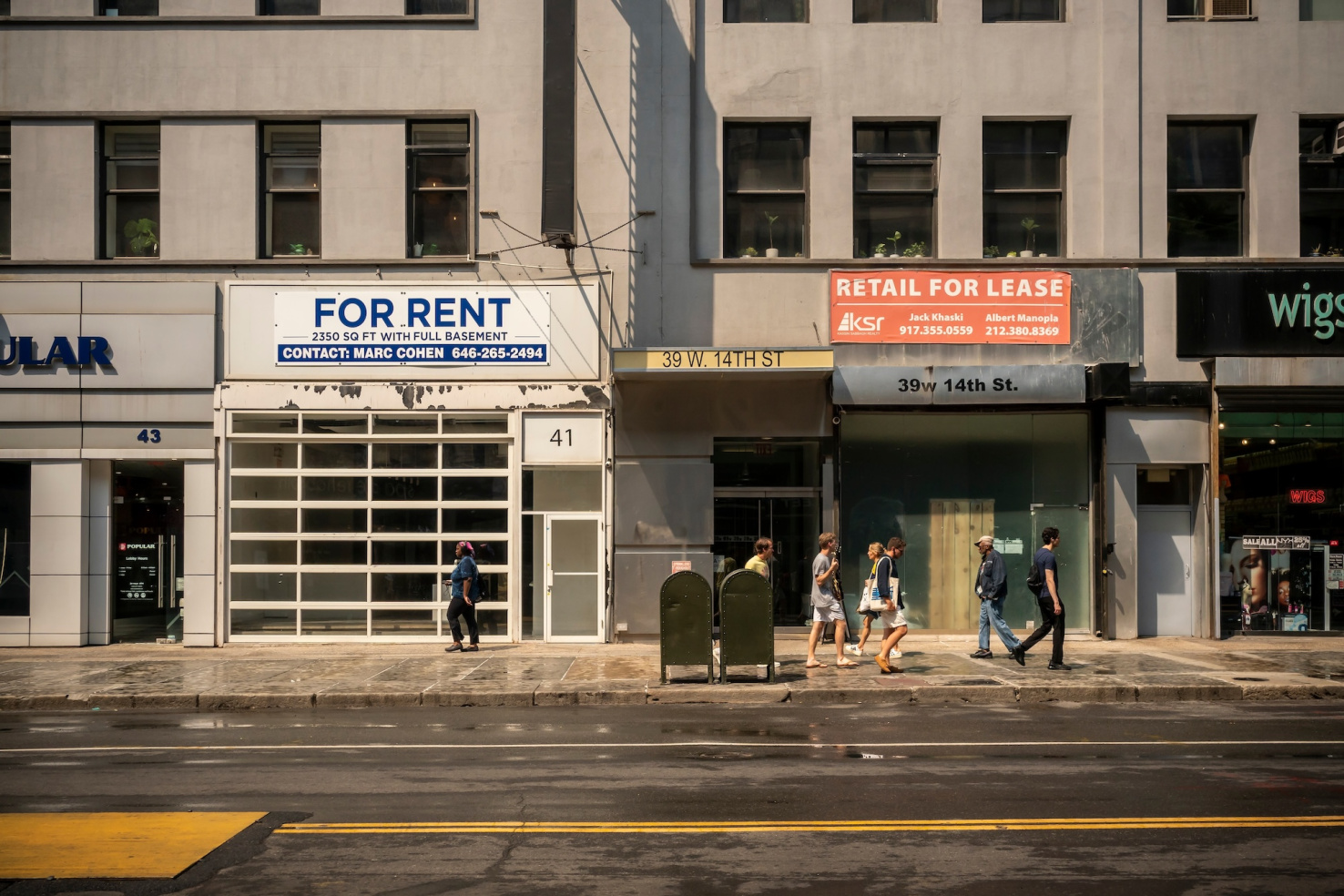
Worse, our attempts to make development self-supporting has serious consequences for the sustainability, affordability and equity of the resulting development. Only nonresidential development, and sometimes very high-priced residential units, generate more tax revenues than they cost the community in services provided. That leads many communities to overzone for commercial and industrial development that it hopes to attract. This can and often does result in vacant commercial lands or commercial buildings with low occupancy rates. But it also results in an undersupply of land available for residential uses, which can be a significant contributor to high housing costs.
The unpleasant truth is that zoning does not create market demand. Zoning more land for office development does not increase the number of offices if there is little demand for them. Zoning for tax revenues is trying to make the revenue tail wag the land use dog. Throughout our nation’s history, local governments have had to find ways to pay for the services their citizens need (and at least some of what they want), and the types of taxes they can and do impose have adjusted to do that. They had to, and they will need to again in the future, because zoning is too weak to work as a revenue generation tool over the long run. It is much more likely that we will adjust our taxing and assessment systems to do so than that zoning systems will somehow develop the superpowers needed to be effective revenue generators.
As we reform our zoning systems, we would do well to think carefully and evaluate the impact of each zoning change on the ability of poorer and less advantaged residents to continue to live in and compete for opportunities in the place they call home. Avoiding the unintended consequences of zoning listed in this article is one good way to do that.
–
Donald L. Elliott is a Senior Consultant and past Director with Clarion Associates, LLC, a land use consulting firm with offices in Denver and Chapel Hill. He has assisted over 80 US and Canadian communities to update plans and regulations related to zoning, subdivision, housing, sustainability, fair housing, and land development. Elliott teaches a graduate-level course on Land Use Regulation at the University of Colorado at Denver College of Architecture and Planning and is a former member of the Denver Planning Board. He is the author of "An Even Better Way to Zone,", "A Better Way to Zone" and coauthor of "The Rules that Shape Urban Form" and "The Citizen’s Guide to Planning."


Planetizen Federal Action Tracker
A weekly monitor of how Trump’s orders and actions are impacting planners and planning in America.

Data reveals that NYC’s bet on congestion pricing has paid off
After almost two years of the program, reports show positive impacts on traffic and air quality and no disruptions to parking.

Denver is solving homelessness. Why aren't the rest of us?
Since 2023, Denver's street homeless population has decreased by 64%, proving that effective tools exist to support those in need of housing.

Chicago's streets are littered with dead birds. Will the city protect them?
Chicago sits in the route of migratory birds traveling south. Its abundance of glass buildings and bright lights make it particularly disorienting for the animals.

CA city to shut down airport, transform it into utopian park
The western side of the 200-acre park will feature a dog park, nature education center and arboretum.

NYC to vote on supporting outdoor dining, streamlining bus and bike lane creation
The city has five proposed amendments to its municipal constitution on the ballot this November.

FREE Course: Walkable City 1: Why Walkability?
After describing his path towards focusing on walkability as the essence of good planning, Jeff Speck marches through his five principal reasons for making more walkable places.
Reinventing Malls: Planning Alchemy—Turning Gray Fields Into Gold
The course focuses on the opportunities and imperatives that shape reinvention of mall sites.

City of Rosemead
Rutgers University, Edward J. Bloustein School of Planning and Public Policy
One Hundred Miles
The Architects Foundation
University of Cincinnati Online
Montrose County
Northern Illinois Transit Authority (NITA)
The Pocatello Development Authority

