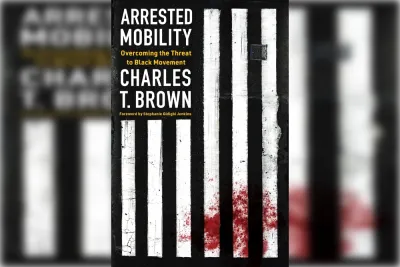
In “Arrested Mobility: Overcoming the Threat to Black Movement," Charles T. Brown offers a blueprint for acknowledging — and beginning to overcome — the role of systemic racism in urban planning.



This review is part of a special collaboration between Planetizen and Booked on Planning, a biweekly podcast where AICP planner Stephanie Rouse and Jennifer Hiatt chat with authors of the latest books shaping urban planning today. Listen to the episode with today’s author in the player below.
The experience of moving around cities is not the same for everyone and is constrained by systemic racism in four areas: policing, planning, polity, and policy. Entire neighborhoods are missing important transportation infrastructure making it physically unsafe to move around. Charles T. Brown focuses on these disparities specifically for Black people in America in his book “Arrested Mobility: Overcoming the Threat to Black Movement.”
Mobility, “the ability to move freely, safely, and confidently through one’s city — whether in a car, on foot, by bike, by e-scooter, or by public transit,” should be a basic right for all residents but remains untrue for most marginalized communities. At its core, the issue stems from individual, interpersonal, institutional, and structural racism creating a structure of systemic oppression. Brown illustrates these issues in a diagram showing a White Road versus Black Road, returning to it throughout the book.
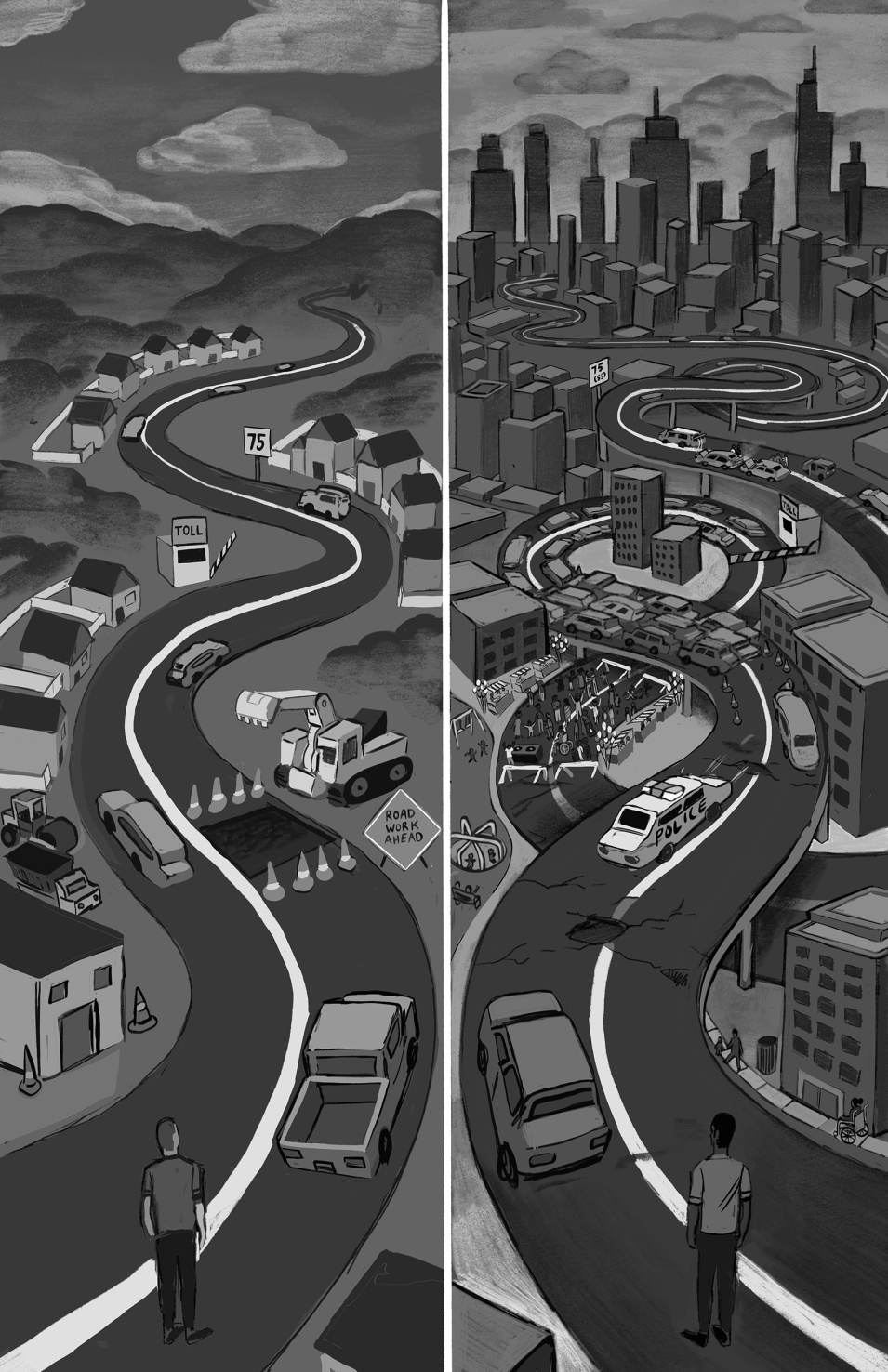
Diagram from “Arrested Mobility” illustrating the disparate experiences between traveling as a Black person versus a white person. Illustrated by Tom Grillo, provided by Charles T. Brown.
The book dives briefly into a history that led to the current transportation climate, including urban renewal policies and zoning regulations used as a tool for segregation, turning to how the profession of urban planning and design has contributed to the problem.
Brown highlights well-documented racial zoning foundations, while also diving into less-discussed topics like crime prevention through environmental design and issues of design bias. One glaring example Brown highlights: the reflectance levels in lighting design standards typically set by white professionals do not account for dark skin, which amplifies safety issues for Black individuals.
The most important question the book asks is: what will it take to solve inequity in mobility? Brown writes that “Un-arresting mobility involves deemphasizing enforcement, rethinking how we design and invest in our communities, and acknowledging the role of systemic racism in urban planning, policymaking, and the policing of our communities.”
He argues that the field of urban planning is working on the first step — acknowledgement — but that changes in policymaking and policing are slower to manifest. A starting point for this work is to decriminalize mobility by using a targeted universalism strategy — an approach that prioritizes the problems experienced by the most marginalized people. One of the most common interventions to decriminalize mobility is removing policing from mobility enforcement to avoid arrests for minor infractions that may be necessary in order to get around a disinvested community.
The book ends with a series of case studies from communities engaging in the work of unarresting mobility in positive ways. One project in development is The Go Hub in North Lawndale, West Chicago, which “addresses arrested mobility by fostering safe, inclusive, and equitable transportation opportunities for Black and Brown residents.”
No one-size-fits-all solution will work everywhere, but starting the conversation, which is what this quick read does, is an important beginning. “Arrested Mobility” provides opportunities to reflect on your own work and begin to implement change.

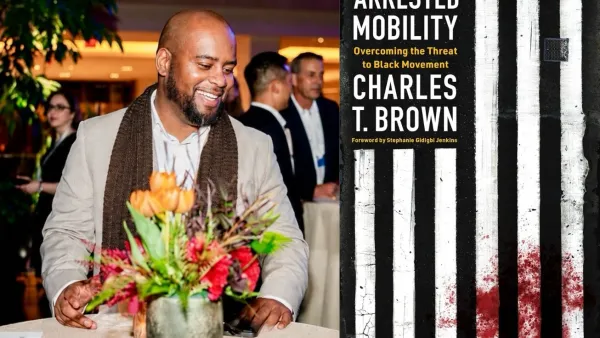
'Arrested mobility' and the fight for Black movement
Author Charles T. Brown explains how his experience growing up in rural Mississippi shaped his worldview and his current work for equitable transportation.

Planetizen Federal Action Tracker
A weekly monitor of how Trump’s orders and actions are impacting planners and planning in America.

Data reveals that NYC’s bet on congestion pricing has paid off
After almost two years of the program, reports show positive impacts on traffic and air quality and no disruptions to parking.

HUD modernizes 50-year-old manufactured housing framework
The Next Generation Manufactured Housing Action Plan establishes new energy-efficiency standards for manufactured homes, and new guidelines for anchoring them.

Developers sue Mississippi landowners who object to pipeline through their land
Because the Federal Energy Regulatory Commission approved the pipeline project, the developer can use private land without the consent of the owner.

A gas leak in NYC is costing residents $300 million
More than 90% of NYC’s electricity is from natural gas. About 2% of that gas is leaking and escaping into the air.

CA officials have the power to fix the state’s riskiest dams. They’ve never used it
California’s 40 most hazardous dams would endanger up to 1.5 million people if they failed.

FREE Course: Walkable City 1: Why Walkability?
After describing his path towards focusing on walkability as the essence of good planning, Jeff Speck marches through his five principal reasons for making more walkable places.
Reinventing Malls: Planning Alchemy—Turning Gray Fields Into Gold
The course focuses on the opportunities and imperatives that shape reinvention of mall sites.

One Hundred Miles
County of Mendocino
planning NEXT
The Architects Foundation
University of Cincinnati Online
Montrose County
Northern Illinois Transit Authority (NITA)
The Pocatello Development Authority

