From Lowell to Elon Musk’s Starbase, we trace the rise, fall, and resurgence of company towns.




In May, the unincorporated community surrounding a SpaceX facility in Boca Chica, Texas voted to incorporate as their own city, dubbed Starbase. While the concept has largely fallen out of favor in recent decades, company towns aren’t new. Although their heyday was brief, communities built and regulated almost entirely by one corporation played a major role in American society in the late 19th and early 20th century.
Some of the founders of company towns positioned them as utopian, paternalistic experiments that would improve the livelihoods of their residents (which would, in turn, theoretically create more productive workers, benefiting the company). Others were more transparently designed to extract as much labor for as little money as possible, replacing slave labor with something akin to modern indenture. The influence of company towns waned in the wake of the New Deal and the prosperous post-World War II era, which both led to increased economic power and mobility for workers. While some communities still remain highly dependent on one corporation or industry, the traditional company town, with its rigid rules and circular economy, is largely obsolete.
Or is it? With companies looking to build their own cities and corporations increasingly monopolizing daily commerce, is a new type of company town making a comeback?
The model has significant implications for society. What does it mean to tie housing, healthcare, education, and civic life to employment? Is the company town a mutually beneficial agreement or a trap into a cycle of dependence for workers and their families?
Consolidating the workforce
The first American company towns grew up around textile mills in New England, where they were envisioned as a more organized, hygienic response to the perceived squalor of industrial cities in England. Mining companies were Similar towns were being created in the mid 19th century in England, Belgium, and Germany, and the practice has spread to other countries as globalization shifted manufacturing centers. At their peak in the late 19th century, company towns housed roughly 3 percent of the U.S. population.
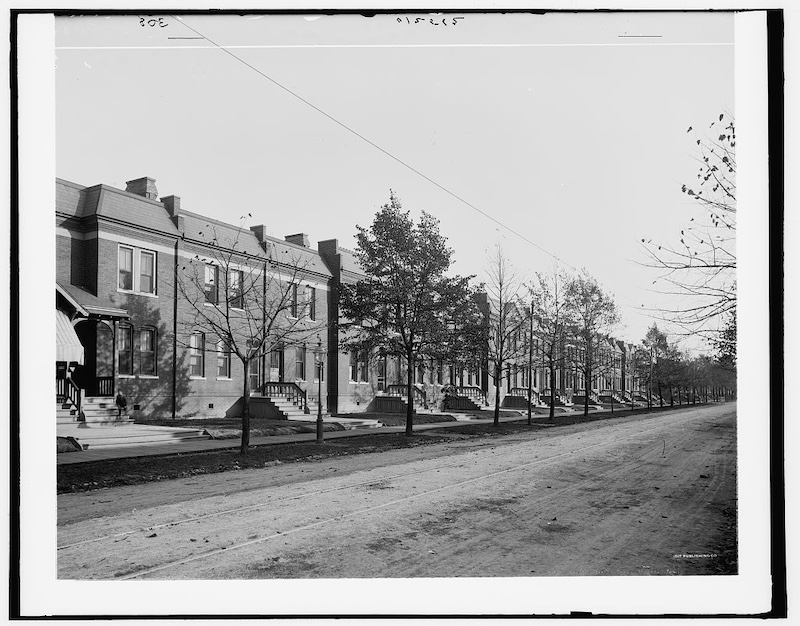
Lowell, Massachusetts, established in the 1820s, is an exemplary New England company town, the “first large-scale planned industrial community” in the country. According to Margaret Crawford, the town’s organization mirrored the hierarchy of the factory, with “rigid geometry and tight spacing” that placed spacious, comfortable housing for executives near the town square and denser worker housing closer to the factory.
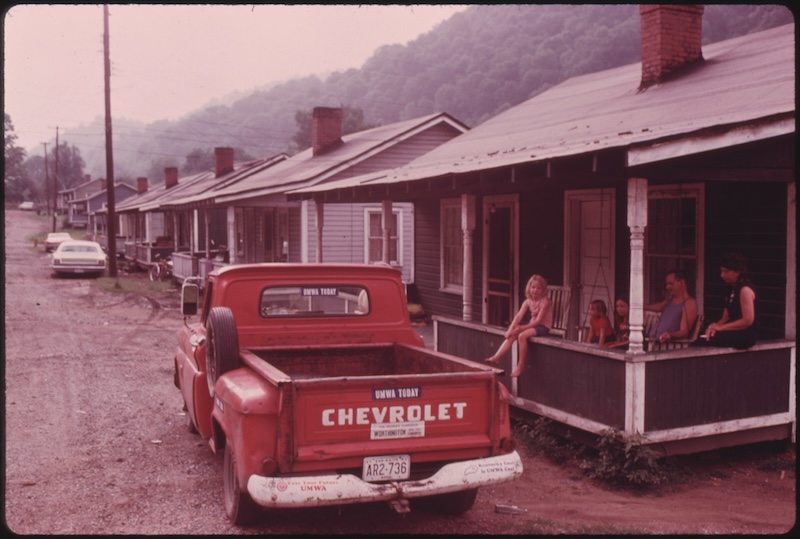
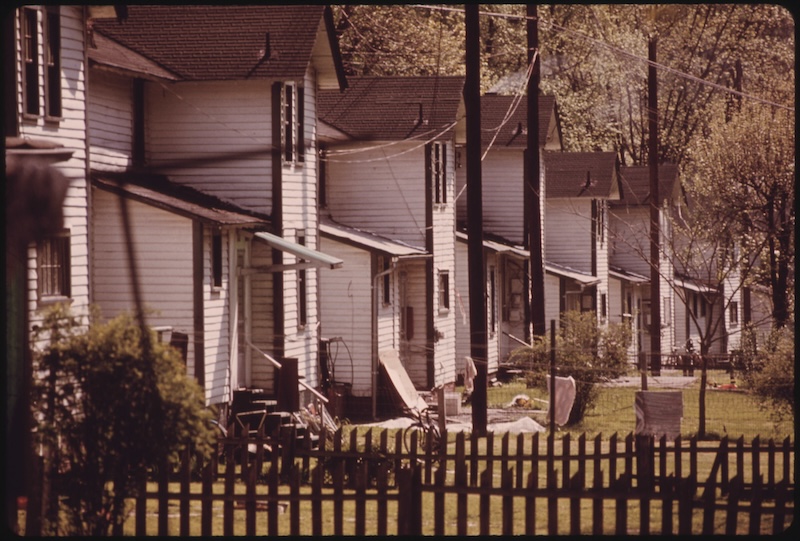
By recruiting workers (in Lowell’s case, primarily young women) who would have to rent housing from the company, the corporations who built these towns were able to recoup some of the initial cost of building new housing and infrastructure. In Lowell, the Boston Manufacturing Co. tightly controlled many aspects of its workers’ lives, including church attendance (mandatory), a prohibition on alcohol, and a ban on dance classes, blurring the line between work and home. Amenities such as schools, churches, and social clubs were provided by employers in the hope that they would help shape their workers’ behavior and ultimately create more productive — and docile — employees. Many companies exerted paternalistic control over their workers, banning certain social activities and confining workers’ mobility within and outside the community with fences and curfews. In coal towns, workers were often paid in ‘scrip,’ company credit that was only valid at company-owned stores, further deepening workers’ dependence on their employer.
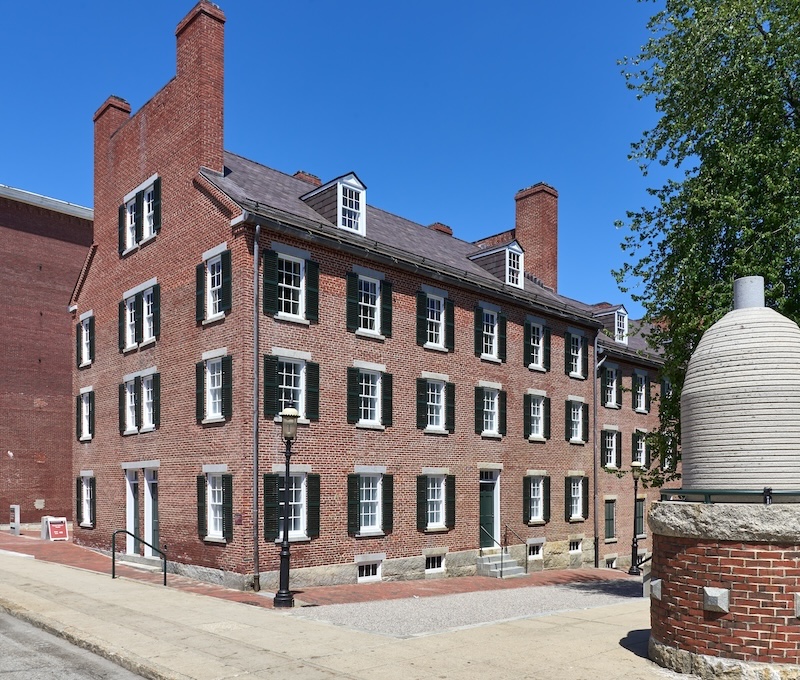
Later in the 1800s, company towns shifted to areas farther away from established communities, near natural resources like ore and timber. Extractive companies and railroads were forced to provide at least minimal housing and amenities for workers in far-flung places, and benefited from being the only option for food, supplies, and social networks. The scattered nature of mining towns also made it difficult to unionize, putting workers out of reach of their peers. Towns like Gary, West Virginia (which was built by U.S. Steel), or Hershey, Pennsylvania, most often remained unincorporated and were run entirely by the company, with no elected town council or mayor.
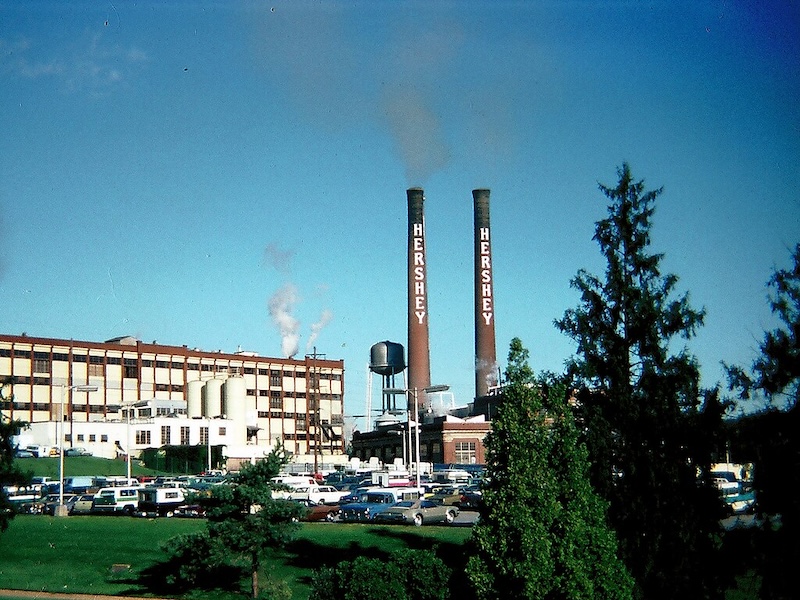
Some company towns even controlled who was allowed to visit and had sway over local law enforcement. However, recent debate over the level of control companies exercised has surfaced a more nuanced understanding of workers’ mobility between mining towns.
While some company towns exploited the labor of freed Black Americans during Reconstruction, others explicitly rejected Black laborers. Unionization, where it happened, helped protect Black workers from discrimination, putting workers on a more equal footing with their peers regardless of race or nationality.
By the mid 20th century, several combined factors contributed to the decline of company towns, including the empowerment of workers by the New Deal, improved social services that made workers less reliant on employers, higher incomes and new credit schemes that allowed more people to buy consumer goods, and the rise of the automobile and increased mobility. The concept of employer-owned housing fell out of favor, and many industries common in company towns moved overseas.
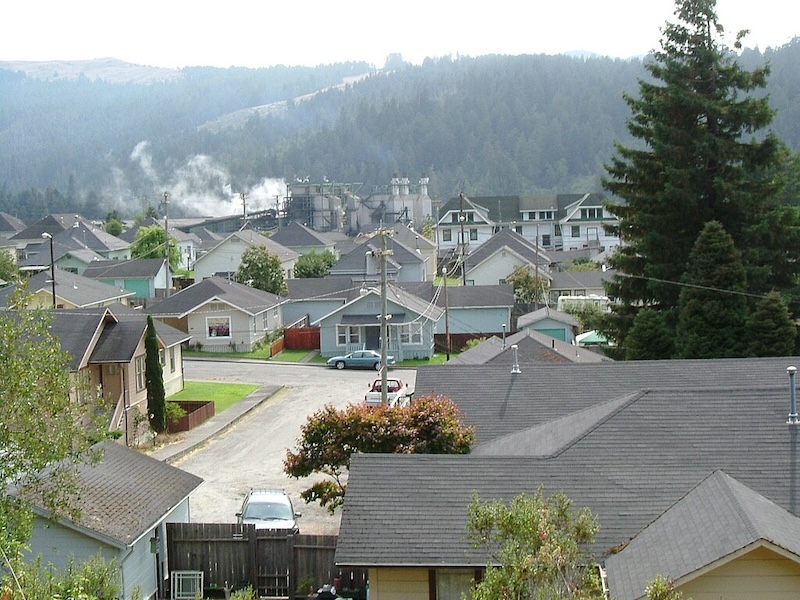
But their decline was faster in some places than others. In the isolated mining towns of Appalachia, communities remained controlled by mining interests. One of the longest-lived instances of a company town is Scotia, California. Developed by the Pacific Lumber Co. in the 1880s, the town remained in private hands until 2014, when the community voted to become independent, allowing the tenants to buy their homes and elect their first city officials.

SpaceX takes over
In May 2025, 212 SpaceX workers and other residents living in Boca Chica, Texas, roughly 20 miles from Brownsville, voted to incorporate their community under the name Starbase as a city with a commission form of government. Prior to SpaceX buying land there for its launch facilities, the community, which was originally formed in 1967 as Kennedy Shores, had dwindled to a population of only six permanent residents in 2008.
In 2012, SpaceX started buying land there, eventually locating their South Texas Launch Site there. As rocket tests began, the FAA told residents to stand outside their homes during tests in case of shock wave-induced broken windows, and many of the remaining residents’ homes were bought out under the threat of eminent domain. In spite of the ambivalence of existing residents, county officials saw the project as beneficial to the county, which would receive new tax revenue and other benefits, as a whole.
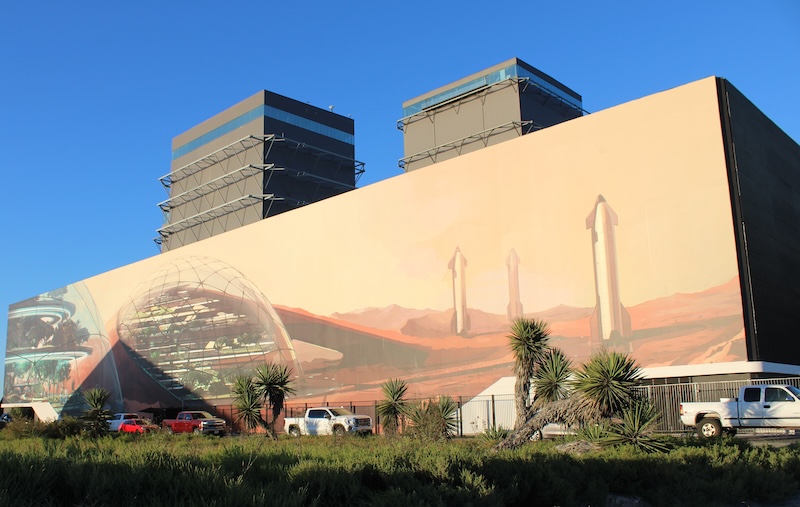
The newly minted city is about 1.5 square miles, has a population of roughly 500, and is comprised primarily of SpaceX headquarters and launch facilities. Almost all the land in Starbase is owned by SpaceX, including housing. The voters also selected a mayor and two city commissioners, all SpaceX employees who ran unopposed. New facilities including a community center, school, clinic, and housing are under construction. As a formal city, Starbase will have to build new infrastructure and contract with the county or other jurisdictions for essential services such as firefighting and police.

The past informs the future
The level of control companies exerted over the workers in traditional company towns seemed, for a time, archaic and obsolete. But as corporations become increasingly monolithic, fewer and fewer companies control every aspect of our labor and our consumption. Arguably, the growth of big box stores and e-commerce companies is a new iteration of the company town, one that expands the notion to the entire world.
A 2019 report from the think tank Center for American Progress on modern company towns noted that labor market concentration, the decline of unions, and the fracturing of the workplace with subcontracting and the gig economy has driven income inequality and reduced the power of workers, making modern company towns possible. According to the report, “labor market concentration does negatively affect workers in these areas” and these towns would need “stronger antitrust enforcement and labor protections” to prevent abuses.

Retro-silient?: America’s First “Eco-burb,” The Woodlands Turns 50
A master-planned community north of Houston offers lessons on green infrastructure and resilient design, but falls short of its founder’s lofty affordability and walkability goals.

Opinion: “New Towns” Are the Answer to Affordable Housing Challenges
How thoughtful design can create more walkable, livable communities.
Why California Should Not, Cannot Solve Its Housing Crisis By Building New Cities
A recent essay advocates for the development of a new city in California to alleviate the state's housing crisis. The argument needs a few tweaks.

Planetizen Federal Action Tracker
A weekly monitor of how Trump’s orders and actions are impacting planners and planning in America.

The state-sanctioned urbicide of Austin
People don’t kill cities. Freeways do.

US to reduce Colorado River water deliveries to Mexico
A new Colorado Treaty amendment reduces Mexico’s Colorado River water allocation by 250,000 acre feet.

Baltimore to break ground on $50 million Transit Priority Project
The project will bring faster bus trips, safer streets and better bike connections to Baltimore.

Airbnb launches $250 million 'last-dollar financing' housing accelerator, makes first investment in Austin
The company will put $6.4 million towards affordable housing development in Texas’ capital.

Guerilla urbanists are building DIY bus stop benches in Chicago
A before-and-after of one of the bus stops with a new bench. The new benches are not officially sanctioned or permitted, but the residents who placed them hope they will be the start of a network of DIY benches across the city.

FREE Course: Walkable City 1: Why Walkability?
After describing his path towards focusing on walkability as the essence of good planning, Jeff Speck marches through his five principal reasons for making more walkable places.
Reinventing Malls: Planning Alchemy—Turning Gray Fields Into Gold
The course focuses on the opportunities and imperatives that shape reinvention of mall sites.

Eagle County Government
Harvard University Graduate School of Design
Nashville Planning Department
The Architects Foundation
University of Cincinnati Online
The Pocatello Development Authority
The Urban Renewal Agency of the City of Pocatello
Journal of the American Planning Association


