The disparity between these commonly used terms can give vastly different outlooks on the housing market.



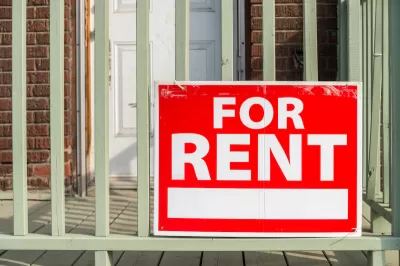
We hear the terms “average rent” and “median rent” frequently. You have probably seen headlines about how high the average rent in New York or Jersey City is. You might even think both terms can be used interchangeably. Yet do we understand what ‘average’ or ‘median’ mean?
If you remember anything from your college statistics class (and if you don’t, I don’t blame you), you know the two terms are not the same. This is an especially important distinction to make when discussing rent prices, which are at the top of most Americans’ minds at the moment. First of all, we have to understand that the average and the median of something are two different types of measurement that serve different purposes.
On one hand, the average calculates the arithmetic mean of a set of data (the set being the number of rents in the market). In this manner, we use the following formula:
If your set of data has five items, you would sum the value of those five items and divide them by 5.
On the other hand, the median of a set of data is the middle value of the set of data. In other words, if your set of data consisted of five items, you would line them up in order of size and search for the middle item — in this example, the median would be the third item in the sequence.
Why does the difference matter when talking about rents? Apart from the sake of being statistically correct, it is important to understand the difference when looking for a home or trying to understand a city’s housing market.
The thing with averages is that they can change drastically based on one item in a set. For example, the average rent in a city with thousands of low-rent units could be dragged upwards by a few exorbitantly priced units. This skews the picture of the rental market, and could fool you into thinking that the majority of rents in that city are close to the average amount.
Unlike the uncertainty of the average, the median provides information that, in my opinion, is more useful. As we know, the median is the middle item in a set of data. Translating this into the rental world, median indicates the middle rent of all the rents in the city, meaning that half the rents in the city are above the median and half are below. In a perfect world scenario, the median and the average would be the same, an evenly distributed bell curve.
The world is not a perfect place, and neither is the rental market. This is why we have different values for the median rent and average rent. New York City provides a useful example. Reports of average rents and median rents show different figures. According to Rental Markets Trends, as of 2024, the average monthly rent in New York City is $4,152, while the median monthly rent is $3,495, according to Zillow, making average rent approximately 1.2 times more than the median rent. Another example is Jersey City which had an average rent of $3,250 and median rent of $2,500. In this case, the average rent is 1.3 times more than the median rent. This indicates a concentration of high prices at the end of the spectrum, not a common denominator — not to say that $3,495 or $2,500 is affordable.
It is not crazy to think that some platforms use this difference to serve their own purposes. Making a place sound more expensive than it actually is can serve particular interests. This is not to diminish the housing crisis, but is a reminder to be cautious when reading bold headlines about “average rent costs.”
A quick online search will reveal different numbers for average and median rent, and, often, the terms will be used interchangeably — so beware. When you go apartment hunting, keep this difference in mind while doing your research. If the average rent is high, it might only mean that some very expensive units are on the market. Seek out more information on your neighborhood and you might be surprised at what you find.

Manhattan Home Sales Slow, Rent Growth Continues
The Manhattan housing market is seeing lower sale prices and a slowdown in demand, but rents in the city are still going up.
Alexandria eviction diversion program will let tenants pay back rent in installments
Eligible tenants will be allowed to make a 10% down payment on the back rent they owe and pay off the rest in installments while remaining in their home.

Indianapolis rents grew by 30% since 2020
The metro area has a shortage of roughly 137,000 affordable homes for the lowest-income households.

‘Going backwards:’ Baltimore mayor, students rally against state's transit funding plan
Maryland's proposed six-year plan provides no funding for Baltimore’s BMORE bus program and reduces its road maintenance funding.

Detroit to transform waterfront with $2.2 billion investment
Developers will convert about 18 acres of unused parking lot space into civic spaces.

HUD modernizes 50-year-old manufactured housing framework
The Next Generation Manufactured Housing Action Plan establishes new energy-efficiency standards for manufactured homes, and new guidelines for anchoring them.

After $600,000 wasted, CA high-speed rail board limits CEO’s power
Ian Choudri will no longer be able to sign, change or manage contracts.

Lithium mines leech water from surrounding communities. Soon, they’ll run dry
Researchers concluded that most lithium mines won't have enough water to meet industry demands by 2050.

El Niño takes lives, infrastructure as U.S. storm systems prove ill-prepared
About two-thirds of America's culverts are in states with outdated design standards.

FREE Course: Walkable City 1: Why Walkability?
After describing his path towards focusing on walkability as the essence of good planning, Jeff Speck marches through his five principal reasons for making more walkable places.
Reinventing Malls: Planning Alchemy—Turning Gray Fields Into Gold
The course focuses on the opportunities and imperatives that shape reinvention of mall sites.

One Hundred Miles
County of Mendocino
planning NEXT
The Architects Foundation
University of Cincinnati Online
Montrose County
Northern Illinois Transit Authority (NITA)
The Pocatello Development Authority

