The city of Austin's political leadership has proposed a package of competing bond proposals to raise money for large congestion relief measures in the fast-growing city.


An editorial by Alberta Philips explores some of the rhetoric behind a recent $720 billion bond proposal for the city of Austin, championed by Mayor Steve Adler. The editorial mostly digs into the scope of the bond, proposed to overhaul "key traffic corridors" in and around the city.
When he announced the $720 million bond package at the end of May, according to Philips, Mayor Adler claimed it was "time to 'go big or go home.'" The bond backs up that big talk by providing funding for the so-called Smart Corridor initiative. Philips also identifies a proposal by State Senator Kirk Watson to overhaul Interstate 35 as another example of the big thinking that presents "a remarkable opportunity to do something about their transportation predicament."
Philips's argument holds off on defining how the city should build bigger to solve Austin's congestion woes—first arguing that competing bond proposals by Austin city councilmembers are "too small to get the job done." One proposal, supported by City Councilmember Ann Kitchen and the city's mobility committee, would raise $300 million. City Councilmember Greg Casar backs another bond proposal that would spend $720 million, but has a "too small geographical reach and vision," according to Philips.
Only at the end of the editorial does Philips lay out the vision of what building bigger should look like, revealing a multi-modal, technology-enabled streetscape.
FULL STORY: Mayor says go big on transportation, but colleagues go small

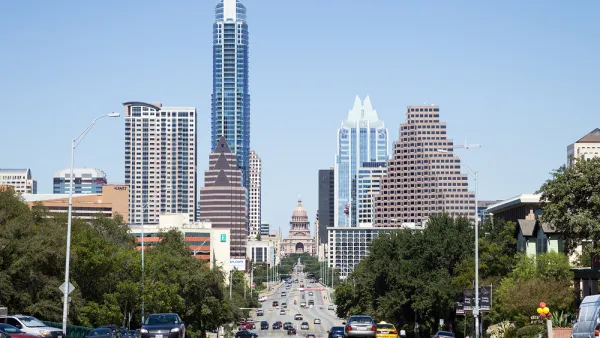
With Some Details To Be Determined, Austin's Transportation Bond Heads to the Ballot
Local groups are concerned that voting for the city of Austin's $720 million transportation bond will require a leap of faith.
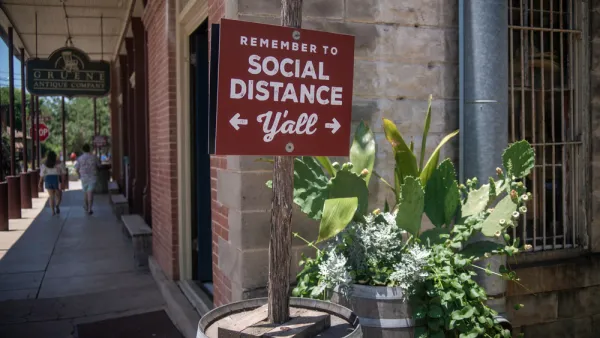
Mask Order Standoff in Texas: Attorney General vs. Austin and Travis County
It's pandemic déjà vu in the Lone Star State, with local governments wanting to protect their constituents from an increase in viral transmission, a power preempted by Gov. Abbott's executive order. Attorney General Ken Paxton lost the first round.
Bond Measure Seeks to Remedy Austin's Affordable Housing Woes
A bond referendum on the November ballot would help Austin increase its supply of affordable housing.

Planetizen Federal Action Tracker
A weekly monitor of how Trump’s orders and actions are impacting planners and planning in America.

The state-sanctioned urbicide of Austin
People don’t kill cities. Freeways do.

US to reduce Colorado River water deliveries to Mexico
A new Colorado Treaty amendment reduces Mexico’s Colorado River water allocation by 250,000 acre feet.

5 New England states march closer to 800 megawatt wind energy project
Securing federal approval for the project may be complicated under the Trump administration, which has historically been hostile towards domestic wind power.

Baltimore to break ground on $50 million Transit Priority Project
The project will bring faster bus trips, safer streets and better bike connections to Baltimore.

Airbnb launches $250 million 'last-dollar financing' housing accelerator, makes first investment in Austin
The company will put $6.4 million towards affordable housing development in Texas’ capital.

FREE Course: Walkable City 1: Why Walkability?
After describing his path towards focusing on walkability as the essence of good planning, Jeff Speck marches through his five principal reasons for making more walkable places.
Reinventing Malls: Planning Alchemy—Turning Gray Fields Into Gold
The course focuses on the opportunities and imperatives that shape reinvention of mall sites.

Eagle County Government
Harvard University Graduate School of Design
Nashville Planning Department
The Architects Foundation
University of Cincinnati Online
The Pocatello Development Authority
The Urban Renewal Agency of the City of Pocatello
Journal of the American Planning Association