Madrid, already famous for deciding to impose stringent limitations on driving, has a plan to blanket the city in green to increase its resilience to the effects of climate change.


"In Madrid, pretty much every unused space will soon be covered in plants," according to an article by Adele Peters.
The details of a wide-ranging and ambitious plan:
The city is spending millions to expand existing parks, and as many roofs and walls will be covered with greenery as possible. Twenty-two vacant lots will be turned into urban gardens. Paved squares will become parks that can suck up rainfall. Near the river that runs through the middle of the city—where a major highway was torn down in 2003—the city is spending over $4.3 million to finish filling in the banks with trees.
Cars will also no longer be welcome on some of the center city's streets, allowing planned space for linear parks as well.
The plan addresses one of the key buzzword surrounding planning and cities in recent years: resilience. Already, Madrid has felt the heat of increasing temperatures and decreasing rainfall. Peters explains in more detail how each of these landscaping projects can improve quality of life as the city faces the new threats brought about by climate change.
Read the full story: Madrid Is Covering Itself In Plants To Help Fight Rising Temperatures

In a Warmer, Wetter and More Disaster-prone World: “Nature is the Greatest Designer”
A conversation with the American Society of Landscape Architects’ CEO Torey Carter-Conneen and board president Kona Gray.
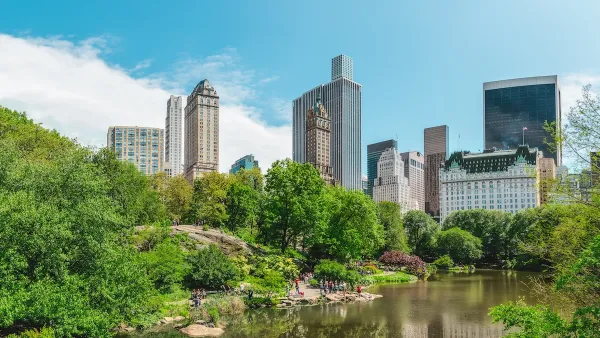
Public Parks as Climate Resilience Tools
Designed with green infrastructure, parks can mitigate flooding, reduce urban heat, and enhance climate resilience, offering cost-effective solutions to environmental challenges while benefiting communities.
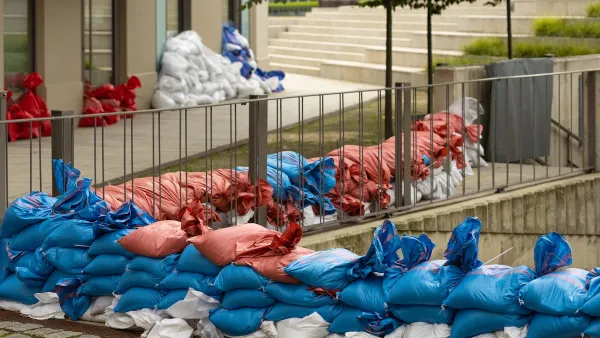
How US Communities Are Building Resilience Against Flooding
Flooding causes over $400 billion in damage in the United States every year.

Washington state to charge fee to drivers with fuel-efficient cars
Revenue from the fee will go towards supporting the state’s highways.

Illinois considers spending $1 billion in taxpayer money on data center
A quantum computing campus and data center are currently under construction in Chicago.

Trump to blast ‘hydrocarbon highway’ through ‘world’s longest art gallery’
Environmental and historic preservation groups are suing to stop the project.

NYC, state sue feds over mixed-immigration-status housing assistance rule
The state’s lawsuit argues that the rule change violates the Administrative Procedure Act.

Michigan to turn neighborhood into virtual power plant
Residents will soon be able to divert their excess energy to the grid in exchange for compensation.

Data center, mining project swarm to long-awaited Alaska railroad line
The state-owned railroad approved final plans for the spur line this week; the project is expected to cost $311 million, mostly funded by the federal government

FREE Course: Walkable City 1: Why Walkability?
After describing his path towards focusing on walkability as the essence of good planning, Jeff Speck marches through his five principal reasons for making more walkable places.
Reinventing Malls: Planning Alchemy—Turning Gray Fields Into Gold
The course focuses on the opportunities and imperatives that shape reinvention of mall sites.

City of Charlotte
City of Rosemead
Rutgers University, Edward J. Bloustein School of Planning and Public Policy
University of Michigan School for Environment and Sustainability (SEAS)
Hunter College, City University of New York (CUNY)
The Architects Foundation
University District Partnership