A $63 million investment to build the Cultural Trail in Indianapolis has returned $1 billion in increased property value and other economic benefits since 2008.


John Tuohy reports: "Property values have increased by $1 billion, businesses report more customers and higher sales, and residents feel safer Downtown since construction of the 8-mile Cultural Trail, according to a survey conducted by Indiana University Public Policy Institute."
"The assessment measured the economic impact of the trail from 2008 to 2014 and examined 1,747 parcels within 500 feet of the trail. The institute also sent questionnaires to 66 businesses and 558 trail users." The findings are contained in a report titled, "Assessment of the Impact of the Indianapolis Cultural Trail: A Legacy of Gene and Marilyn Glick" [pdf].
The article includes more details about the findings of the report, including one caveat about the recession's impact on the property values along the trail.
Hat tip to Brent Toderian for sharing the article.
Read the full story: Study: Property values along Cultural Trail up $1B

The Indianapolis Cultural Trail
Downtown Indianapolis' revitalization created several thriving cultural districts, but gaps in the urban fabric made them seem distant and unconnected. Planners' solution? The Indianapolis Cultural Trail.
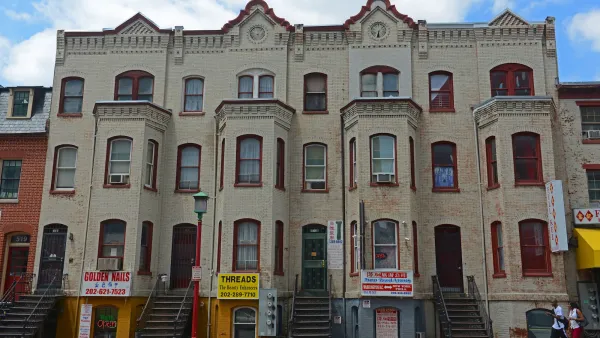
Is this the first wave of de-gentrification?
Valencia, Temescal, H Street and the fickle fortunes of the gentrified neighborhood.
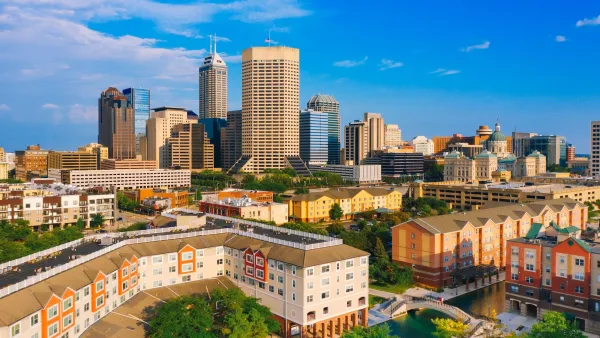
Indianapolis rents grew by 30% since 2020
The metro area has a shortage of roughly 137,000 affordable homes for the lowest-income households.

Planetizen Federal Action Tracker
A weekly monitor of how Trump’s orders and actions are impacting planners and planning in America.

California plans to bury El Niño’s downpour
If the state plays its cards right, it may be able to store a billion acre-feet of El Niño’s water in aquifers.

Desperate measures: Advocates weigh draining Lake Powell to fill Colorado River
Draining the reservoir could reduce evaporation losses by a couple hundred thousand acre-feet.

California city breaks ground on transit connector
The project includes three mobility hubs and a pedestrian bridge.

After public outcry, Massachusetts city releases housing development tracker
Cambridge’s tracker currently shows 250 housing projects in various stages of development.

40 years after approval, Chicago breaks ground on new park
The park honors Jean Baptiste Point du Sable, the city’s first permanent non-native settler.

FREE Course: Walkable City 1: Why Walkability?
After describing his path towards focusing on walkability as the essence of good planning, Jeff Speck marches through his five principal reasons for making more walkable places.
Reinventing Malls: Planning Alchemy—Turning Gray Fields Into Gold
The course focuses on the opportunities and imperatives that shape reinvention of mall sites.

City of Rosemead
Rutgers University, Edward J. Bloustein School of Planning and Public Policy
One Hundred Miles
Hunter College, City University of New York (CUNY)
The Architects Foundation
University of Cincinnati Online
City of Cambridge
Montrose County
The Pocatello Development Authority