The mountains of West Virginia and Kentucky can much less likely to be stripped and gutted for the purposes of coal extraction that they were even a few years ago as natural gas continues its ascendance.


"Coal production mountaintop removal mining has fallen 62 percent since 2008, dropping at a faster rate that overall coal production during a period of industry decline," reports James Bruggers. The news comes a report from the U.S. Environmental Protection Agency, which also found a 15 percent decrease in coal production from 2008 to 2014 in addition to several other metrics of decline for coal production in the United States.
"The government agency noted that lower demand for U.S. coal, primarily used to generate electric power, has been driven by competitive natural gas prices, an increasing use of renewable generation, flat electricity demand, and environmental regulations," adds Bruggers.
Reporting from Louisville, Bruggers noted a local example of the trend toward natural gas—LG&E recently dedicated a $530 natural gas power plant to replace a coal power plant.
The report echoes news earlier this year of the decline of the coal industry's market cap, which is down to $1.2 billion from $21.7 billion in June 2010.
Read the full story: Mountaintop removal coal mining drops sharply

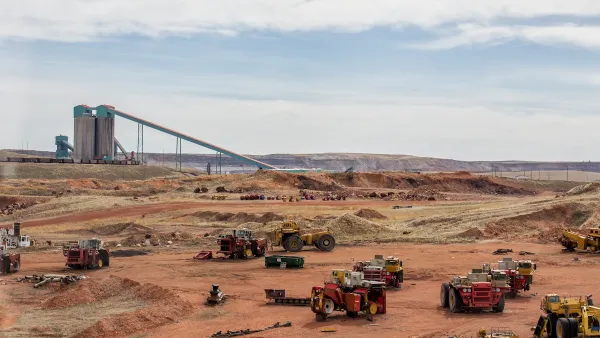
A Win for ‘Keep it in the Ground’
Coal mining in Wyoming will take a major hit as a result of a U.S. Department of Interior plan to cease future leasing of coal mines in the nation's most productive coal mining basin. The decision casts a spotlight on the presidential election.
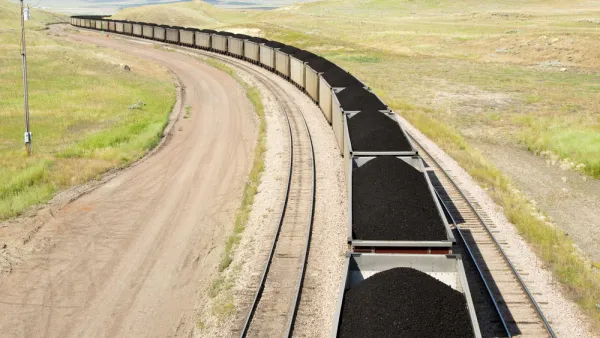
Mountain Coal States vs. West Coast Cities
A legal battle is being waged between the coal-exporting states of Utah, Wyoming, and Montana and coastal cities in California, Oregon, and Washington that pits the power of local land-use authority against the protection of interstate commerce.
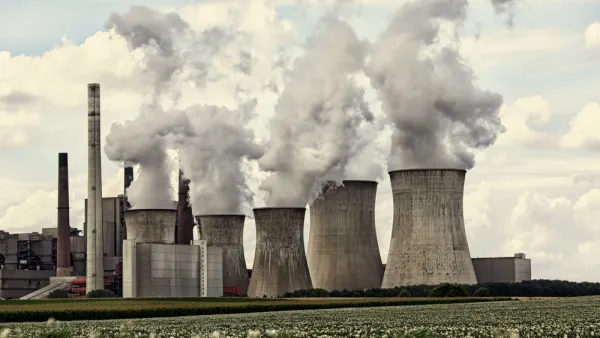
It's Official: Obama's Clean Power Plan Has Been Replaced by the Trump Administration
It took less than a year for the EPA to finalize the Affordable Clean Energy rule, which will allow older coal-burning plants to continue operating, in the Trump administration's most consequential environmental rollback accomplished to date.

Planetizen Federal Action Tracker
A weekly monitor of how Trump’s orders and actions are impacting planners and planning in America.

Amtrak, CN end decades-long dispute with eight-year agreement
The new operating agreement establishes an updated framework for the companies to work together, including processes to resolve disputes.

Judges permit Denver to divert 77,000 acre feet from the Colorado River for reservoir expansion
Overuse and climate change have caused the Colorado River’s water levels to plummet.

Philadelphia to invest $2 billion into upgrading city airports as PHL places last in customer satisfaction
Modernizations to Philadelphia's airports will include baggage system upgrades and a new automated parking garage guidance system.

The LA housing policies making developers turn away from the city
Despite LA’s housing shortage, developers say the city’s "mansion-tax" and pandemic-era policies make it an unappealing place to build housing.

New density bill would require 7 California cities to establish regional transit hubs
The bill would also require major cities in California to permit high-rise residential buildings.

FREE Course: Walkable City 1: Why Walkability?
After describing his path towards focusing on walkability as the essence of good planning, Jeff Speck marches through his five principal reasons for making more walkable places.
Reinventing Malls: Planning Alchemy—Turning Gray Fields Into Gold
The course focuses on the opportunities and imperatives that shape reinvention of mall sites.

City of Wisconsin Rapids
Harvard University Graduate School of Design
KFH Group Inc.
The Architects Foundation
University of Cincinnati Online
The Pocatello Development Authority
The Urban Renewal Agency of the City of Pocatello