Local residents are upset with the effects of the placemaking installment in Chicago, opened this spring—namely slower traffic and a polka dot color scheme. An article in DNAinfo points out that slowing traffic was kind of the point.


Ariel Cheung reports on the pushback to the Lincoln Hub makeover in Chicago—a brightly covered, polka dot paint scheme designed as a placemaking and traffic calming facility. According to Cheung, "some neighbors have taken umbrage to what they've nicknamed "Polka Dot Park" and say it has snarled traffic and detracted from the block's historic architecture."
A petition to remove the project's polka dots and bollards is circulating online, with 257 signatures earlier this week. The project is a test of the concept, so future tweaks are possible. The city is also "planning 10 more similar public spaces in the city's plazas, malls and traffic triangles this year, with 10 additional locations each year following, as approved by the City Council."
Read the full story: Neighbors Are Mad Lincoln Hub Slows Traffic, But That Was Kind of the Point

'Lincoln Hub': A Polka Dot Makeover for Chicago Intersection
The intersection of Lincoln Ave, Southport Avenue, and Wellington Avenue in the South Lakeview neighborhood of Chicago is in the process of a major upgrade in pedestrian-friendly placemaking.
Indianapolis Puts Design Ideas to the Test With Pedestrian-Friendly Pilot Project
As it works to gather the $60 million necessary to implement permanent changes to Monument Circle, Indianapolis is testing ideas for how to make the location more pedestrian friendly.
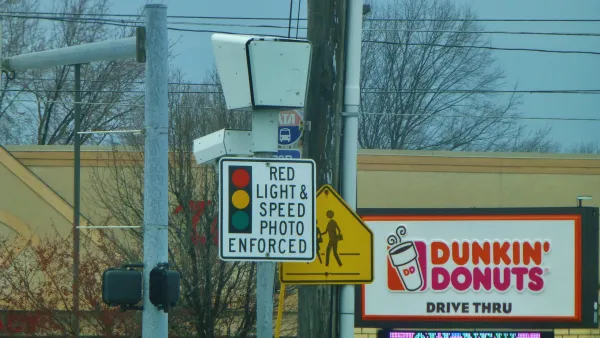
To Protect Pedestrians, Keep the Cameras
Active Transportation Alliance, a Chicago pedestrian advocacy group, urges Mayor Rahm Emanuel to improve red light cameras rather than remove them. Despite complaints from drivers, well-advertised cameras can reduce pedestrian fatalities.

Planetizen Federal Action Tracker
A weekly monitor of how Trump’s orders and actions are impacting planners and planning in America.

Amtrak, CN end decades-long dispute with eight-year agreement
The new operating agreement establishes an updated framework for the companies to work together, including processes to resolve disputes.

Judges permit Denver to divert 77,000 acre feet from the Colorado River for reservoir expansion
Overuse and climate change have caused the Colorado River’s water levels to plummet.

Boston has spent millions making the Green Line more accessible — and there’s no end in sight
While the city has invested millions into expanding and adding platforms to the Green Line to make it more accessible, new train cars set to arrive next year will be too tall for disabled passengers to board without raising the current platforms.

Idaho may see an 18% drop in federal surface transit funding — the largest estimated cut in the US
Transit systems in rural communities are much more reliant on federal funding to provide their services.

How ‘post-disaster gentrification’ alters neighborhoods after natural calamities
After hurricanes, fires or other calamities, the original residents of a community are often replaced by younger, wealthier residents.

FREE Course: Walkable City 1: Why Walkability?
After describing his path towards focusing on walkability as the essence of good planning, Jeff Speck marches through his five principal reasons for making more walkable places.
Reinventing Malls: Planning Alchemy—Turning Gray Fields Into Gold
The course focuses on the opportunities and imperatives that shape reinvention of mall sites.

Harvard University Graduate School of Design
KFH Group Inc.
Greater Baltimore Committee
The Architects Foundation
University of Cincinnati Online
The Pocatello Development Authority
The Urban Renewal Agency of the City of Pocatello