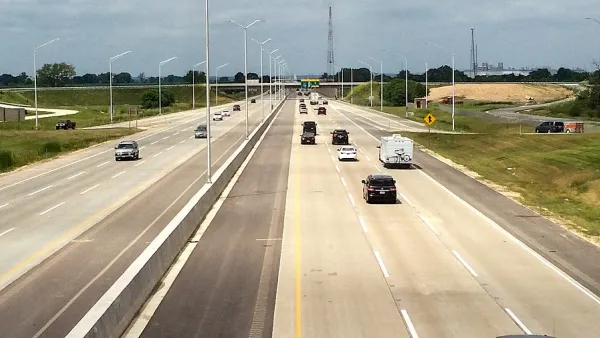
According to a recent op-ed, the Illiana Expressway "was built upon faulty assumptions, and motivated largely by crony intentions."


Austin Berg of the Illinois Policy Institute writes: "It may be the only statewide issue that fiscal conservatives, Chicago politicians, environmentalists, urban planners, legacy media and transportation experts can all agree on: The Illiana Expressway is a bad idea."
These groups must have released a sigh of relief around the state of Illinois when Governor Bruce Rauner announced that he ordered the Illinois Department of Transportation to suspend the project, saving $100 million toward a state budget shortfall of $4 billion next year.
The problem with the Illiana Expressway, according to its critics, is that "the Illiana would 'eat itself,' as planners had vastly overestimated the growth in vehicle miles over the next 30 years in the rural, sparsely populated area, and the tolls charged could have reached as much as four times more than other Illinois tollways, further driving down the number of users."
Berg's article makes an argument against the project, which is still eligible for federal funding, to be killed completely. The nail in the coffin for the project, according to Berg, would be to sell the land the state had acquired in prepartation for the project. The state has already spent $61 million in planning and land acquisition for the project.
FULL STORY: KILLING ILLIANA: CLOSING THE ROAD TO NOWHERE A WIN FOR ILLINOIS

Sale of Illinois Tollway Considered to Pay Pension Debt
Gov. J.B. Pritzker has a $134 billion problem in unfunded pension liabilities. Along with several other measures, his administration is considering selling state assets, including the Illinois Tollway, to fill the hole.
When Red States Turn Blue
Michigan Gov. Gretchen Whitmer has followed the path laid by New Mexico Gov. Michelle Lujan Grisham and Illinois Gov. J.B. Pritzker in joining the U.S. Climate Alliance. All three are new Democratic governors replacing Republican predecessors.

Vehicle Miles Traveled Fee Becomes Debate Issue in Illinois Gubernatorial Race
Republican Gov. Bruce Rauner might as well have accused his Democratic opponent of wanting to hike the gas tax. J.B. Pritzker denies he plans to introduce a VMT fee but admits that he's open to all ideas to raise revenue to maintain infrastructure.

Planetizen Federal Action Tracker
A weekly monitor of how Trump’s orders and actions are impacting planners and planning in America.

The state-sanctioned urbicide of Austin
People don’t kill cities. Freeways do.

US to reduce Colorado River water deliveries to Mexico
A new Colorado Treaty amendment reduces Mexico’s Colorado River water allocation by 250,000 acre feet.

LA Metro’s ultimatum: no extra buses for LA28 if federal funding isn’t imminently secured
If Metro does not provide additional buses, LA28 organizers will have to find a new way to manage Olympic traffic. LA28’s budget does not include a line item for transit.

Colorado’s Largest Data Center Could Rise Next to Homes — Without a Public Hearing
The proposed campus would consume 11 times the power of Denver International Airport; as it has across the country, opposition mounts.

5 New England states march closer to 800 megawatt wind energy project
Securing federal approval for the project may be complicated under the Trump administration, which has historically been hostile towards domestic wind power.

FREE Course: Walkable City 1: Why Walkability?
After describing his path towards focusing on walkability as the essence of good planning, Jeff Speck marches through his five principal reasons for making more walkable places.
Reinventing Malls: Planning Alchemy—Turning Gray Fields Into Gold
The course focuses on the opportunities and imperatives that shape reinvention of mall sites.

Eagle County Government
Harvard University Graduate School of Design
Nashville Planning Department
The Architects Foundation
University of Cincinnati Online
The Pocatello Development Authority
The Urban Renewal Agency of the City of Pocatello
Journal of the American Planning Association