The state of North Carolina joins the roster of states working with the private sector to invest in highway infrastructure around growing urban areas.


The state of North Carolina closed the financial deal on its first highway public-private partnership—the I-77 Express Lanes Project. Simon Santiago and Corey Brook report that the project "with a design and construction cost estimated at approximately $591 million, will add 26 miles of tolled, express lanes along the existing I-77 corridor in the Charlotte region."
As for the financial terms of the public-private partnership (PPP), "[t]he financing package includes $100 million of private activity bonds and a $189 million TIFIA loan from the U.S. Department of Transportation, all of which are to be repaid by the project’s developer, I-77 Mobility Partners."
"The developer will design, build, toll, operate and maintain the express lanes for 50 years after construction and will assume the risk if toll revenues do not meet projections."
A press release announcing the deal, from the North Carolina Department of Transportation, claims that the PPP "facilitates the completion of the I-77 Express Lanes project by 2018, instead of relying on traditional funding to make piecemeal improvements to the I-77 Corridor during the next two decades."
Read the full story: North Carolina Achieves Financial Close on State’s First Highway Public-Private Partnership


Virginia Shows How Not to Do Public-Private Partnerships
A public-private partnership to build a tunnel connecting Norfolk with the city of Portsmouth under the Elizabeth River in Virginia has gone awry, saddling the public with increasing costs and, likely, more expenses in the future.
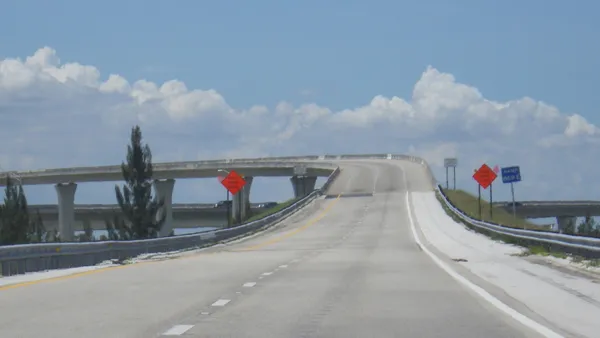
Florida Highway Project Faces Opposition From All Sides
Critics worry the proposed 330-mile corridor would encourage sprawl, harm wildlife, and saddle the state with decades of debt.
How Not to Do Growth
The state of Florida is moving forward with the Multi-use Corridors of Regional Economic Significance (M-Cores) plan to build several new toll expressways in rural parts of the state.

Planetizen Federal Action Tracker
A weekly monitor of how Trump’s orders and actions are impacting planners and planning in America.

California plans to bury El Niño’s downpour
If the state plays its cards right, it may be able to store a billion acre-feet of El Niño’s water in aquifers.

Chicago breaks ground on $3 billion megadevelopment
The new neighborhood, titled Foundry Park, will one day host 3,700 residences.

Desperate measures: Advocates weigh draining Lake Powell to fill Colorado River
Draining the reservoir could reduce evaporation losses by a couple hundred thousand acre-feet.

This road in NYC is infamously dangerous — and Mamdani can't fix it
New York City's Ocean Parkway is known for reckless driving, but the power to implement safety measures lies with the state rather than the city.

One of Denver’s busiest corridors to gain BRT
The project will span 18 miles and contain 74 bus rapid transit stations.

FREE Course: Walkable City 1: Why Walkability?
After describing his path towards focusing on walkability as the essence of good planning, Jeff Speck marches through his five principal reasons for making more walkable places.
Reinventing Malls: Planning Alchemy—Turning Gray Fields Into Gold
The course focuses on the opportunities and imperatives that shape reinvention of mall sites.

City of Rosemead
Rutgers University, Edward J. Bloustein School of Planning and Public Policy
One Hundred Miles
Hunter College, City University of New York (CUNY)
The Architects Foundation
University of Cincinnati Online
City of Cambridge
Montrose County
The Pocatello Development Authority