The Federal Highway Administration (FHWA) on May 18 announced new guidelines for the planning and design of separated bike lanes.


Greg Nadeau, acting administrator of the FHWA, writes a post announcing the release of the Separated Bike Lane Planning and Design Guide, which, among other things, explains the importance of separated bike lanes to a multi-modal transportation system: These lanes are an important tool communities across the U.S. can use to build safe, comfortable, and connected networks of bicycle infrastructure that meet the needs of people of all ages and abilities."
In addition to a number of case studies, "FHWA’s guide outlines planning considerations and design options for this innovative bicycle facility. It provides information on one and two-way facilities, outlines different options for providing separation, and highlights midblock design considerations including driveways, transit stops, accessibility, and loading zones. Intersection design is also taken into consideration, including the related operations, signalization, signage, and on-road marking concerns."
Nadeau mentions that the new Guide is intended to support the U.S. DOT's Safer People, Safer Streets initiative.
Read the full story: FHWA introduces Separated Bike Lane Planning and Design Guide

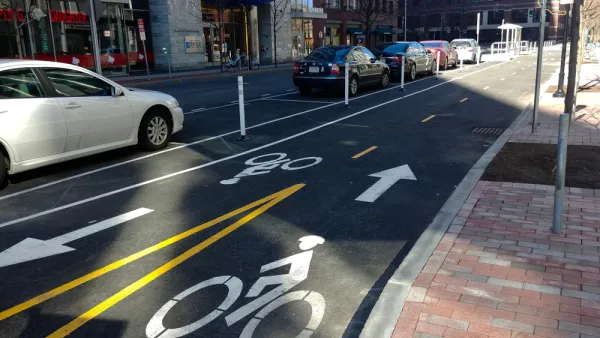
Nation's Top Safety Board Recommends Protected Bike Lanes
The NTSB chair issued a stark warning on Nov. 5: "If we do not improve roadway infrastructure for bicyclists, bicyclists will die who otherwise would not," stated Robert Sumwalt in introducing their first report in 47 years devoted to bike safety.
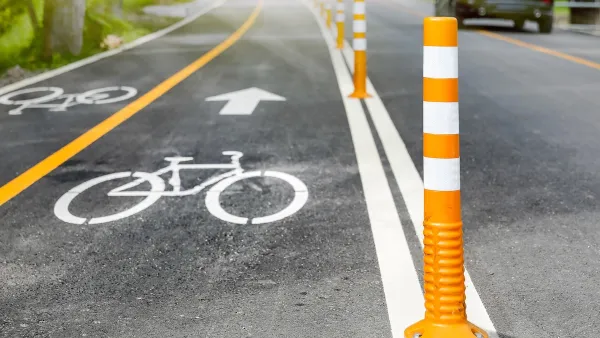
Study: Bike Lanes Improve Road Safety
Bike lanes delineated with bollards or traffic cones are most likely to slow drivers and reduce crashes between cars and bikes.
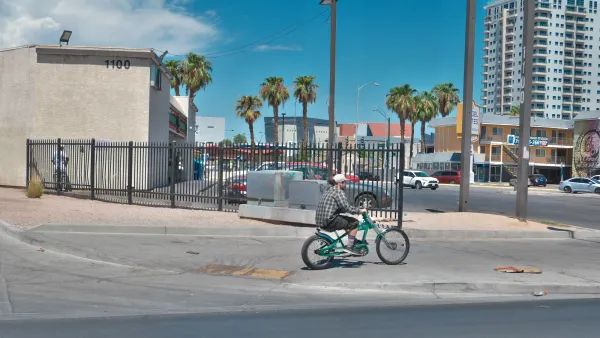
Las Vegas is building its first protected bike lane
The new lane connects Henderson and the Las Vegas Raiders headquarters via Starr Avenue.

Amtrak, CN end decades-long dispute with eight-year agreement
The new operating agreement establishes an updated framework for the companies to work together, including processes to resolve disputes.

Judges permit Denver to divert 77,000 acre feet from the Colorado River for reservoir expansion
Overuse and climate change have caused the Colorado River’s water levels to plummet.
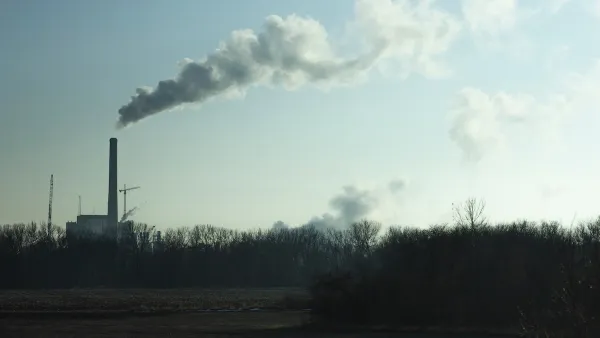
Nation's most wind-powered state turns to coal as data centers increase energy demand
For the first time in decades, Iowa has increased its generation of coal power.

Boston has spent millions making the Green Line more accessible — and there’s no end in sight
While the city has invested millions into expanding and adding platforms to the Green Line to make it more accessible, new train cars set to arrive next year will be too tall for disabled passengers to board without raising the current platforms.

Idaho may see an 18% drop in federal surface transit funding — the largest estimated cut in the US
Transit systems in rural communities are much more reliant on federal funding to provide their services.

How ‘post-disaster gentrification’ alters neighborhoods after natural calamities
After hurricanes, fires or other calamities, the original residents of a community are often replaced by younger, wealthier residents.

FREE Course: Walkable City 1: Why Walkability?
After describing his path towards focusing on walkability as the essence of good planning, Jeff Speck marches through his five principal reasons for making more walkable places.
Reinventing Malls: Planning Alchemy—Turning Gray Fields Into Gold
The course focuses on the opportunities and imperatives that shape reinvention of mall sites.

City of Wisconsin Rapids
Harvard University Graduate School of Design
KFH Group Inc.
The Architects Foundation
University of Cincinnati Online
The Pocatello Development Authority
The Urban Renewal Agency of the City of Pocatello