The latest fare increase for the Metropolitan Transportation Authority comes against the backdrop of record ridership and a $15 billion funding gap for the system's five-year capital plan.


"The Metropolitan Transportation Authority voted on Thursday to raise the base fare on subways and buses by a quarter, to $2.75, and the cost of a 30-day MetroCard by $4.50, to $116.50," reports Emma G. Fitzsimmons.
Fare increases are now scheduled to be raised every two years, although Metropolitan Transportation Authority had some choices to make when they voted on the fare increase this week, according to Fitzsimmons.
"For subway and bus riders, the bonus for pay-per-ride MetroCards will increase to 11 percent, from 5 percent, for anyone who puts at least $5.50 on a card. The cost of a weekly pass will rise to $31 from $30….The board had considered two proposals for pay-per-ride MetroCards and decided against an option that kept the base fare at $2.50 while eliminating the bonus."
Read the full story: M.T.A. Votes to Raise Fares on Subways and Buses

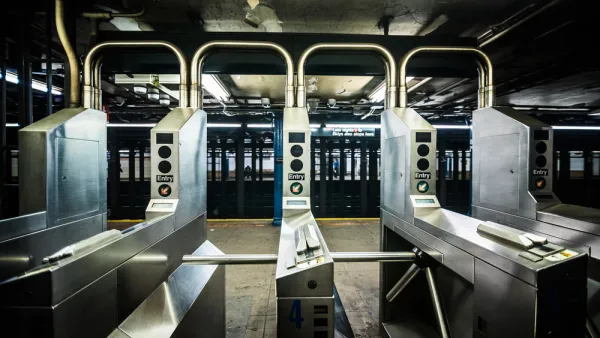
Means-Based, Transit-Fare Discounts Take a Leap Forward in the Big Apple
The 2019 New York City budget includes $106 million to subsidize half the transit fare for qualified residents for six months. The city joins the ranks of Seattle, Toronto, and the Bay Area that offer income-based discounts for transit fares.
Two Opinions on NYC's Proposed Subway Fare Increase
Editorializing on the expected fare increase for New York City's 8.5 million transit riders, the Times suggests ways to soften the blow. Writing in response, the president of the Citizens Budget Commission suggests looking toward motorists.
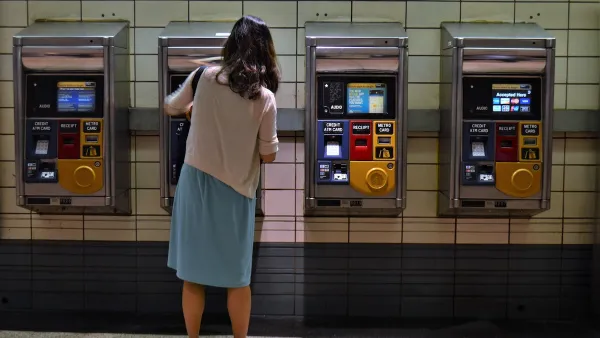
NYC to Raise Transit Fares
The MTA board approved a 10-cent fare increase as part of a plan to increase revenue, claiming the agency loses $1 billion annually to fare evasion.

Planetizen Federal Action Tracker
A weekly monitor of how Trump’s orders and actions are impacting planners and planning in America.

Amtrak, CN end decades-long dispute with eight-year agreement
The new operating agreement establishes an updated framework for the companies to work together, including processes to resolve disputes.

Judges permit Denver to divert 77,000 acre feet from the Colorado River for reservoir expansion
Overuse and climate change have caused the Colorado River’s water levels to plummet.

Northwest rail fans eager for Sept. 30 debut of Amtrak’s Airo fleet
Get ready for that new train smell and more seats. But they won’t go faster or run more frequently on the Cascades route in Washington and Oregon.

NYC DOT wants faster, more permanent street upgrades
The city is examining ways to build more concrete infrastructure without getting entangled in 'decades-long' projects.

'Something we’ve never seen before:' rising utility rates could strain city finances nationwide
Data centers, climate change and other factors have caused utility rates in the United States to increase by 38% since 2020.

FREE Course: Walkable City 1: Why Walkability?
After describing his path towards focusing on walkability as the essence of good planning, Jeff Speck marches through his five principal reasons for making more walkable places.
Reinventing Malls: Planning Alchemy—Turning Gray Fields Into Gold
The course focuses on the opportunities and imperatives that shape reinvention of mall sites.

Harvard University Graduate School of Design
KFH Group Inc.
Greater Baltimore Committee
The Architects Foundation
University of Cincinnati Online
The Pocatello Development Authority
The Urban Renewal Agency of the City of Pocatello