Ian Law of Place Alliance spoke to the 2014 ASLA Annual Meeting in Denver at the end of November about what it takes to accomplish a vision for a more dense, walkable suburban downtown.


Jared Green relays the proceedings of a session at the 2014 ASLA Annual Meeting in Denver, by Ian Law, ASLA, of Place Alliance, who "explained how even the best laid plans for retrofitting suburbia can go haywire."
Green describes one of the pitfalls Law cited during the session: "it’s particularly challenging to create a comprehensive plan that can sustain a dense, walkable downtown if there are many small landowners in a community. Ideally, 'one developer will be in control of the entire development.' Also important is that 'the goals of the developer are in synch with the goals of the community.'"
As a cautionary tale, Law detailed the experience of Malta, New York. Green describes the case study: "The community realized it needed to update itself to accommodate a new silicon chip plant that will bring in 2,000 jobs. However, they ended up creating an overly ambitious downtown revitalization plan. Instead of one downtown to replace what wasn’t working, they ended up creating three, said Law. These isolated, disconnected developments had 'too much retail for the scale of Malta.'"
The article goes on to describe a few success stories, as well, including Mizner Park in Boca Raton, Florida; Belmar in Lakewood, near Denver; and Mashpee Commons in Cape Cod, Massachusetts.
Read the full story: Revitalizing Suburbia: It’s All About Context and Scale


Debating the Feasibility of Retrofitting Suburbia
Is the challenge of retrofitting sprawl intractable or unavoidable?
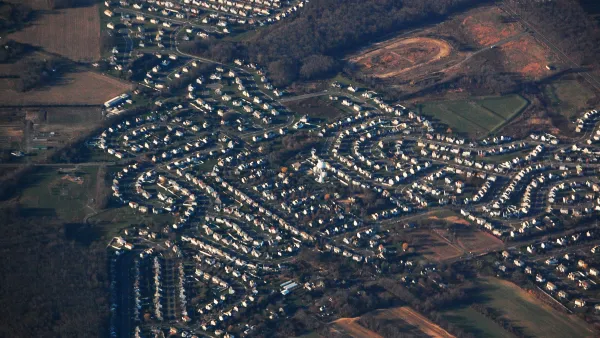
Cities May Be Back, But Don't Forget About the Burbs
A review of June Williamson's new book reminds us that the need to retrofit suburbia is as urgent as ever, despite the ascendance of cities. Amanda Kolson Hurley explores the top five reasons 'why the suburbs are shaping up as the new frontier.'
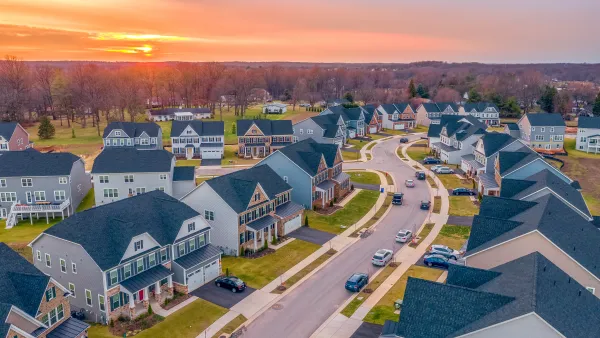
Remote Work and the Shift to Suburbia
Is the growth of working from home turning America into a ‘suburban nation?’

Planetizen Federal Action Tracker
A weekly monitor of how Trump’s orders and actions are impacting planners and planning in America.

Amtrak, CN end decades-long dispute with eight-year agreement
The new operating agreement establishes an updated framework for the companies to work together, including processes to resolve disputes.

Judges permit Denver to divert 77,000 acre feet from the Colorado River for reservoir expansion
Overuse and climate change have caused the Colorado River’s water levels to plummet.

Boston has spent millions making the Green Line more accessible — and there’s no end in sight
While the city has invested millions into expanding and adding platforms to the Green Line to make it more accessible, new train cars set to arrive next year will be too tall for disabled passengers to board without raising the current platforms.

Idaho may see an 18% drop in federal surface transit funding — the largest estimated cut in the US
Transit systems in rural communities are much more reliant on federal funding to provide their services.

How ‘post-disaster gentrification’ alters neighborhoods after natural calamities
After hurricanes, fires or other calamities, the original residents of a community are often replaced by younger, wealthier residents.

FREE Course: Walkable City 1: Why Walkability?
After describing his path towards focusing on walkability as the essence of good planning, Jeff Speck marches through his five principal reasons for making more walkable places.
Reinventing Malls: Planning Alchemy—Turning Gray Fields Into Gold
The course focuses on the opportunities and imperatives that shape reinvention of mall sites.

City of Wisconsin Rapids
Harvard University Graduate School of Design
KFH Group Inc.
The Architects Foundation
University of Cincinnati Online
The Pocatello Development Authority
The Urban Renewal Agency of the City of Pocatello