San Francisco is hard at work on a Central Subway project expected to open in 2019 with a terminus in Chinatown, but planners have already been hard at work studying an extension of the subway to Fisherman's Wharf.


San Francisco Chronicle Architecture Critic John King throws his support behind a plan to extend San Francisco's Central Subway to the northeastern waterfront, home of the city's popular Fisherman's Wharf tourist attraction.
Here's how King describes the plan: "A cadre of city planners worked through 14 scenarios on how to extend the Central Subway from Chinatown, where the northernmost stop at Stockton and Washington streets is scheduled to open in 2019, to Fisherman’s Wharf and back. The costs would range from $367 million to $1.4 billion, and the number of riders using the enlarged T-Third line is projected to climb as much as 55 percent beyond the levels now anticipated."
King supports the plans for its ambitions (all to rare there days, says King) and its potential to connect a part of the city now occupied mostly by tourists and the extremely wealthy. "According to King, there’s a compelling power to the idea of an extension that, if nothing else, would make the Central Subway seem less like a boondoggle and more of a factor in the shaping of tomorrow’s city. The empty lot of the Pagoda was a starting point for dreams. Let’s see if it can become a starting point of something real as well."
Michael Cabanatuan reported the news of a study analyzing the extension, released at the end of November by the San Francisco Municipal Transportation Authority.
Read the full story: Central Subway extension to Fisherman’s Wharf makes sense

Opinion: San Francisco’s Central Subway Is a Bad Investment
Critics of the subway project argue that the line is too short and disconnected from other transit options to be useful. Meanwhile, projected costs continue to rise.
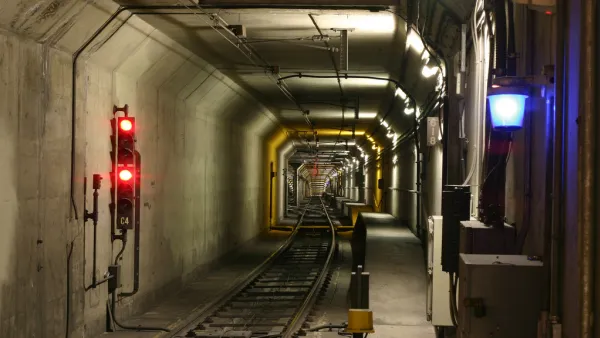
Subways Central to San Francisco Supervisor's Ambitious Transit Agenda
San Francisco County Supervisor announced an ambitious agenda to construct underground rail transit—arguing that the city "should always have a subway under construction."
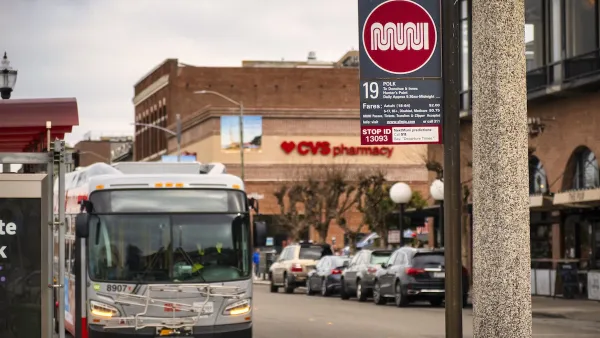
San Francisco Muni Sees Highest Ridership Since Start of Pandemic
The SFMTA is improving service at off-peak hours and on weekends to accommodate new travel patterns that rely less on weekday commuters. Ridership has increased accordingly.

Planetizen Federal Action Tracker
A weekly monitor of how Trump’s orders and actions are impacting planners and planning in America.

California plans to bury El Niño’s downpour
If the state plays its cards right, it may be able to store a billion acre-feet of El Niño’s water in aquifers.

Desperate measures: Advocates weigh draining Lake Powell to fill Colorado River
Draining the reservoir could reduce evaporation losses by a couple hundred thousand acre-feet.

Chicago voters approve permanent festival grounds, penalty for vacant property owners
Currently, major summer and fall festivals take over public parks for weeks at a time, drawing criticism from nearby residents

NYC votes to cut outdoor dining red tape, speed up permitting
New York City also voted to allow the Department of Transportation to begin work on urgent projects before notifying elected officials.

California appears to reject Prop. 45
The proposition would have expanded the projects that qualify for a streamlined environmental review, effectively paring down the California Environmental Quality Act.

FREE Course: Walkable City 1: Why Walkability?
After describing his path towards focusing on walkability as the essence of good planning, Jeff Speck marches through his five principal reasons for making more walkable places.
Reinventing Malls: Planning Alchemy—Turning Gray Fields Into Gold
The course focuses on the opportunities and imperatives that shape reinvention of mall sites.

City of Rosemead
Rutgers University, Edward J. Bloustein School of Planning and Public Policy
One Hundred Miles
Hunter College, City University of New York (CUNY)
The Architects Foundation
University of Cincinnati Online
City of Cambridge
Montrose County
The Pocatello Development Authority