Planners are crafting the details of Chicago's first shared street, where pedestrians will rule.


"The Chicago Department of Transportation is currently hashing out an ordinance to regulate how motorists will behave on the Argyle 'shared street' [pdf], a pedestrian-priority zone slated for construction next year," reports John Greenfield and Steven Vance.
"The streetscape project — the first of its kind in Chicago — will create a plaza-like feel along Argyle from Broadway to Sheridan, by raising the street level and eliminating curbs. Slow motorized traffic and car parking will still be permitted on the street, but pedestrians will rule the space." 48th Ward Alderman Harry Osterman released final designs for the shared street concept in August.
The article provides more insight into the functional details of the shared street concept for Argyle Street, which caught the attention of the Chicago Tribune back in October of this year.
Read the full story: City Writing New Rules of the Road to Allow Shared Space on Argyle Street

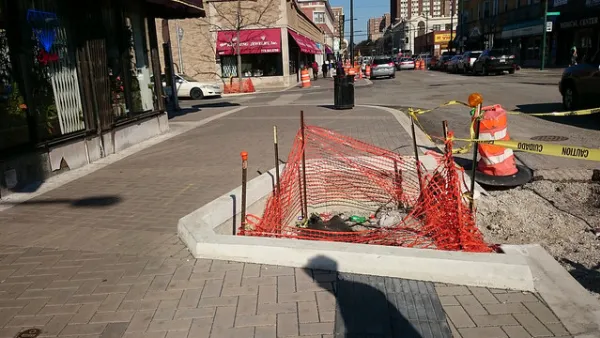
Chicago's Shared Street Off to a Bumpy Start
The shared street concept is being tested in Chicago, with goals of spurring economic development, allowing new and flexible use of public spaces, and increasing pedestrian safety.
Chicago's First Shared Street Planned for Uptown's Argyle Street
Following one failed attempt at a similar plan, a popular neighborhood for shopping will soon become a shared street project. The effort is part of a trend in Chicago looking for ways to transform streets into pedestrian friendly destinations.
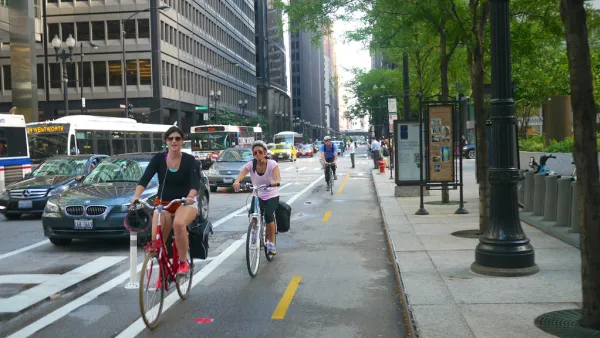
Bike Friendliness Ends at the City Border
A new report details the work Chicago's suburbs will have to do to live up to the bike-friendly example of its urban core.

Planetizen Federal Action Tracker
A weekly monitor of how Trump’s orders and actions are impacting planners and planning in America.

Amtrak, CN end decades-long dispute with eight-year agreement
The new operating agreement establishes an updated framework for the companies to work together, including processes to resolve disputes.

Judges permit Denver to divert 77,000 acre feet from the Colorado River for reservoir expansion
Overuse and climate change have caused the Colorado River’s water levels to plummet.

NYC DOT wants faster, more permanent street upgrades
The city is examining ways to build more concrete infrastructure without getting entangled in 'decades-long' projects.

'Something we’ve never seen before:' rising utility rates could strain city finances nationwide
Data centers, climate change and other factors have caused utility rates in the United States to increase by 38% since 2020.

Trump to overrule local leaders, lease millions of acres of America’s Pacific Island territories’ seafloors to mining companies
International law says that the Indigenous people of America’s territories have a right to prior and informed consent regarding projects that impact their countries.

FREE Course: Walkable City 1: Why Walkability?
After describing his path towards focusing on walkability as the essence of good planning, Jeff Speck marches through his five principal reasons for making more walkable places.
Reinventing Malls: Planning Alchemy—Turning Gray Fields Into Gold
The course focuses on the opportunities and imperatives that shape reinvention of mall sites.

Harvard University Graduate School of Design
KFH Group Inc.
Greater Baltimore Committee
The Architects Foundation
University of Cincinnati Online
The Pocatello Development Authority
The Urban Renewal Agency of the City of Pocatello