The Texas Transportation Commission's choice to run the Texas Department of Transportation is a former Marine Corps lieutenant general with a progressive take on the state's transportation challenges.


"The Texas Department of Transportation’s new executive director [Joe Weber] says it’s going to take more than new roads to keep Texans traveling smoothly if population growth estimates prove true," reports Brandon Formby.
Instead, says Weber, the state will need to increase funding for commuter and freight projects. Weber is quoted directly in the article: "That’s going to be hard to do…That’s a cultural change."
"Some estimates project the state could double its population to more than 55 million residents in less than 40 years. TxDOT faces inadequate funding to maintain current state roads and build new highways to keep pace."
Weber also takes a progressive stance on traffic safety, saying it's "embarrassing" that 1,100 people have died in vehicle collisions so far this year.
Saying that transportation is about economic development, rather than just congestion, "Weber said that meeting transportation needs isn’t just about making sure Texans get to work. He said the future stability of the state’s economy will rely on businesses, workers and consumers being able to connect through all modes of transport."
If you're interested in learning more about Texas' freeway building tradition, and want to get an idea of the aforementioned culture Weber means to change, Robert Wilsonsky recently wrote up a book called Dallas-Fort Worth Freeways (available for free download). The article quotes author Oscar Slotboom directly: "One of the themes through the book is how influential the freeways have been in North Texas, empowering everything. They empower ambition, the things built besides the freeways, from Texas Instruments to NorthPark. So much of modern Dallas was built around the freeways and remains dependent upon the freeways. And I thought it was interesting how Dallas really is freeway-crazy. They party at their openings."
Read the full story: Roads alone won’t drive Texas’ future, new TxDOT chief says

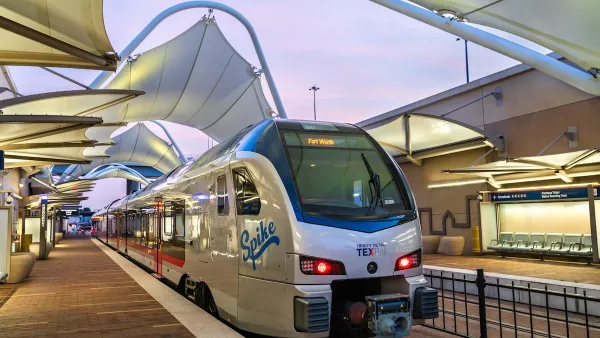
North Texas Transportation Council Advocates for Road Safety, Rail Projects
The North Texas Regional Transportation Council issued a series of recommendations for state legislators that include more support for road safety projects and high-speed rail.
Federal Carbon Reduction Funds Could Finance Highway Projects in Texas
Transit advocates say the state’s carbon reduction strategy reveals a continued preference for car-oriented infrastructure.
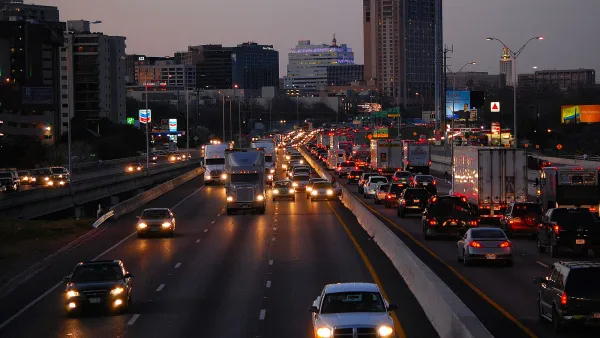
Austin Leaders Denounce 20-Lane Freeway Project
TxDOT is pushing ahead with plans for a massive freeway expansion project through downtown Austin despite opposition from virtually all local leaders.

Planetizen Federal Action Tracker
A weekly monitor of how Trump’s orders and actions are impacting planners and planning in America.

California plans to bury El Niño’s downpour
If the state plays its cards right, it may be able to store a billion acre-feet of El Niño’s water in aquifers.

Chicago breaks ground on $3 billion megadevelopment
The new neighborhood, titled Foundry Park, will one day host 3,700 residences.

Want to study the Missouri River? Soon, you may need unanimous approval from 10 states
Legislation would require 10 governors’ permission to study or build projects moving water outside the basin.

Desperate measures: Advocates weigh draining Lake Powell to fill Colorado River
Draining the reservoir could reduce evaporation losses by a couple hundred thousand acre-feet.

This road in NYC is infamously dangerous — and Mamdani can't fix it
New York City's Ocean Parkway is known for reckless driving, but the power to implement safety measures lies with the state rather than the city.

FREE Course: Walkable City 1: Why Walkability?
After describing his path towards focusing on walkability as the essence of good planning, Jeff Speck marches through his five principal reasons for making more walkable places.
Reinventing Malls: Planning Alchemy—Turning Gray Fields Into Gold
The course focuses on the opportunities and imperatives that shape reinvention of mall sites.

City of Rosemead
Rutgers University, Edward J. Bloustein School of Planning and Public Policy
One Hundred Miles
Hunter College, City University of New York (CUNY)
The Architects Foundation
University of Cincinnati Online
City of Cambridge
Montrose County
The Pocatello Development Authority