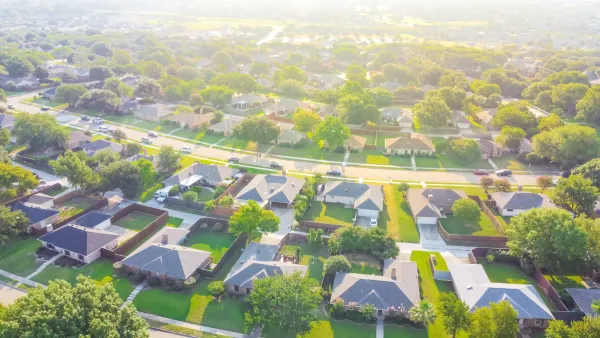
A new book explains how suburban dwellers have built "zoning rules, housing covenants and other mechanisms" to protect "their privileged place in the residential pecking order."


Robert McCartney provides insight into a new book by Ben Ross, Dead End: Suburban Sprawl and the Rebirth of American Urbanism. Ross, a scientist by profession, "led the grass-roots campaign for the light-rail Purple Line in the Maryland suburbs for 15 years."
The book, according to McCartney, "is drawing praise for its well-researched analysis of why so many Americans live in widely dispersed, single-family homes and spend so many hours stuck in traffic."
"It also casts light on the cultural forces at play in major disputes gripping our region over affordable housing, the 'war on cars,' the Columbia Pike streetcar in Arlington, and the redevelopment of White Flint in Montgomery and Tysons Corner in Fairfax County."
McCartney focuses on Ross's argument that sprawl is a symptom of status-seeking obstructionists, or NIMBYs, who protect their interests with a system of "snob zoning."
Robert Steuteville also produced a detailed review of Dead End, calling it "the shrewdest book on the psychology of the built environment that I have read in a long time."
Read the full story: New book by Purple Line activist Ben Ross blames suburban sprawl on status-seeking


Zoning for Good
A new book highlights the power of zoning to change communities for the better.
The Rise of Zoning Reform
As the housing affordability crisis spread from mainly coastal cities to the rest of the nation, cities and states are taking a serious look at outdated zoning codes that hamper efforts to build more housing.

Arizona Tapping Groundwater to Fuel Suburban Growth
Critics say Arizona’s growth patterns are unsustainable and dangerous, given the depleted Colorado River and the state’s deepening reliance on groundwater.

Planetizen Federal Action Tracker
A weekly monitor of how Trump’s orders and actions are impacting planners and planning in America.

‘Going backwards:’ Baltimore mayor, students rally against state's transit funding plan
Maryland's proposed six-year plan provides no funding for Baltimore’s BMORE bus program and reduces its road maintenance funding.

Detroit to transform waterfront with $2.2 billion investment
Developers will convert about 18 acres of unused parking lot space into civic spaces.

U.S.-Iran war may have ‘devastating’ impact on cost to warm homes
Vermont and Maine residents may see a 76% increase in the cost of warming their homes this winter.

Senate bill would ‘overhaul’ environmental permitting laws
Under the proposed act, government agencies would also not be able to suspend or rescind permits after granting them.

Exemption applications for NYC’s pied-à-terre tax see 55% success rate
The city sent nearly 40% of its initial pied-à-terre tax warnings erroneously.

FREE Course: Walkable City 1: Why Walkability?
After describing his path towards focusing on walkability as the essence of good planning, Jeff Speck marches through his five principal reasons for making more walkable places.
Reinventing Malls: Planning Alchemy—Turning Gray Fields Into Gold
The course focuses on the opportunities and imperatives that shape reinvention of mall sites.

One Hundred Miles
County of Mendocino
planning NEXT
The Architects Foundation
University of Cincinnati Online
Montrose County
Northern Illinois Transit Authority (NITA)
The Pocatello Development Authority