Montgomery County, Maryland—located immediately to the north of Washington D.C.—is embracing the trend of driving less while opting for other forms of transportation.


“Montgomery County has 100,000 more residents than 10 years ago, but the amount of driving in the county has actually stayed the same, says a new study on how people get around,” writes Dan Reed.
“Drivers traveled about 7.3 million miles on state roads in the county in 2012. It's a slight decrease from 2011, but about the same as in 2002, when the county had just over 900,000 residents, compared to 1.005 million residents today.”
Reed pulled the data from the Mobility Assessment Report prepared by the Montgomery County Planning Department. Reed’s article also includes analysis of growing numbers of pedestrians and bikers inside the Beltway as well as increased bus ridership in the Upcounty.
Read the full story: Montgomery County added 100,000 residents since 2002, but driving didn't increase


How Montgomery County Will Implement its Ambitious Bicycle Master Plan
Montgomery County, Maryland planners were trying to raise the bar for bicycle infrastructure planning and design in North America.
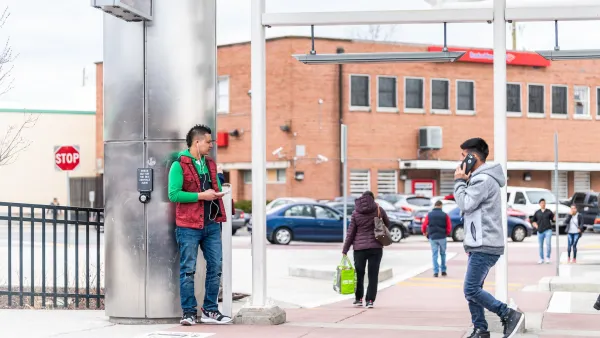
Montgomery County Residents Reject New Sidewalks, Citing Flooding and ‘Stranger Danger’
County officials nixed a proposal from MCDOT to build new sidewalks on streets near a future transit station.

DC Area County Eliminates Bus Fares
Montgomery County joins a growing trend of making transit free.

Planetizen Federal Action Tracker
A weekly monitor of how Trump’s orders and actions are impacting planners and planning in America.

Amtrak, CN end decades-long dispute with eight-year agreement
The new operating agreement establishes an updated framework for the companies to work together, including processes to resolve disputes.

Judges permit Denver to divert 77,000 acre feet from the Colorado River for reservoir expansion
Overuse and climate change have caused the Colorado River’s water levels to plummet.

NYC DOT wants faster, more permanent street upgrades
The city is examining ways to build more concrete infrastructure without getting entangled in 'decades-long' projects.

'Something we’ve never seen before:' rising utility rates could strain city finances nationwide
Data centers, climate change and other factors have caused utility rates in the United States to increase by 38% since 2020.

Trump to overrule local leaders, lease millions of acres of America’s Pacific Island territories’ seafloors to mining companies
International law says that the Indigenous people of America’s territories have a right to prior and informed consent regarding projects that impact their countries.

FREE Course: Walkable City 1: Why Walkability?
After describing his path towards focusing on walkability as the essence of good planning, Jeff Speck marches through his five principal reasons for making more walkable places.
Reinventing Malls: Planning Alchemy—Turning Gray Fields Into Gold
The course focuses on the opportunities and imperatives that shape reinvention of mall sites.

KFH Group Inc.
Greater Baltimore Committee
Eagle County Government
The Architects Foundation
University of Cincinnati Online
The Pocatello Development Authority
The Urban Renewal Agency of the City of Pocatello