A newly released series of animated GIFs provides a powerful visualization of how paltry even the most robust transit systems in the world look to those with special needs.


Patrick Stotz writes of the agenda behind a new series of animated GIFs that shows the difference in transit access for those with special needs: “Even though there certainly have been a lot of improvements in the accessibility of public transport stations during the last decade or two, there are still far too many stations in almost any bigger city which are not accessible for someone who is e.g. in a wheelchair.”
In response: “Our approach was to take open licensed versions of these maps and remove the name of every station which is not marked as wheelchair accessible.”
The design team behind the GIFs produced maps of New York, City, London, and Hamburg—systems that don’t look nearly as comprehensive when viewed through a more demanding accessibility requirement. Instructions for creating similar maps of other cities are also included.
Read the full story: The limited accessibility of public transport


West Hollywood makes delivery robots paying road users
Cities are looking for creative ways to regulate food delivery robots, in some cases putting them to work gathering data for ADA compliance or collecting revenue for sidewalk maintenance.
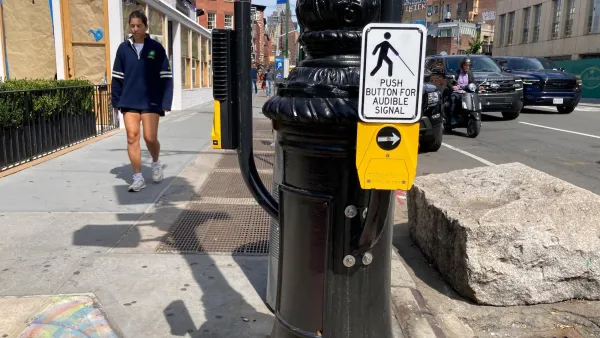
90% of NYC Intersections Lack Audible Crossing Signals for Blind Pedestrians
People with vision impairments rely on a complex network of tactile and audible signals to navigate cities.
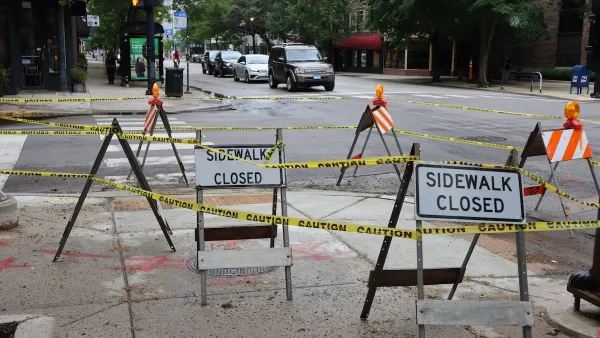
Chicago Residents Sue City Over Inaccessible Sidewalks
The suit alleges the city has failed to create a “coordinated, proactive system” for complying with ADA and ensuring accessibility on the city’s sidewalks and crosswalks.

Planetizen Federal Action Tracker
A weekly monitor of how Trump’s orders and actions are impacting planners and planning in America.

Amtrak, CN end decades-long dispute with eight-year agreement
The new operating agreement establishes an updated framework for the companies to work together, including processes to resolve disputes.

Judges permit Denver to divert 77,000 acre feet from the Colorado River for reservoir expansion
Overuse and climate change have caused the Colorado River’s water levels to plummet.

NYC DOT wants faster, more permanent street upgrades
The city is examining ways to build more concrete infrastructure without getting entangled in 'decades-long' projects.

'Something we’ve never seen before:' rising utility rates could strain city finances nationwide
Data centers, climate change and other factors have caused utility rates in the United States to increase by 38% since 2020.

Trump to overrule local leaders, lease millions of acres of America’s Pacific Island territories’ seafloors to mining companies
International law says that the Indigenous people of America’s territories have a right to prior and informed consent regarding projects that impact their countries.

FREE Course: Walkable City 1: Why Walkability?
After describing his path towards focusing on walkability as the essence of good planning, Jeff Speck marches through his five principal reasons for making more walkable places.
Reinventing Malls: Planning Alchemy—Turning Gray Fields Into Gold
The course focuses on the opportunities and imperatives that shape reinvention of mall sites.

Harvard University Graduate School of Design
KFH Group Inc.
Greater Baltimore Committee
The Architects Foundation
University of Cincinnati Online
The Pocatello Development Authority
The Urban Renewal Agency of the City of Pocatello