Stephen Jacob Smith examines how high emotions, grand designs, poor negotiating, and "extreme politicization" drove the Port Authority of New York and New Jersey to build the world's most expensive train station in Lower Manhattan.


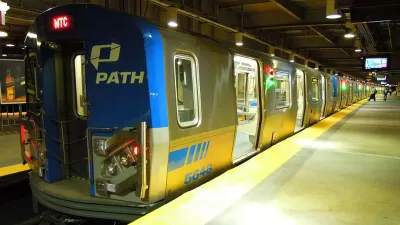
The Port Authority has been very good at one thing in the last decade: spending money.
"One World Trade Center, born the Freedom Tower and taken over by the Port in 2006, will be the most expensive office building in the world. The 'Vehicle Security Center,' an underground tour bus garage and road network serving the World Trade Center complex, may very well be the most expensive parking garage in history," notes Smith.
"And then there’s the PATH station to New Jersey, the most troubled project at one of the world’s most troubled construction sites. At $3.74 billion, plus another $200 million in contingencies, the 'Transportation Hub' at the World Trade Center—not even the busiest station in the Financial District—will be far and away the most expensive train station built in modern history."
"When the grandiose ambitions and the emotions of 9/11 met with the famously flush Port Authority, disaster struck," says Smith. "Mission creep, an inattentive governor and extreme politicization sent costs skyward, eventually outstripping even the record-setting resources devoted to it."
Read the full story: PATH/Fail: The Story of the World’s Most Expensive Train Station

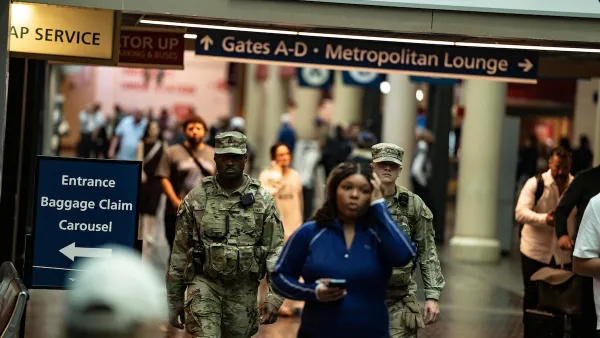
Trump Plans Takeover of DC's Union Station
USDOT says it will take over management duties for the commercial spaces managed by Amtrak since last year and address the building’s infrastructure needs.
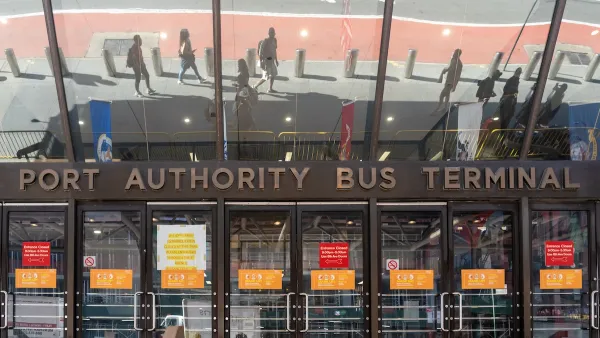
NYC Secures Funding for Midtown Bus Terminal Replacement
The aging Manhattan transit terminal, the world’s busiest, will receive a $10 billion revamp and expansion.
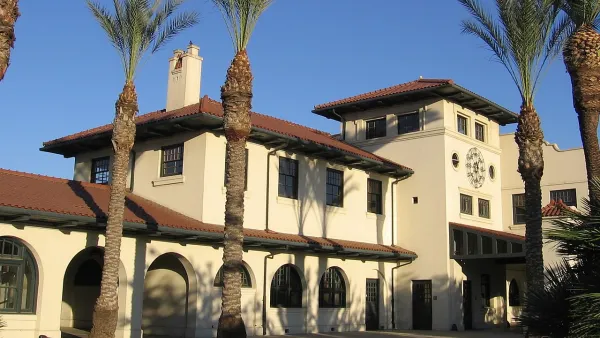
Historic Fresno Train Depot Will Become Part of HSR Station
The 150-year-old building will see new life as a retail space as part of a flurry of new development along the upcoming high-speed rail line.

Planetizen Federal Action Tracker
A weekly monitor of how Trump’s orders and actions are impacting planners and planning in America.

Amtrak, CN end decades-long dispute with eight-year agreement
The new operating agreement establishes an updated framework for the companies to work together, including processes to resolve disputes.

Judges permit Denver to divert 77,000 acre feet from the Colorado River for reservoir expansion
Overuse and climate change have caused the Colorado River’s water levels to plummet.

Boston has spent millions making the Green Line more accessible — and there’s no end in sight
While the city has invested millions into expanding and adding platforms to the Green Line to make it more accessible, new train cars set to arrive next year will be too tall for disabled passengers to board without raising the current platforms.

Idaho may see an 18% drop in federal surface transit funding — the largest estimated cut in the US
Transit systems in rural communities are much more reliant on federal funding to provide their services.

How ‘post-disaster gentrification’ alters neighborhoods after natural calamities
After hurricanes, fires or other calamities, the original residents of a community are often replaced by younger, wealthier residents.

FREE Course: Walkable City 1: Why Walkability?
After describing his path towards focusing on walkability as the essence of good planning, Jeff Speck marches through his five principal reasons for making more walkable places.
Reinventing Malls: Planning Alchemy—Turning Gray Fields Into Gold
The course focuses on the opportunities and imperatives that shape reinvention of mall sites.


City of Wisconsin Rapids
Harvard University Graduate School of Design
KFH Group Inc.
The Architects Foundation
University of Cincinnati Online
The Pocatello Development Authority
The Urban Renewal Agency of the City of Pocatello