Smart Growth America has recognized the best of the 130 complete streets policies approved last year across the United States; and the one passed by Indianapolis has received the highest ranking.


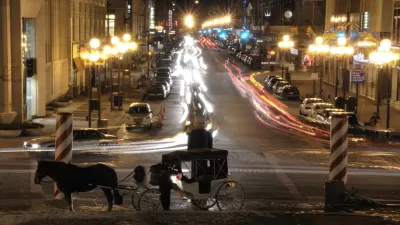
"Complete Streets policies challenge auto-centric design and entrench an ethic that streets are for all users, of all ages and abilities, on all modes," explains Tanya Snyder. "A street designed for cars to travel at top speeds without regard for pedestrians, bicyclists, or public transit users – now or in the future – is not a complete street."
According to information compiled by Smart Growth America and its National Complete Streets Coalition, "Last year was a good one for advocates of these policies: Of all the 488 policies currently in place nationwide, more than a quarter of them were passed last year."
"Statewide policies exist in 27 states and the District of Columbia and Puerto Rico," adds Snyder. "You might be surprised by the states with the most policies – Michigan leads the pack with 65 policies, then New Jersey with 50 and in third place – shockingly – is Florida, the most dangerous state in the nation for pedestrians and bicyclists."
But it's Indianapolis who comes out on top when judged according to the coalition's 10 criteria.
Read the full story: How to Write a Complete Streets Policy

Safe Streets 'Champions' Announced
Smart Growth America and the National Complete Streets Coalition announced a new initiative designed to help cities achieve the potential of a new approach to street design.
The Best of the Best Complete Streets Policies
Complete streets policies are keeping planners busy across the country. An annual report features the best of the best when it comes to transforming city streets for the safety and activity of all users.
Report: Complete Streets Deliver More Than Just Good Vibes
Better safety and multimodal ease are not the only benefits offered by complete streets. According to this report, on the average they pay for themselves and then some.

Planetizen Federal Action Tracker
A weekly monitor of how Trump’s orders and actions are impacting planners and planning in America.

Chicago breaks ground on $3 billion megadevelopment
The new neighborhood, titled Foundry Park, will one day host 3,700 residences.

This MA town is drowning in its own sewage — and residents like it that way
Susan Murcott, a waste water expert, said if Carlisle didn't address their leaking sewage, the problem could turn “deadly.”

To power data centers, Google seeks autonomous control of thousands of homes’ electricity
The tech company has signed a deal to indirectly pay Mid-Atlantic residents to reduce their power demand when the grid is strained.

From robotaxis to robotrains: LA, DC weigh driverless transit
If approved, the projects will take years to implement and face financial and technical hurdles.

Dallas suburbs are turning their downtowns into small towns
Four Texas towns are embracing walkability and density in their downtowns.

FREE Course: Walkable City 1: Why Walkability?
After describing his path towards focusing on walkability as the essence of good planning, Jeff Speck marches through his five principal reasons for making more walkable places.
Reinventing Malls: Planning Alchemy—Turning Gray Fields Into Gold
The course focuses on the opportunities and imperatives that shape reinvention of mall sites.

City of Rosemead
Rutgers University, Edward J. Bloustein School of Planning and Public Policy
One Hundred Miles
The Architects Foundation
University of Cincinnati Online
Montrose County
The Pocatello Development Authority
The Urban Renewal Agency of the City of Pocatello