Once a bastion of sprawl, the San Diego region is now embracing one of the most significant regional planning efforts in the nation's history. It is the first region in California to draft a Sustainable Communities Strategy, as mandated by SB 375.


SANDAG (The San Diego regional planning agency) is behind the strategy, which is currently open for public comment before being approved. The goal of the Sustainable Communities Strategy (SCS) is to reduce the region's per capita emissions by 7% by 2020 and 13% by 2035.
Josh Stephens reports:
"By now, the methods for reaching such targets have become well accepted throughout the state. Regions are encouraging compact development, beefing up public transit plans, and allocating new housing-according to Regional Housing Needs Assessments-in locations that enable residents to drive less, rather than by spreading housing evenly around a region. San Diego especially is investing in transportation demand management (TDM) strategies such as high-occupancy toll lanes on its freeways.
A combination of all of these tactics, officials say, will enable the region to meet, or even exceed, its SB 375 targets. Moreover, SANDAG is going beyond 2035 and actually is planning for growth through 2050."
Thanks to Josh Stephens
Read the full story: Pioneering Sustainability Plan Takes Shape in San Diego Region

A New Era in California for Evaluating Transportation Emissions
An appellate court's rejection of SANDAG's $200 billion sustainable communities plan holds far-reaching implications for how regional planners evaluate greenhouse gas emissions from transportation to meet SB 375 requirements to the year 2050.
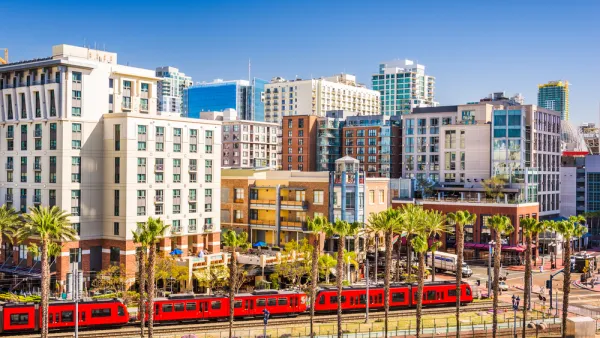
Climate Crisis, Housing Crisis on a Collision Course
Sprawl might relieve the housing crisis, but it would also exacerbate the climate crisis. Tough choices will be necessary in regions like San Diego, where the question of where to accommodate growth is very much in question.
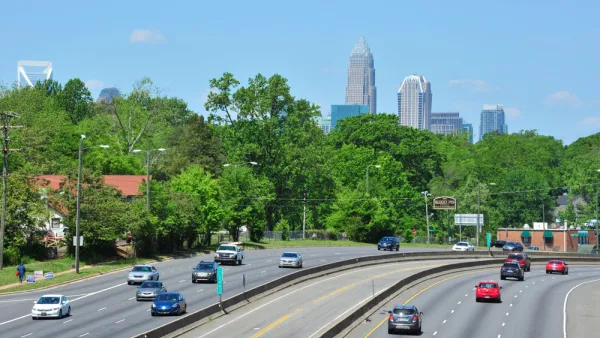
In Sprawling Charlotte, Traffic Jams Point to Climate Solutions
A look at the relationship between sprawl and climate change mitigation in the fast-growing North Carolina city.

Planetizen Federal Action Tracker
A weekly monitor of how Trump’s orders and actions are impacting planners and planning in America.

Amtrak, CN end decades-long dispute with eight-year agreement
The new operating agreement establishes an updated framework for the companies to work together, including processes to resolve disputes.

Northwest rail fans eager for Sept. 30 debut of Amtrak’s Airo fleet
Get ready for that new train smell and more seats. But they won’t go faster or run more frequently on the Cascades route in Washington and Oregon.

St. Louis Metro to test if single-car trains can reduce operating costs, maintain rider satisfaction
The pilot program will run from October to spring 2027, and begin with one single-car train operating on Metrolink’s Red and Blue lines.

Pennsylvania is building data centers in abandoned mines
Housing data centers in mines provides an alternative to destroying local forests and may spare residents from data centers’ noise and air pollution.

If Corpus Christi can’t revive desalination plant project, it may owe Texas $235 million
Earlier this month, city officials declined to pursue developing the plant for the second time in a year.

FREE Course: Walkable City 1: Why Walkability?
After describing his path towards focusing on walkability as the essence of good planning, Jeff Speck marches through his five principal reasons for making more walkable places.
Reinventing Malls: Planning Alchemy—Turning Gray Fields Into Gold
The course focuses on the opportunities and imperatives that shape reinvention of mall sites.

City of Thousand Oaks
City of Wisconsin Rapids
Harvard University Graduate School of Design
The Architects Foundation
University of Cincinnati Online
The Pocatello Development Authority
The Urban Renewal Agency of the City of Pocatello