Philadelphia is seeing a surge in new parks, as new public-realm projects are either opening or moving closer towards development.


One park has just opened and four others are on track to open by the end of the year.
"How is it possible that so many new and improved public spaces are in the pipeline when the keepers of the public treasury - the city and state - are pleading poverty? Or, for that matter, when Fairmount Park's operating budget has remained unchanged since the 1980s?
Actually, public funds cover only a small part of the cost of city parks nowadays. While Fairmount Park managed to secure some government money before the recession hit, and then topped off with federal stimulus dollars, few of the new parks would be seeing the light of day without heavy underwriting from philanthropic foundations, nonprofits, and private institutions. For better or worse, outside interests have become the lead player in planning and maintaining an entire generation of what we still like to call public parks."
Read the full story: Changing Skyline: A bumper crop of new parks sprouting in Philadelphia

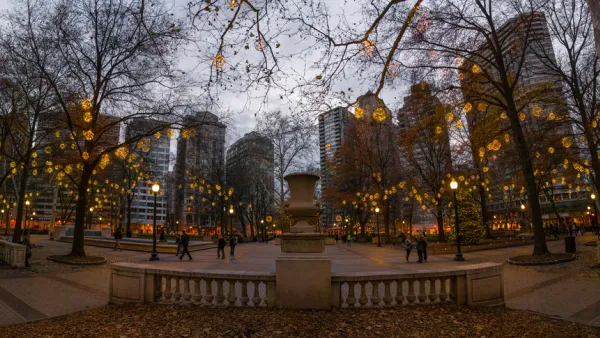
Sitting on the Walls Prohibited in Philadelphia's Rittenhouse Square
The list of prohibitions for the use of public spaces grows—this time to the seemingly innocuous and park-perfect activity of sitting.
New Philadelphia Mayor Pitching $300 Million for Parks and Libraries
Investment in public space is shaping up as a signature initiative for new Philadelphia Mayor Jim Kenney.
The Reviews Are In: Philadelphia's New Dilworth Park
Calling it "a suit in a jeans-and-T-shirt world," Philadelphia Inquirer Architecture Critic Inga Saffron's review of the redesigned Dilworth Park in Philadelphia is more criticism than celebration.

Planetizen Federal Action Tracker
A weekly monitor of how Trump’s orders and actions are impacting planners and planning in America.

Data reveals that NYC’s bet on congestion pricing has paid off
After almost two years of the program, reports show positive impacts on traffic and air quality and no disruptions to parking.

Denver is solving homelessness. Why aren't the rest of us?
Since 2023, Denver's street homeless population has decreased by 64%, proving that effective tools exist to support those in need of housing.

Will sprawl save California?
California residents will vote on Proposition 45 in November, which would make it easier to build large housing developments on the outskirts of the state’s cities.

Texas suburbs are popping up around old oil wells. Some are starting to leak
Several plugged wells in Texas have failed in recent years, endangering those who unknowingly settled nearby.

This Chicago neighborhood is using planning to increase life expectancy
The Garfield Park Quality-Of-Life Plan aims to bring residents everything from easier access to fresh food to revitalized commercial corridors.

FREE Course: Walkable City 1: Why Walkability?
After describing his path towards focusing on walkability as the essence of good planning, Jeff Speck marches through his five principal reasons for making more walkable places.
Reinventing Malls: Planning Alchemy—Turning Gray Fields Into Gold
The course focuses on the opportunities and imperatives that shape reinvention of mall sites.

Rutgers University, Edward J. Bloustein School of Planning and Public Policy
One Hundred Miles
County of Mendocino
The Architects Foundation
University of Cincinnati Online
Montrose County
Northern Illinois Transit Authority (NITA)
The Pocatello Development Authority