Vancouver, B.C. is known for its strong commitment to progressive planning, which has resulted in a dense, vibrant downtown. Planning director Brent Toderian explains his city's biggest plan yet.


Erick Villagomez at re:place Magazine interviews Toderian about the Cambie Street Corridor Plan, which stretches through several neighborhoods and is the first time the city's trademark densification has stretched beyond the confines of downtown.
Toderian says that is the "largest and most complex area planning exercise" in the city:
"We've prided ourselves for years in Vancouver, on integrating land use and transportation thinking better than most cities, and I think this Plan takes that to a new level. Beyond that though, this Plan signifies for us a new definition for success - the robust integration of land use, transportation and energy. In particular, district and neighbourhood energy sources and systems that take heating off-the-grid, on top of building and transportation-related energy use considerations."
Read the full story: The Cambie Street Corridor and the Future of Vancouver
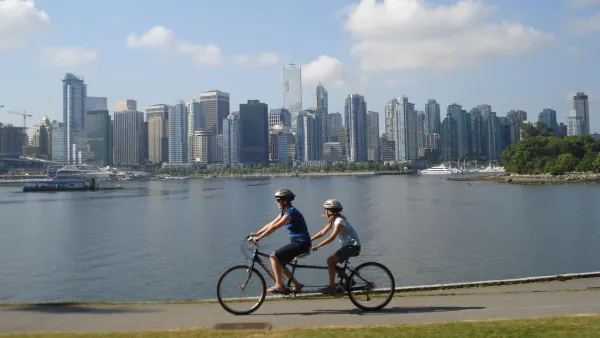
Why Has 'Vancouverism' Become a Hard Sell in Canada?
Vancouver's remarkable experiment in livable density is the envy of, and model for, cities across the world. So, after a decade of skyline expansion across Canada, why has densification 'lost steam' in the country? Doug Saunders investigates.
Preserving Industrial Areas for Jobs
Only 10% of the City of Vancouver, B.C. isn't zoned for residences, and that 10% holds 50% of the city's jobs. Planning director Brent Toderian says it is imperative to preserve the remaining industrial land for employment.
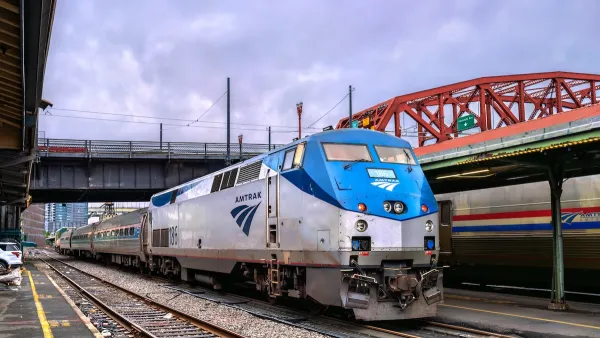
Transit leaders progress high-speed rail from Portland to Vancouver, B.C.
Washington state officials may reveal feasible routes for the high-speed rail in late 2027.

Desperate measures: Advocates weigh draining Lake Powell to fill Colorado River
Draining the reservoir could reduce evaporation losses by a couple hundred thousand acre-feet.

Eastern Nebraska is running out of electricity
Data centers and electrification are straining eastern Nebraska’s grid, throttling economic development.

Malls are becoming the midtowns of the future
Mall and office park redevelopments are a generational opportunity to create new nodes of urbanity.

NYC breaks ground on anti-flooding infrastructure project
New York City's new system will reduce stormwater flows to local sewers by 90%.

One Kentucky town’s secret to affordable housing
The Smoketown Community Land Trust has already built seven affordable homes for community members.

Houston gains petal-shaped cooling infrastructure to make streets more ‘delightful’
The city has installed the pavilions along 15 blocks in Houston.

FREE Course: Walkable City 1: Why Walkability?
After describing his path towards focusing on walkability as the essence of good planning, Jeff Speck marches through his five principal reasons for making more walkable places.
Reinventing Malls: Planning Alchemy—Turning Gray Fields Into Gold
The course focuses on the opportunities and imperatives that shape reinvention of mall sites.

City of Rosemead
Rutgers University, Edward J. Bloustein School of Planning and Public Policy
One Hundred Miles
University of Michigan School for Environment and Sustainability (SEAS)
Hunter College, City University of New York (CUNY)
The Architects Foundation
City of Cambridge
Montrose County
The Pocatello Development Authority