The real estate market will only recover once developers start building the types of neighborhoods and places people are demanding, according to Patrick C. Doherty and Christopher B. Leinberger.


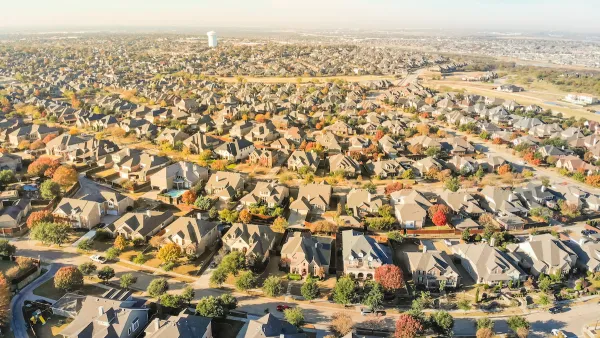
Car-dependent neighborhoods are in oversupply, and there is a need for more walkable and compact neighborhood developments, according to Doherty and Leinberger.
"At the heart of this opportunity are the underappreciated implications of a massive demographic convergence. In short, the two largest demographic groups in the country, the baby boomers and their children-together comprising half the population-want homes and commercial space in neighborhoods that do not exist in anywhere near sufficient quantity. Fixing this market failure, unleashing this latent demand, and using it to put America back to work could be accomplished without resorting to debt-building stimulus or layoff-inducing austerity. At least for the moment, Washington has an opportunity to speed up private investment for public good and launch what could be a period of long-lasting prosperity. It is a market-driven way to make the economic recovery sustainable while addressing many of the most serious problems of our time: the health care crisis, climate change, over-reliance on oil from countries with terrorist ties, and an overextended military."
Read the full story: The Next Real Estate Boom

Why Jeff Speck is a “Zoning Abolitionist”
Decades into his career, the walkability guru has learned a thing or two.
Zoning for Good
A new book highlights the power of zoning to change communities for the better.

Being a Non-Driver in a Car-Dependent World
A third or more of Americans cannot drive due to their age, ability, or other factors. How can their travel needs inform our transportation systems?

Planetizen Federal Action Tracker
A weekly monitor of how Trump’s orders and actions are impacting planners and planning in America.

California plans to bury El Niño’s downpour
If the state plays its cards right, it may be able to store a billion acre-feet of El Niño’s water in aquifers.

Desperate measures: Advocates weigh draining Lake Powell to fill Colorado River
Draining the reservoir could reduce evaporation losses by a couple hundred thousand acre-feet.

In Texas, data centers are swallowing promised parkland
Residents who moved to Taylor, Texas for a rural community now have to contend with three data centers in their backyard.

How a Chicago-sized wind farm beat the odds and powered on
The project spanned five presidential administrations and a standoff with a U.S. military base.

MTA gives itself 30 days to transform pit into basketball court
The site has been under construction since 2022; the city originally estimated it would finish the court in 2024.

FREE Course: Walkable City 1: Why Walkability?
After describing his path towards focusing on walkability as the essence of good planning, Jeff Speck marches through his five principal reasons for making more walkable places.
Reinventing Malls: Planning Alchemy—Turning Gray Fields Into Gold
The course focuses on the opportunities and imperatives that shape reinvention of mall sites.

City of Rosemead
Rutgers University, Edward J. Bloustein School of Planning and Public Policy
One Hundred Miles
Hunter College, City University of New York (CUNY)
The Architects Foundation
University of Cincinnati Online
City of Cambridge
Montrose County
The Pocatello Development Authority