High Speed Rail, regardless of how glamorous it appears to be, is nothing but a waste of money in the U.S., claims Robert Samuelson. If states want HSR, let them build it themselves without federal subsidy, he concludes as there is no national gain.


Samuelson doesn't have a kind word for high speed rail, other than suggesting it might work well in Europe and Asia because of their higher population densities.
"Intercity trains-at whatever speed-target such a small part of total travel that the effects on reduced oil use, traffic congestion, and greenhouse gases must be microscopic. We are prisoners of economic geography. Suburbanization after World War II made most rail travel impractical.
Obama calls high-speed rail essential "infrastructure" when it's actually old-fashioned "pork barrel." The interesting question is why it retains its intellectual respectability. The answer, it seems, is willful ignorance.
High-speed rail would subsidize a tiny group of travelers and do little else. If states want these projects, they should pay all costs because there are no meaningful national gains."
[Robert J. Samuelson "has been writing a bi-weekly column for Newsweek since 1984. The column concentrates on the economy and socio-economic and political issues. His Newsweek column is reprinted on the op-ed page of the Washington Post"].
Thanks to Loren Spiekerman
Read the full story: High-Speed Pork - Why fast trains are a waste of money

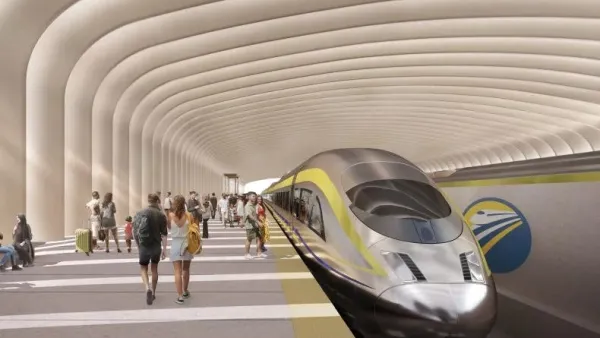
California High-Speed Rail's Plan to Right Itself
The railroad's new CEO thinks he can get the project back on track. The stars will need to align this summer.
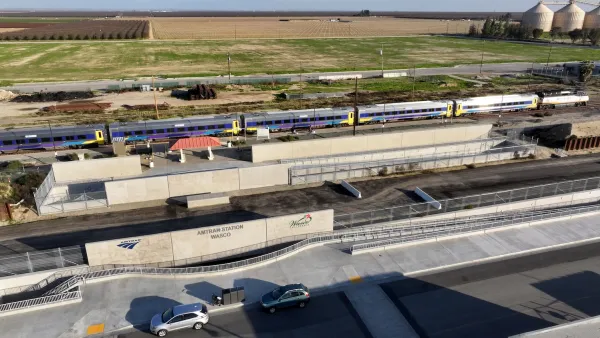
Trump: Federal Government Won’t Pay for California HSR
The President has targeted federal funding for the California bullet train project since his first administration.
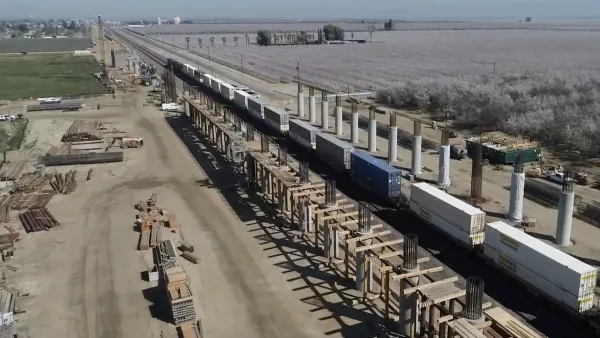
California HSR Could Be Up and Running by 2033
A newly restructured leadership promises to speed up the arduous construction process and start running trains in five to eight years.

Planetizen Federal Action Tracker
A weekly monitor of how Trump’s orders and actions are impacting planners and planning in America.

Amtrak, CN end decades-long dispute with eight-year agreement
The new operating agreement establishes an updated framework for the companies to work together, including processes to resolve disputes.

Judges permit Denver to divert 77,000 acre feet from the Colorado River for reservoir expansion
Overuse and climate change have caused the Colorado River’s water levels to plummet.

NYC DOT wants faster, more permanent street upgrades
The city is examining ways to build more concrete infrastructure without getting entangled in 'decades-long' projects.

'Something we’ve never seen before:' rising utility rates could strain city finances nationwide
Data centers, climate change and other factors have caused utility rates in the United States to increase by 38% since 2020.

Trump to overrule local leaders, lease millions of acres of America’s Pacific Island territories’ seafloors to mining companies
International law says that the Indigenous people of America’s territories have a right to prior and informed consent regarding projects that impact their countries.

FREE Course: Walkable City 1: Why Walkability?
After describing his path towards focusing on walkability as the essence of good planning, Jeff Speck marches through his five principal reasons for making more walkable places.
Reinventing Malls: Planning Alchemy—Turning Gray Fields Into Gold
The course focuses on the opportunities and imperatives that shape reinvention of mall sites.

Harvard University Graduate School of Design
KFH Group Inc.
Greater Baltimore Committee
The Architects Foundation
University of Cincinnati Online
The Pocatello Development Authority
The Urban Renewal Agency of the City of Pocatello