With Haiti's capital city in ruins, and emergency response still underway, rebuilding efforts are a ways off. But the rebuilding following recent disasters may provide guidance, writes Mark MacKinnon.


The task ahead seems almost impossible:
"With as many as 45,000 people believed to be dead, it's hard to imagine that eventually life will return to something approaching normal in Port-au-Prince...But history tells us that Port-au-Prince will rebuild and recover, at least to its previous state...Simply rebuilding Haiti is one thing, reconstructing Haitian communities is another....People who have lost their homes and livelihoods usually welcome outside help. But they don't want to be cut out when their community is being reconstructed. In the end, Haitians must decide what they want the rebuilt Port-au-Prince to look like."
MacKinnon suggests that China's experience rebuilding Sichuan, as well as the Indonesian efforts following the tsunami show how, with locally-appropriate planning that avoids "cookie-cutter solutions," disasters can result in improved living conditions.
Read the full story: How to Fix Port-au-Prince

Planetizen Federal Action Tracker
A weekly monitor of how Trump’s orders and actions are impacting planners and planning in America.

Eastern Nebraska is running out of electricity
Data centers and electrification are straining eastern Nebraska’s grid, throttling economic development.
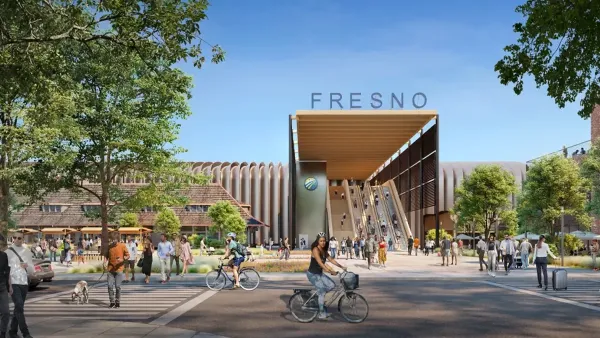
California High-Speed Rail Authority picks trainset manufacturer
The California High-Speed Rail Authority aims to start servicing passengers by 2033.

States are counting on battery farms. Some towns don’t want them.
While fire safety has improved, some communities are still wary.

Dallas releases zoning code overhaul to officials
The drafted overhaul is over 400 pages long.

NYC renovations for dangerous, ‘mercilessly crammed’ street delayed until 2027
Construction was supposed to begin this fall.

FREE Course: Walkable City 1: Why Walkability?
After describing his path towards focusing on walkability as the essence of good planning, Jeff Speck marches through his five principal reasons for making more walkable places.
Reinventing Malls: Planning Alchemy—Turning Gray Fields Into Gold
The course focuses on the opportunities and imperatives that shape reinvention of mall sites.

City of Rosemead
Rutgers University, Edward J. Bloustein School of Planning and Public Policy
One Hundred Miles
University of Michigan School for Environment and Sustainability (SEAS)
Hunter College, City University of New York (CUNY)
The Architects Foundation
City of Cambridge
The Pocatello Development Authority
The Urban Renewal Agency of the City of Pocatello