


















Economist Edward L. Glaeser crunches the numbers on a hypothetical high speed rail line between Dallas and Houston and finds the costs prohibitive.


"I'm going to frame the discussion around an imaginary 240-mile link between Dallas and Houston, but the basic formula for direct costs and benefit is general:
Number of Riders times (Benefit per Rider minus Variable Costs per Rider) minus Fixed Costs.
I'm simplifying, but a formula needs to be simple if interested parties can seriously debate the numbers, and the only way that America is going to get to the right answer on public investments is if numbers trump rhetoric. I will plug illustrative figures into the formula, but not only am I well aware that every number here is debatable, I am hoping for just that debate."
He bases his figures on comparable costs from other rail lines from around the world, as well as estimates of interest rates on the bonds and loans required to fund the project.
Thanks to Reconnecting America
FULL STORY: Running the Numbers on High-Speed Trains


Brightline West Moves Forward With Finalized Federal Funding
The high-speed rail line will connect Southern California and Las Vegas via a two-hour trip along Interstate 15.
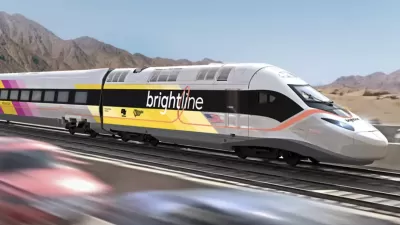
Las Vegas-to-L.A. High-Speed Rail Project Passes Another Hurdle
The segment between Rancho Cucamonga and the high desert town of Victorville received a key approval, with groundbreaking scheduled for later this year.
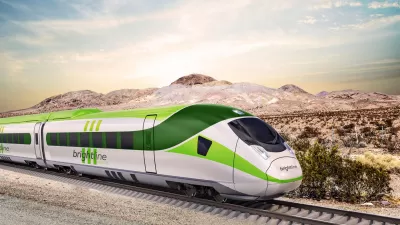
L.A.-Las Vegas High Speed Rail Could Break Ground Next Year
The privately funded train would shuttle passengers between Los Angeles and Las Vegas in half the time it takes to drive and could take 3 million vehicles off the road.
Planetizen Federal Action Tracker
A weekly monitor of how Trump’s orders and actions are impacting planners and planning in America.
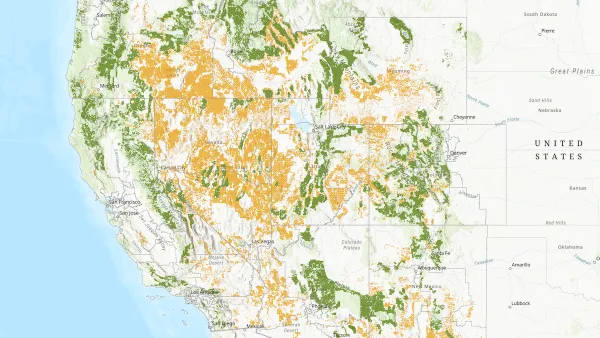
Map: Where Senate Republicans Want to Sell Your Public Lands
For public land advocates, the Senate Republicans’ proposal to sell millions of acres of public land in the West is “the biggest fight of their careers.”
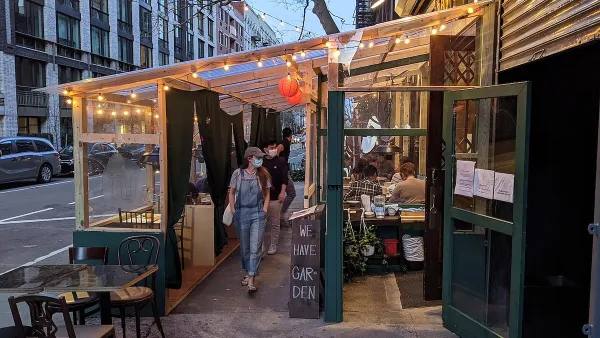
Restaurant Patios Were a Pandemic Win — Why Were They so Hard to Keep?
Social distancing requirements and changes in travel patterns prompted cities to pilot new uses for street and sidewalk space. Then it got complicated.

Platform Pilsner: Vancouver Transit Agency Releases... a Beer?
TransLink will receive a portion of every sale of the four-pack.

Toronto Weighs Cheaper Transit, Parking Hikes for Major Events
Special event rates would take effect during large festivals, sports games and concerts to ‘discourage driving, manage congestion and free up space for transit.”

Berlin to Consider Car-Free Zone Larger Than Manhattan
The area bound by the 22-mile Ringbahn would still allow 12 uses of a private automobile per year per person, and several other exemptions.

Urban Design for Planners 1: Software Tools
This six-course series explores essential urban design concepts using open source software and equips planners with the tools they need to participate fully in the urban design process.
Planning for Universal Design
Learn the tools for implementing Universal Design in planning regulations.

Heyer Gruel & Associates PA
JM Goldson LLC
Custer County Colorado
City of Camden Redevelopment Agency
City of Astoria
Transportation Research & Education Center (TREC) at Portland State University
Camden Redevelopment Agency
City of Claremont
Municipality of Princeton (NJ)