



















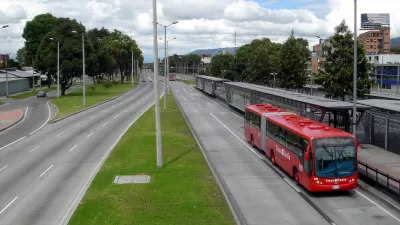
Bogota, Colombia's bus rapid transit system is seen as a shining example of how buses can make up a good public transportation system in cities. It's also being looked at as a model for fighting climate change.


The New York Times looks at the system and it's clean-burning buses and discusses what other cities' transit systems (and officials) can learn.
"[S]leek, red vehicles full of commuters speed down the four center lanes of Avenida de las Américas. The long, segmented, low-emission buses are part of a novel public transportation system called bus rapid transit, or B.R.T. It is more like an above-ground subway than a collection of bus routes, with seven intersecting lines, enclosed stations that are entered through turnstiles with the swipe of a farecard and coaches that feel like trams inside. Versions of these systems are now being planned or built in dozens of developing cities around the world - Mexico City, Cape Town, Jakarta, Indonesia, and Ahmedabad, India, to name a few - providing a public transportation network that improves traffic flow and reduces smog at a fraction of the cost of building a subway.
But the rapid transit systems have another benefit: they may hold a key to combating climate change."
FULL STORY: Cleaner Buses in Developing World May Be Key for Climate

Bogota's TransMilenio Turns 10
Bogota's integrated mass transit system has been operation for a decade and continues to grow, but faces challenges for the coming years, from the constant growth in ridership to irregularities in construction contracts.
Looking to the Future as TransMilenio Turns 20
The world's most famous, and influential, bus rapid transit system, which served 2.4 million riders a day in Bogotá in the days before the pandemic, offers lessons in transit planning and management as it enters its third decade.

Is It Time to Rethink the Legacy of Enrique Peñalosa?
Negative responses to the "Most Influential Urbanists" list published last week overwhelmingly focused on one name on the list: Enrique Peñalosa.
Planetizen Federal Action Tracker
A weekly monitor of how Trump’s orders and actions are impacting planners and planning in America.
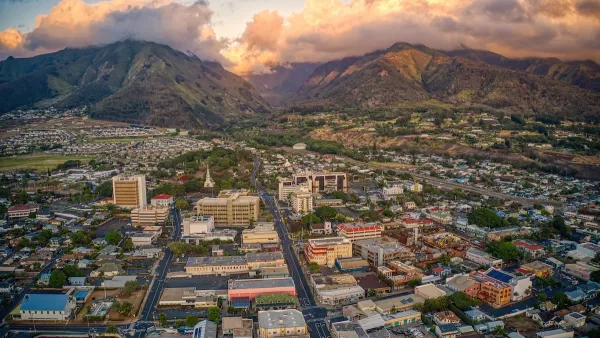
Maui's Vacation Rental Debate Turns Ugly
Verbal attacks, misinformation campaigns and fistfights plague a high-stakes debate to convert thousands of vacation rentals into long-term housing.
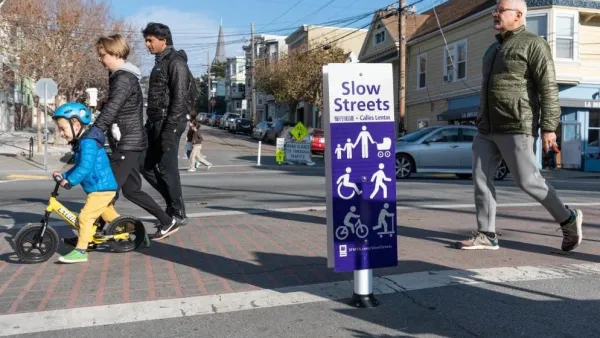
San Francisco Suspends Traffic Calming Amidst Record Deaths
Citing “a challenging fiscal landscape,” the city will cease the program on the heels of 42 traffic deaths, including 24 pedestrians.

Defunct Pittsburgh Power Plant to Become Residential Tower
A decommissioned steam heat plant will be redeveloped into almost 100 affordable housing units.

Trump Prompts Restructuring of Transportation Research Board in “Unprecedented Overreach”
The TRB has eliminated more than half of its committees including those focused on climate, equity, and cities.

Amtrak Rolls Out New Orleans to Alabama “Mardi Gras” Train
The new service will operate morning and evening departures between Mobile and New Orleans.

Urban Design for Planners 1: Software Tools
This six-course series explores essential urban design concepts using open source software and equips planners with the tools they need to participate fully in the urban design process.
Planning for Universal Design
Learn the tools for implementing Universal Design in planning regulations.

Heyer Gruel & Associates PA
JM Goldson LLC
Custer County Colorado
City of Camden Redevelopment Agency
City of Astoria
Transportation Research & Education Center (TREC) at Portland State University
Jefferson Parish Government
Camden Redevelopment Agency
City of Claremont