Three years after the publication of The High Cost of Free Parking, Prof. Don Shoup's work has begun to take hold across the country. Cities from San Francisco to Washington, DC, are starting to curb traffic and recognize the true cost of parking.


"Shoup contends that many cities, hamstrung by convention, superstition and guidelines hearkening back to the halcyon days of suburban sprawl, have been giving away their most valuable real estate: parking spaces. Shoup has waged a campaign to convince cities to revolutionize their parking policies, from charging higher meter prices to allowing communal lots to reducing sacrosanct minimum parking requirements. Such efforts, he says, could speed the flow of traffic, encourage denser development, rehabilitate pedestrian environments and even make it easier to find a place to park. Now, four years after his book's publication, cities across America are devising ways to stop parking in its tracks."
"Leading the pack is San Francisco, where the new SFPark program has received $23 million in federal funding. SFPark takes nearly the entire suite of Shoupisms to heart and is implementing them in an 18-month pilot project that will apply to 7,000 curbside and over 11,000 off-street spaces. It will rely heavily on cutting-edge meter and data-gathering technology to adjust rates and reduce congestion."
Thanks to Josh Stephens
Read the full story: Putting Parking into Reverse

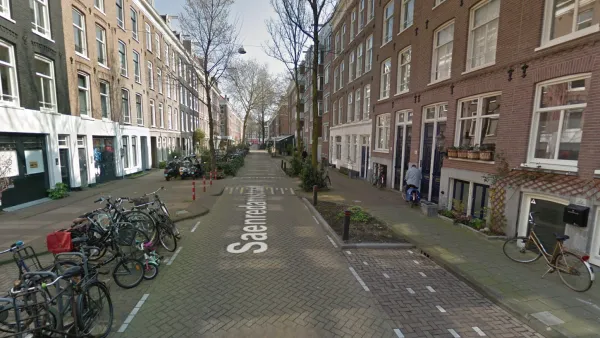
Watch: How to Remove Thousands of Parking Spaces
What the city of Amsterdam will gain by removing cars from on-street parking space.

Dynamic Parking Prices Coming to Milwaukee
One of the key elements of progressive parking policy, as recommended by Donald Shoup, is on the way to the on-street parking meters in the city of Milwaukee.
Two New Parking Policies Put Portland in the Lead on Parking
Portland will implement dynamic meter pricing and parking districts, making it the leader in progressive parking policies in the Pacific Northwest, according to this article.

Planetizen Federal Action Tracker
A weekly monitor of how Trump’s orders and actions are impacting planners and planning in America.

Amtrak, CN end decades-long dispute with eight-year agreement
The new operating agreement establishes an updated framework for the companies to work together, including processes to resolve disputes.

Colorado’s Largest Data Center Could Rise Next to Homes — Without a Public Hearing
The proposed campus would consume 11 times the power of Denver International Airport; as it has across the country, opposition mounts.

'This is going to be painful:’ Virginia stares down $1.7 billion funding gap for highway maintenance
The state may address the deficit by shifting $290 million from its construction budget to maintenance projects.

Judges permit Denver to divert 77,000 acre feet from the Colorado River for reservoir expansion
Overuse and climate change have caused the Colorado River’s water levels to plummet.
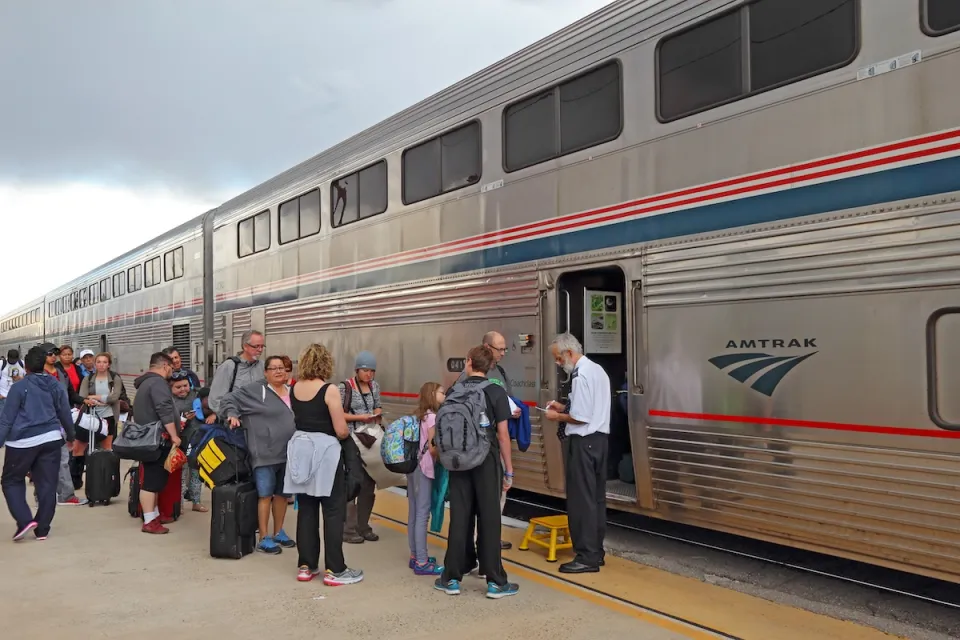
Amtrak, CN end decades-long dispute with eight-year agreement
The new operating agreement establishes an updated framework for the companies to work together, including processes to resolve disputes.

FREE Course: Walkable City 1: Why Walkability?
After describing his path towards focusing on walkability as the essence of good planning, Jeff Speck marches through his five principal reasons for making more walkable places.
Reinventing Malls: Planning Alchemy—Turning Gray Fields Into Gold
The course focuses on the opportunities and imperatives that shape reinvention of mall sites.

KFH Group Inc.
Greater Baltimore Committee
Eagle County Government
The Architects Foundation
University of Cincinnati Online
The Pocatello Development Authority
The Urban Renewal Agency of the City of Pocatello