




















Ninevah, one of the world's most endangered heritage sites, is deteriorating due to recent development and urban sprawl, say officials.


'There is very little left of Ninevah now because of the encroachment,' says Muzahim Hussein, director of antiquities in Ninevah Province. Mr. Hussein says renovation in the 1990s of the Nebi Younis mosque – dedicated to the prophet Jonah and built on the site of an older church – destroyed part of the ancient city, across the river from modern Mosul.
'There are many treasures under there, but archaeologists could not stop the renovation,' says Hussein, who believes there is an Assyrian palace buried underneath the site. 'The department of antiquities could not stop the renovations because it was done by President Saddam Hussein himself, and because religiously, it's a holy place and you can't excavate near it or under it.'
The Iraqi archaeologist's excavation at Nebi Younis in 1990 revealed neo-Assyrian sculptures that appeared to be the entrance to a palace. Hussein says he wrapped them in plastic and buried them again to hide and protect them.
Conservation experts say that in Ninevah, unlike more remote archaeological sites in southern Iraq, urbanization is more of a threat than looting is. Ninevah was once the most powerful city in the ancient world. In the 7th century BC, the city was the wealthy capital of an empire stretching from the Nile Valley to the Caucasus mountains."
FULL STORY: Iraq's urban sprawl, not looting, threatens Ninevah antiquities

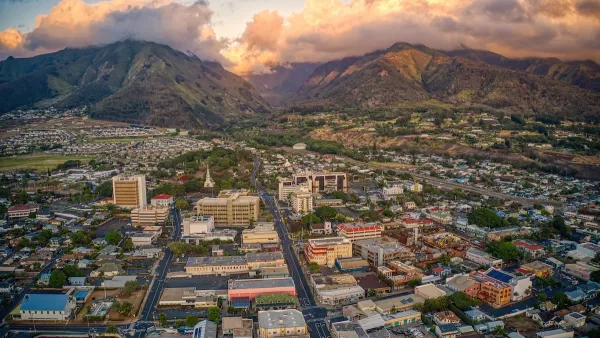
Maui's Vacation Rental Debate Turns Ugly
Verbal attacks, misinformation campaigns and fistfights plague a high-stakes debate to convert thousands of vacation rentals into long-term housing.

Planetizen Federal Action Tracker
A weekly monitor of how Trump’s orders and actions are impacting planners and planning in America.
In Urban Planning, AI Prompting Could be the New Design Thinking
Creativity has long been key to great urban design. What if we see AI as our new creative partner?

King County Supportive Housing Program Offers Hope for Unhoused Residents
The county is taking a ‘Housing First’ approach that prioritizes getting people into housing, then offering wraparound supportive services.

Researchers Use AI to Get Clearer Picture of US Housing
Analysts are using artificial intelligence to supercharge their research by allowing them to comb through data faster. Though these AI tools can be error prone, they save time and housing researchers are optimistic about the future.

Making Shared Micromobility More Inclusive
Cities and shared mobility system operators can do more to include people with disabilities in planning and operations, per a new report.

Urban Design for Planners 1: Software Tools
This six-course series explores essential urban design concepts using open source software and equips planners with the tools they need to participate fully in the urban design process.
Planning for Universal Design
Learn the tools for implementing Universal Design in planning regulations.

planning NEXT
Appalachian Highlands Housing Partners
Mpact (founded as Rail~Volution)
City of Camden Redevelopment Agency
City of Astoria
City of Portland
City of Laramie