This column deals with two Seattle issues: one political - the victory of a transit measure on Nov. 4 that will direct $18 billion to light rail; the other human - a Sierra Club activist who made the campaign for Prop 1 a full time job.


A year ago "the Sierra Club, practically alone, opposed a massive roads and rail plan. Mike O'Brien argued the roads portion was poison. After voters turned it all down, I sent O'Brien a nasty e-mail, congratulating him for joining the ranks of backward Seattleites who have denied the city rapid transit for generations."
"Nine months ago (O'Brien) quit his job as chief financial officer of the corporate law firm Stokes Lawrence so he could push for (a better transit measure) full time. For no pay."
"The vote Nov. 5 (sic) to tax ourselves $17.8 billion for light rail was a watershed. Not only did it end 40 years of dithering about rapid transit, but the landslide win sent the clearest message yet to any future roads plans: Be green, or be dead."
"Anything green wins - from buses to rail to HOV lanes. Or, as we're probably about to find out, congestion tolling."
"It's a huge story, a major shift in the way this city thinks and lives," (O'Brien) said, after rolling up to a downtown coffeehouse on his bicycle the other day. "What's exciting is that it's coming from the bottom up. The public intuitively gets it better than the politicians."
Thanks to John Holtzclaw
Read the full story: Green fever colors the future of roads
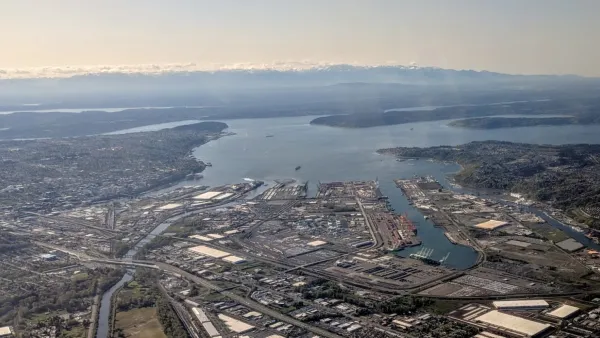
Election 2019: Devastating Transportation Funding Loss in Pacific Northwest
Washington voters' approval of Initiative 976, which put a limit on car tab increases as well as repealing many motor vehicle fees, will have far-reaching consequences for funding road maintenance, transit, and bike and pedestrian projects.
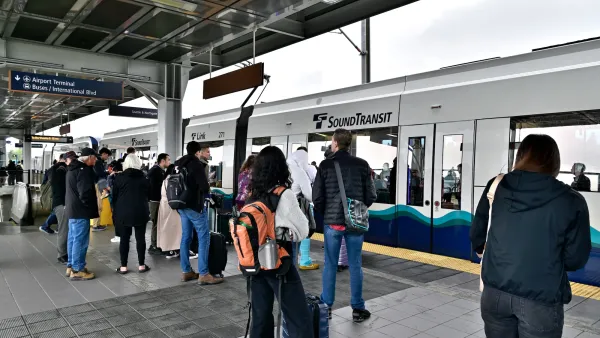
Seattle light rail 'shatters' national ridership records with 155,000 daily rides
Sound Transit rail ridership rose sharply after the agency opened a new cross-lake connection.
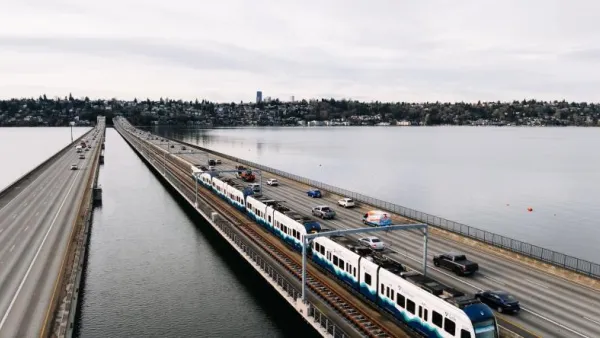
Seattle’s Floating Light Rail Bridge to Open March 28
The new East Link segment of King County’s light rail system crosses Lake Washington on a first-of-its-kind floating bridge.

Desperate measures: Advocates weigh draining Lake Powell to fill Colorado River
Draining the reservoir could reduce evaporation losses by a couple hundred thousand acre-feet.

Eastern Nebraska is running out of electricity
Data centers and electrification are straining eastern Nebraska’s grid, throttling economic development.

Move over, LA: St. Louis gears up for Olympics, invests millions in downtown redevelopment
The Missouri city will host the 2028 Olympic soccer group stage and knockout matches.

Mass. votes against statewide minimum lot size for single-family homes
Over 2 million residents voted on Question 7; it was decided by just over 30,000 votes.

Maryland’s $15 billion bridge project gains key approval
The Maryland Transit Authority said the project will create over 60,000 jobs and add $23 billion to the local economy.

‘No clear next steps’ for Chicago's permanent festival grounds
Eleventh Ward Ald. Nicole Lee has suggested Soldier Field as a possible location for the permanent event space.

FREE Course: Walkable City 1: Why Walkability?
After describing his path towards focusing on walkability as the essence of good planning, Jeff Speck marches through his five principal reasons for making more walkable places.
Reinventing Malls: Planning Alchemy—Turning Gray Fields Into Gold
The course focuses on the opportunities and imperatives that shape reinvention of mall sites.

City of Rosemead
Rutgers University, Edward J. Bloustein School of Planning and Public Policy
One Hundred Miles
University of Michigan School for Environment and Sustainability (SEAS)
Hunter College, City University of New York (CUNY)
The Architects Foundation
City of Cambridge
Montrose County
The Pocatello Development Authority