Baltimore considers following in the footsteps of Paris, San Francisco and Copenhagen by opening a "design center", a place for people to gather and debate the design of their city.


Klaus Philipsen, a local architect and co-chairman of the Urban Design Committee of Baltimore's AIA chapter, is one of the minds behind the plan.
""What we don't have is a place where ... you know that design is discussed and you can see what is happening in Baltimore," Philipsen said.
The purpose of the meeting next week is to find out who might want to pursue the idea. No specific location has been identified for a Baltimore design center, he said.
"It's a litmus test to see if there is interest and, if so, what should be in it" and where it might be, he said of the meeting. "Everything is on the table right now."
Some design centers are primarily commercial settings where designers and clients select furniture, fixtures and textiles, but that isn't primarily what is envisioned, said Craig Purcell, another local architect who has been involved in the preliminary discussions. He said he envisions a design center as "a place for exploration and communication and exchange of ideas."
He said it would be an urban laboratory where students from different colleges might share facilities, and where people could learn about the latest redevelopment plans for the State Office Center or the East Baltimore renewal area or Charles North.
Depending on who runs it, he said, elements likely would include an extensive design library, galleries, academic studios and meeting rooms. Once it becomes established, he said, it could anchor a larger design district that could include commercial space for designers and showrooms for companies serving the building industry.""
Read the full story: Architects and planners ponder a city design center
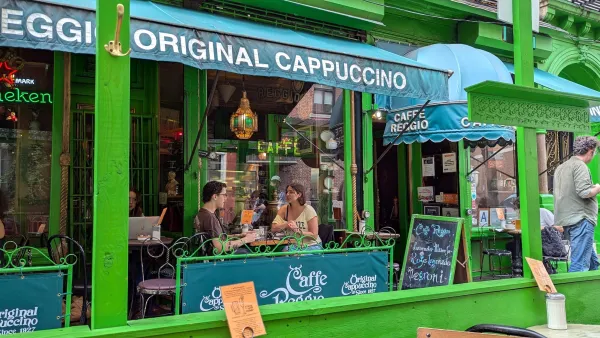
From SoHo to SoDoSoPa
How zoning made great neighborhoods illegal to build, and preordained gentrification.
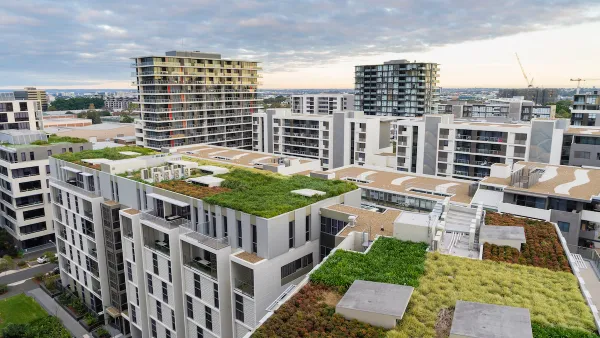
Where Urban Design Is Headed in 2024
A forecast of likely trends in urban design and architecture.
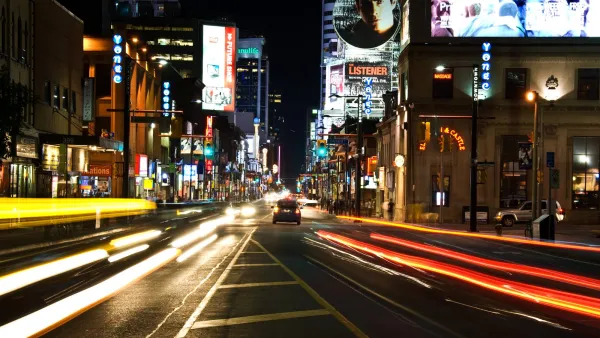
A Pedestrian-Forward Vision for Toronto Roadway
Toronto’s iconic Yonge Street is heavily used by pedestrians, and, according to this article, it's time for a revamp that acknowledges all of the street's users.

Desperate measures: Advocates weigh draining Lake Powell to fill Colorado River
Draining the reservoir could reduce evaporation losses by a couple hundred thousand acre-feet.

Eastern Nebraska is running out of electricity
Data centers and electrification are straining eastern Nebraska’s grid, throttling economic development.

Malls are becoming the midtowns of the future
Mall and office park redevelopments are a generational opportunity to create new nodes of urbanity.

NYC breaks ground on anti-flooding infrastructure project
New York City's new system will reduce stormwater flows to local sewers by 90%.

One Kentucky town’s secret to affordable housing
The Smoketown Community Land Trust has already built seven affordable homes for community members.

Houston gains petal-shaped cooling infrastructure to make streets more ‘delightful’
The city has installed the pavilions along 15 blocks in Houston.

FREE Course: Walkable City 1: Why Walkability?
After describing his path towards focusing on walkability as the essence of good planning, Jeff Speck marches through his five principal reasons for making more walkable places.
Reinventing Malls: Planning Alchemy—Turning Gray Fields Into Gold
The course focuses on the opportunities and imperatives that shape reinvention of mall sites.

City of Rosemead
Rutgers University, Edward J. Bloustein School of Planning and Public Policy
One Hundred Miles
University of Michigan School for Environment and Sustainability (SEAS)
Hunter College, City University of New York (CUNY)
The Architects Foundation
City of Cambridge
Montrose County
The Pocatello Development Authority