


The Golden Gate Bridge has a four foot railing along its pedestrian sidewalk. Mental health advocates have long demanded that a barrier be placed to prevent those intent on suicide from jumping, and point to studies showing why it is needed.


High School teacher Ken Baldwin jumped off the Golden Gate Bridge in a suicide attempt almost 23 years ago and survived, as have only about 2% of the 1,300 leapers. In fact, a suicide is attempted off the landmark bridge about once every 10 days. "Yet for seven decades, the Golden Gate Bridge Highway and Transportation District has pushed aside evidence that prompted the construction of effective barriers on other bridges and landmarks, including the Eiffel Tower in Paris."
One argument against building the barrier is to not alter its appearance, Yet,"the bridge district this year found $25 million to install a movable median to divide two-way traffic on the bridge, where a total of five head-on collisions have claimed a single life since 1997." [See related link].
A "University of California survey found that nine out of 10 people prevented from jumping off the Golden Gate (by passersby or by the patrols that roam the bridge looking for likely jumpers) were still alive years later or had died of natural causes, despite the rationale that a barrier would prompt them only to "go somewhere else to end it.
The study is part of a growing body of scientific literature that explodes persistent myths about suicide while reinforcing a simple principle: When it is harder to kill oneself, fewer people do so."
"Advocates note that British authorities reached past the taboos that swirl about suicide to address it as a public health issue. Understanding that reducing "easy access to lethal means" translates into saved lives, the Brits stopped the sale of non-steroidal painkillers in bulk, making the pills available only in blister packs."
Thanks to MTC library
FULL STORY: The Golden Gate: A Bridge Too Deadly?


Making the Golden Gate Bridge Safer for Cyclists
The Golden Gate Bridge District is looking at ways to improve safety on the bridge's narrow, windy bike and pedestrian paths.
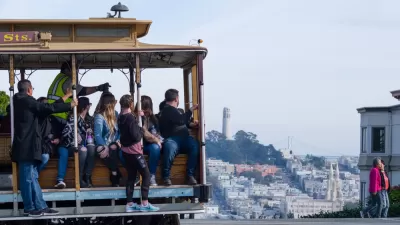
Post-Pandemic Transit Plan Announced in San Francisco
The recently announced post-COVID plan for public transit in San Francisco looks a lot different than the pre-COVID days.
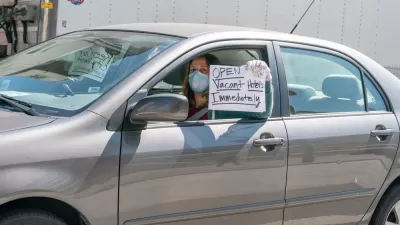
Hotels Could Play a Critical Role in Containing Coronavirus in Crowded Cities
Some cities are leasing entire hotels to provide rooms for people who have tested positive for COVID-19 or been exposed to infected people, to allow for safe and supportive isolation away from family or household members who risk being infected.
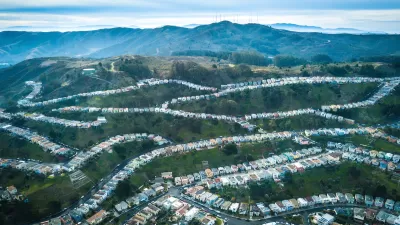
Depopulation Patterns Get Weird
A recent ranking of “declining” cities heavily features some of the most expensive cities in the country — including New York City and a half-dozen in the San Francisco Bay Area.

California Exodus: Population Drops Below 39 Million
Never mind the 40 million that demographers predicted the Golden State would reach by 2018. The state's population dipped below 39 million to 38.965 million last July, according to Census data released in March, the lowest since 2015.
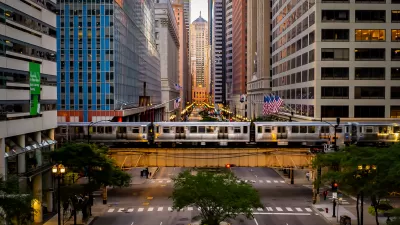
Chicago to Turn High-Rise Offices into Housing
Four commercial buildings in the Chicago Loop have been approved for redevelopment into housing in a bid to revitalize the city’s downtown post-pandemic.

New Park Opens in the Santa Clarita Valley
The City of Santa Clarita just celebrated the grand opening of its 38th park, the 10.5-acre Skyline Ranch Park.

U.S. Supreme Court: California's Impact Fees May Violate Takings Clause
A California property owner took El Dorado County to state court after paying a traffic impact fee he felt was exorbitant. He lost in trial court, appellate court, and the California Supreme Court denied review. Then the U.S. Supreme Court acted.

How Urban Form Impacts Housing Affordability
The way we design cities affects housing costs differently than you might think.
City of Costa Mesa
Licking County
Barrett Planning Group LLC
HUD's Office of Policy Development and Research
Mpact Transit + Community
HUD's Office of Policy Development and Research
City of Universal City TX
ULI Northwest Arkansas
Town of Zionsville

Urban Design for Planners 1: Software Tools
This six-course series explores essential urban design concepts using open source software and equips planners with the tools they need to participate fully in the urban design process.
Planning for Universal Design
Learn the tools for implementing Universal Design in planning regulations.
