This op-ed, transportation expert and Brookings Institution researcher Rob Puentes discusses the need for the Dulles Metro-rail project and how it has become a pawn in a bureaucratic chess match.


Puentes makes the argument for why metropolitan areas will go it alone for the sake of its citizens: "Clearly, some kind of competitive process is warranted. However, the current bureaucratic rigmarole is so torturous, it is no wonder that some metropolitan areas are forgoing the federal process completely and funding new transit segments on their own."
It is vastly important for local, state and the federal government, along with the private sector to work cooperatively, rather than against one another, for the sake of these individual economies, which are the engines of prosperity for the nation at-large.
"The Dulles dust-up is not a unique disease, but rather a symptom of a much larger national transportation illness. As hard as it may be to think of a $5 billion mega-transportation project as a "microcosm" of anything, right now that is exactly how one should consider the Dulles rail controversy."
"The disagreements about the planned 23-mile Metrorail line through Tysons Corner in Virginia, continuing to Dulles International Airport - stalled now due to ideological differences over the appropriate federal role in transportation - are a subset of a larger battle taking place."
Thanks to Rob Puentes
Read the full story: Keeping Controversial Dulles Project on Track


Planetizen Federal Action Tracker
A weekly monitor of how Trump’s orders and actions are impacting planners and planning in America.
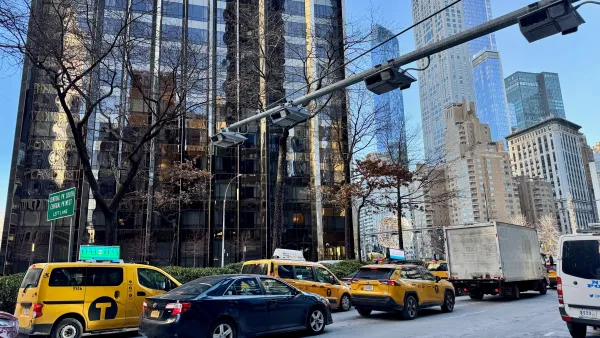
Data reveals that NYC’s bet on congestion pricing has paid off
After almost two years of the program, reports show positive impacts on traffic and air quality and no disruptions to parking.

Denver is solving homelessness. Why aren't the rest of us?
Since 2023, Denver's street homeless population has decreased by 64%, proving that effective tools exist to support those in need of housing.

Will sprawl save California?
California residents will vote on Proposition 45 in November, which would make it easier to build large housing developments on the outskirts of the state’s cities.

Texas suburbs are popping up around old oil wells. Some are starting to leak
Several plugged wells in Texas have failed in recent years, endangering those who unknowingly settled nearby.

This Chicago neighborhood is using planning to increase life expectancy
The Garfield Park Quality-Of-Life Plan aims to bring residents everything from easier access to fresh food to revitalized commercial corridors.

FREE Course: Walkable City 1: Why Walkability?
After describing his path towards focusing on walkability as the essence of good planning, Jeff Speck marches through his five principal reasons for making more walkable places.
Reinventing Malls: Planning Alchemy—Turning Gray Fields Into Gold
The course focuses on the opportunities and imperatives that shape reinvention of mall sites.

Rutgers University, Edward J. Bloustein School of Planning and Public Policy
One Hundred Miles
County of Mendocino
The Architects Foundation
University of Cincinnati Online
Montrose County
Northern Illinois Transit Authority (NITA)
The Pocatello Development Authority