Plans for a North American Superhighway will have major environmental effects, argues this article from The Valley Advocate of Connecticut.


"I-69 is a massive superhighway that already extends from Ontario to Indianapolis (through Michigan). There are plans to resume construction next spring and push it through southern Indiana, Kentucky, Tennessee, Mississippi, Arkansas, Louisiana and Texas, where it will connect with the highways of the Plan Puebla Panama in Mexico."
"Meanwhile, another part of this "Super Corridor" called Interstate 35 has been expanding from Winnepeg to Mexico, through North and South Dakota, Nebraska, Wyoming, Oklahoma and Texas."
"All this asphalt, pollution, impervious surface, drained wetlands, traffic, is courtesy NAFTA, the North American Free Trade Agreement. I-69 and I-35 will be the major artery of globalization in the Americas-an aorta through our heartland four football fields wide."
"The road has already gobbled up hundreds of thousands of acres of undeveloped, pristine habitat, and displaced rural families through eminent domain "takings." When it's completed, it will profoundly reshape the Americas, gutting regions and, in Central America, cultures, while leading to more dam projects, clear-cutting of forests and other environmentally unfriendly activities. In addition, this 'corridor' will require $2 billion per year of public funds for 'infrastructure improvements.'"
Read the full story: The World This Week: Nafty Business

Planetizen Federal Action Tracker
A weekly monitor of how Trump’s orders and actions are impacting planners and planning in America.

Washington state to charge fee to drivers with fuel-efficient cars
Revenue from the fee will go towards supporting the state’s highways.
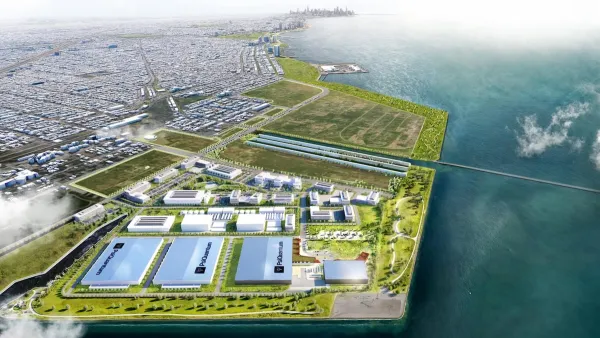
Illinois considers spending $1 billion in taxpayer money on data center
A quantum computing campus and data center are currently under construction in Chicago.

‘Demolition of our heritage:’ Some US tribes speak out against BAAJA
A coalition of indigenous groups in the United States are concerned about provisions in the bill that may weaken their ability to halt large energy projects.

How LA’s new mayor plans to tackle affordable housing crisis
Mayor-elect Nithya Raman has proposed overhauling the city’s permitting process.

Interactive map reveals Pennsylvania's abandoned oil, gas wells — many on residential property
It is difficult for residents to know if a well is near their home, or if it poses a threat to them.

FREE Course: Walkable City 1: Why Walkability?
After describing his path towards focusing on walkability as the essence of good planning, Jeff Speck marches through his five principal reasons for making more walkable places.
Reinventing Malls: Planning Alchemy—Turning Gray Fields Into Gold
The course focuses on the opportunities and imperatives that shape reinvention of mall sites.

City of Charlotte
City of Rosemead
Rutgers University, Edward J. Bloustein School of Planning and Public Policy
University of Michigan School for Environment and Sustainability (SEAS)
Hunter College, City University of New York (CUNY)
The Architects Foundation
University District Partnership