The suburbs outside Washington D.C. are the richest in the nation -- in part due to the growth in federal spending since 9/11.


According to the U.S. Census Bureau, three counties surrounding the nation's capitol are the most prosperous in the United States. These affluent suburbs have helped the Washington D.C. metropolitan region as a whole rank second-highest in the nation in terms of median income. The new figures also show that the region enjoys the least poverty of any major metropolitan area in the country.
"Rapidly growing Loudoun County has emerged as the wealthiest jurisdiction in the nation, with its households last year having a median income of more than $98,000. It is followed by Fairfax and Howard counties, with Montgomery County not far behind.
That accumulation of suburban wealth, local economists said, is a side effect of the enormous flow of federal money into the region through contracts for defense and homeland security work in the five years since the Sept. 11, 2001, attacks, coming after the local technology boom of the 1990s. "When you put that together . . . you have a recipe for heightened prosperity," said Anirban Basu, an economist at a Baltimore consulting firm."
Read the full story: D.C. Suburbs Top List Of Richest Counties

Planetizen Federal Action Tracker
A weekly monitor of how Trump’s orders and actions are impacting planners and planning in America.

Washington state to charge fee to drivers with fuel-efficient cars
Revenue from the fee will go towards supporting the state’s highways.
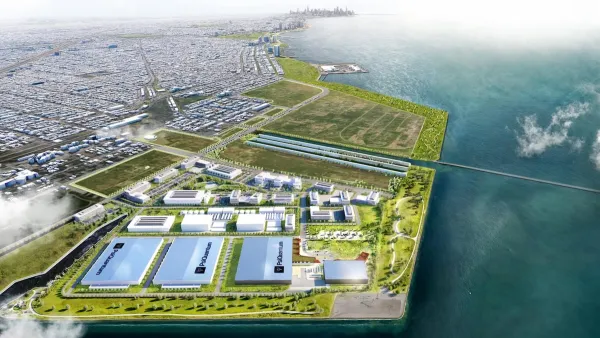
Illinois considers spending $1 billion in taxpayer money on data center
A quantum computing campus and data center are currently under construction in Chicago.

Trump to blast ‘hydrocarbon highway’ through ‘world’s longest art gallery’
Environmental and historic preservation groups are suing to stop the project.

25 states cast bids to be the home of U.S. Space Academy
The academy will train scientists, officers and astronauts for the U.S. Space Force.

Trump’s emergency orders to resuscitate coal plants cost ratepayers $593 million
Keeping coal plants on life support in Florida has cost ratepayers there $25.6 million.

FREE Course: Walkable City 1: Why Walkability?
After describing his path towards focusing on walkability as the essence of good planning, Jeff Speck marches through his five principal reasons for making more walkable places.
Reinventing Malls: Planning Alchemy—Turning Gray Fields Into Gold
The course focuses on the opportunities and imperatives that shape reinvention of mall sites.

City of Charlotte
City of Rosemead
Rutgers University, Edward J. Bloustein School of Planning and Public Policy
University of Michigan School for Environment and Sustainability (SEAS)
Hunter College, City University of New York (CUNY)
The Architects Foundation
University District Partnership