Fertility Rates
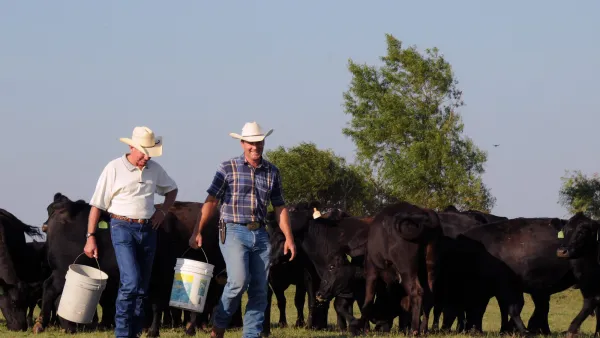
Meeting the Challenge of Feeding 10 Billion People Sustainably in 2050
With world population to grow by about 2 billion by 2050, and with more people eating higher on the food chain as nations develop economically, can world agriculture reduce its carbon footprint? A new World Resources Institute report shows how.

Fertility Rates Are Down Where Home Prices Are Up
The economic recovery has not led to a baby recovery.

Planning for an Era of Climate Change Disasters
In a wide-ranging editorial, Mark Allen argues for strategies that may help communities cope with climate disasters as they grow more frequent.

U.S. Population Growth Slows to Depression-Era Lows
The Sun Belt continues to grow while the rest of the country's population growth continues to slow.

FREE Course: Walkable City 1: Why Walkability?
After describing his path towards focusing on walkability as the essence of good planning, Jeff Speck marches through his five principal reasons for making more walkable places.
Reinventing Malls: Planning Alchemy—Turning Gray Fields Into Gold
The course focuses on the opportunities and imperatives that shape reinvention of mall sites.

City of Rosemead
Rutgers University, Edward J. Bloustein School of Planning and Public Policy
One Hundred Miles
University of Michigan School for Environment and Sustainability (SEAS)
Hunter College, City University of New York (CUNY)
The Architects Foundation
City of Cambridge
The Pocatello Development Authority
The Urban Renewal Agency of the City of Pocatello









