Mental Maps
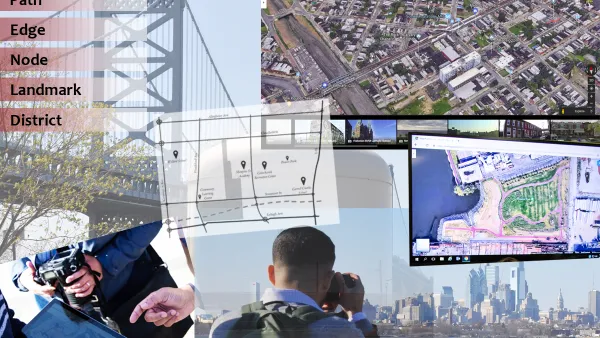
Analyzing Lynch's City Imageability in the Digital Age
Mahbubur Meenar of Rowan University writes about a recent article he co-authored in the Journal of Planning Education and Research
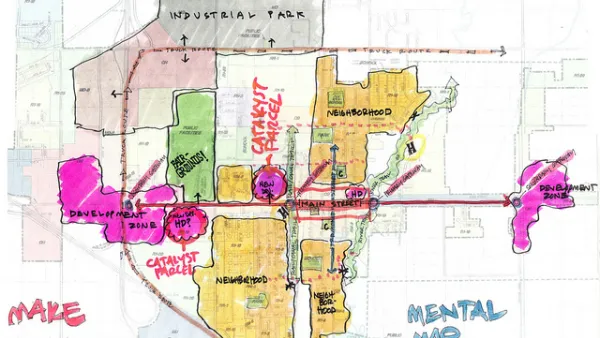
Using Neuroscience to Build Neighborhoods
The brain has a complex, ancient relationship with place. Mental maps are the manifestation of our brains' perception of place and wayfinding. These maps can have profound impacts on how residents appreciate, and improve, their neighborhoods.

Mental Maps Yield to GPS for Taxi Drivers
In the old days, every taxi driver in New York City was required to prove at least a basic working knowledge of the city's streets and landmarks. A new licensing exam does away with geography, assuming that taxis will rely on GPS.

FREE Course: Walkable City 1: Why Walkability?
After describing his path towards focusing on walkability as the essence of good planning, Jeff Speck marches through his five principal reasons for making more walkable places.
Reinventing Malls: Planning Alchemy—Turning Gray Fields Into Gold
The course focuses on the opportunities and imperatives that shape reinvention of mall sites.

City of Rosemead
Rutgers University, Edward J. Bloustein School of Planning and Public Policy
One Hundred Miles
University of Michigan School for Environment and Sustainability (SEAS)
Hunter College, City University of New York (CUNY)
The Architects Foundation
City of Cambridge
Montrose County
The Pocatello Development Authority









