Clustering
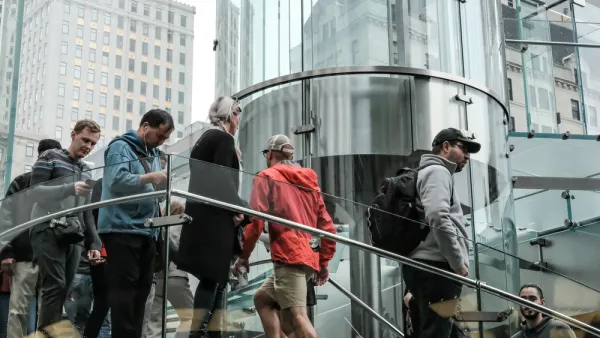
Remote Work Won't Radically Change Where We Work
As tech firms like Apple expand their satellite offices and remote work opportunities, economists and work experts debate just how much the dispersal made possible by remote work will be held in check by the forces of agglomeration.

Cities Growing Faster than Suburbs (But Not by Much)
Eliot Brown, commercial real estate reporter for The Wall Street Journal, writes on urban trends largely influenced by firms seeking to attract the brightest young workers with decidedly urban preferences. Mid-size and large cities are prospering.
Talent Clustering: A Wide or Narrow Benefit?
Experts have disagreed about the net effect of America's increasing clustering of highly skilled and affluent citizens in a relatively small number of metro areas. Richard Florida examines who benefits and who loses from this process.

FREE Course: Walkable City 1: Why Walkability?
After describing his path towards focusing on walkability as the essence of good planning, Jeff Speck marches through his five principal reasons for making more walkable places.
Reinventing Malls: Planning Alchemy—Turning Gray Fields Into Gold
The course focuses on the opportunities and imperatives that shape reinvention of mall sites.

City of Rosemead
Rutgers University, Edward J. Bloustein School of Planning and Public Policy
One Hundred Miles
University of Michigan School for Environment and Sustainability (SEAS)
Hunter College, City University of New York (CUNY)
The Architects Foundation
City of Cambridge
The Pocatello Development Authority
The Urban Renewal Agency of the City of Pocatello









