Social Cohesion
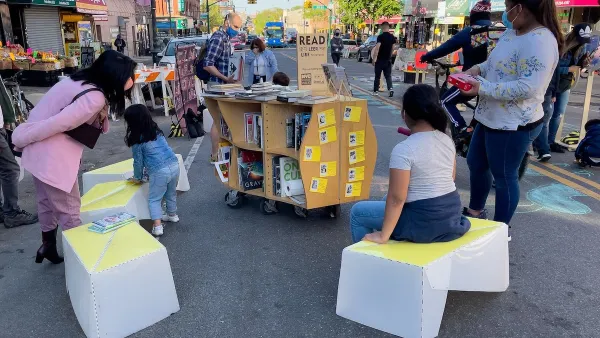
Third Spaces and Public Life
Public parks, libraries, and other social infrastructure foster community connections and stave off loneliness. Why are they increasingly deprioritized in civic life?
A Sociologist Explains Why We Shouldn't Dismiss the Cul-de-Sac
With their anti-urban inward orientation, cul-de-sacs are representative of the auto-oriented, privatized suburban development model. But one sociologist is out to demonstrate their benefits by showing how cul-de-sacs can develop social cohesion.
Neighborhood Form and Extreme Weather Events
Adapting to extreme weather events resulting from climate change has largely taken the form of infrastructure engineering, e.g building flood doors for subways or reinforcing sand dunes, but what of 'social adaptation' for residents themselves?

FREE Course: Walkable City 1: Why Walkability?
After describing his path towards focusing on walkability as the essence of good planning, Jeff Speck marches through his five principal reasons for making more walkable places.
Reinventing Malls: Planning Alchemy—Turning Gray Fields Into Gold
The course focuses on the opportunities and imperatives that shape reinvention of mall sites.

City of Rosemead
Rutgers University, Edward J. Bloustein School of Planning and Public Policy
One Hundred Miles
Hunter College, City University of New York (CUNY)
The Architects Foundation
University of Cincinnati Online
City of Cambridge
Montrose County
The Pocatello Development Authority









