Trader Joes
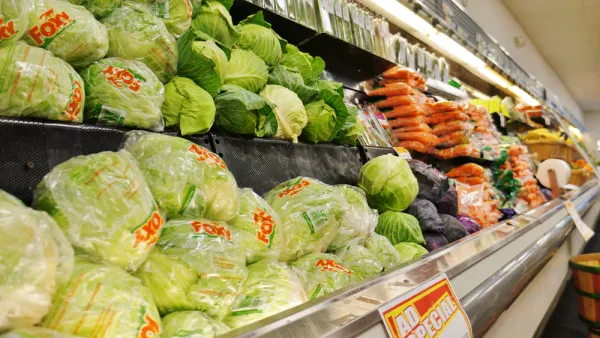
Ground-Level Grocery Stores Proliferate in Boston
Being able to get groceries without a car can be a big draw in walkable, mixed use neighborhoods. Many Boston grocers and developers are taking that to heart.
What is Urban Decay? (And Why the Answer Matters)
The ambiguous definition of 'urban decay' dilutes the argument for requiring this less-well-known environmental study.
Seed Money for Walkability: Who Should Pay?
Who should be required to take the first step in suburban retrofitting? The city, in the form of providing walkable, bikeable streets, or developers, by conforming to pedestrian-oriented building standards?

FREE Course: Walkable City 1: Why Walkability?
After describing his path towards focusing on walkability as the essence of good planning, Jeff Speck marches through his five principal reasons for making more walkable places.
Reinventing Malls: Planning Alchemy—Turning Gray Fields Into Gold
The course focuses on the opportunities and imperatives that shape reinvention of mall sites.

City of Rosemead
Rutgers University, Edward J. Bloustein School of Planning and Public Policy
One Hundred Miles
University of Michigan School for Environment and Sustainability (SEAS)
Hunter College, City University of New York (CUNY)
The Architects Foundation
City of Cambridge
Montrose County
The Pocatello Development Authority









