Workforce Housing

Maps: Where Teachers Can Afford Housing in California
Teachers can't afford to live in the neighborhoods where they teach in California—the biggest gap between teachers' wages and the cost of housing is found in the Bay Area.
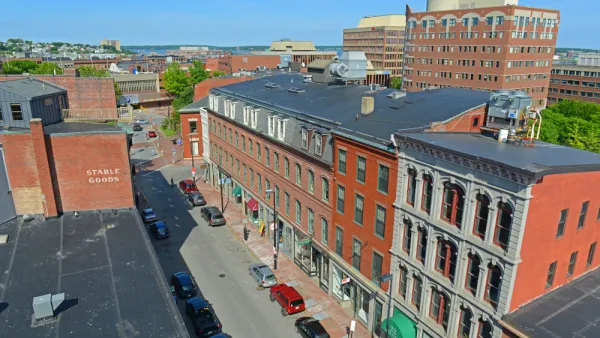
Inclusionary Zoning to Fund Workforce Housing, But for Hotel Developments
A new law in Portland, Maine could be the first to charge an affordable housing fee from new hotel developments.

Thoughts on California's Housing Strategy
Balance between state and local control and between private and public solutions are necessary for meaningful improvement in housing affordability, according to planning activist and affordable housing developer Murtaza Baxamusa.

Inclusionary Zoning Could Spread to Atlanta's Suburbs
Brookhaven, Georgia is rewriting its citywide zoning code, including density bonuses and mandatory inclusionary zoning in one of the new code's overlays.

The Amazon Opportunity to Revitalize Urban Communities
If corporations continue to be able to take public subsidy as the price of locating in an area, maybe the debate isn't whether to offer subsidies but simply how and for what to offer them. Here’s one incentive that might actually benefit communities.

Nebraska Lawmakers Hoping to Solve the State's Rural Housing Shortage
Communities across Nebraska report plenty of jobs to go around, but not enough housing for the workers to fulfill the demand.
Montgomery County Planners Target 4,2000 New Housing Units
The Montgomery County Planning Department is making the case for more housing to meet the growing number of jobs in the county.

Aspen's Workforce Housing Buckling Under Weight of Aging Population
As residents of Aspen, Colorado's limited supply of workforce housing begin to retire, they're staying put, creating a new affordable housing crunch for younger workers.

Market Not Cooperating With Boston's Housing Goals
Just because the public sector has set a goal to deliver thousands of new workforce housing units, doesn’t mean the market, or the private sector for that matter, will cooperate.
16 Case Studies of Workforce Housing Protection
A new report from the Urban Land Institute responds to what it argues is a housing crisis among lower- and middle-income workers.

Seattle's Struggle to Build Affordable Housing
The Emerald City's affordable housing difficulties mirror those of New York, Chicago, Los Angeles, San Francisco, and others: too much demand and too few resources.
New Programs to House Rural Residents Closer to Jobs
Greg Aamot explores case studies from Minnesota of a conundrum that troubles many rural communities: how to house daytime workforces near their jobs, with the benefits in sales and property tax revenue that results.
New Approach Needed for Building Affordable Housing
The rising interest in urban living has meant a growing shortage of affordable housing in cities across the country. Roger Lewis proposes a new approach to help solve the crisis: building workforce housing funded by the public sector.
Socially Conscious Developers Build a Bastion of Affordability in Philly
Inga Saffron reports on the redevelopment of a 19th-century brick mill into workforce housing in Philadelphia's South Kensington neighborhood; a project that proves virtue need not come at the expense of profit for one Philadelphia-based developer.
Will Increasing Density Allow Houston to Better House its Middle Class?
In order to facilitate the construction of more workforce housing, Houston is considering changing its development rules for the first time in 14 years. Will increasing density limits in the "doughnut" beyond Loop 610 help bring down prices?
Housing Crunch Threatens D.C.’s Thriving Economy
In the next 20 years, the D.C. area is expected to have nearly 3 million job openings. With the resulting demand for new, diverse and more affordable housing outpacing supply, some fear that the city’s housing deficit will derail its robust economy.
New Report Taps TOD to Provide L.A.'s Workforce Housing
UCLA's Paul Habibi believes that L.A.'s lack of affordable workforce housing, the "donut hole" between subsidized housing and high-end housing preferred by developers, is harming the city's competitiveness. In a new report he outlines a solution.
Innovation when Good Planning Policy Has Become the Norm
Scott Doyon argues for a stripped-down, back-to-basics 'punk rock' approach to urban growth and development to replace the 'rock and roll' excesses of planning during the housing boom; and he profiles the new innovators who are doing just that.
'Unfathomable' Budget Cuts Deepen the Housing Crisis
The continuing recession and housing crisis are being further decimated by federal cuts to housing aid, according to The Nation.
Does Gentrification Need to be a Bad Word?
Gentrification has come to signify wealthier residents pushing lower-income residents out of a community, but gentrification also has some "undeniable upsides". Ward 8 in Washington D.C. offers a glimpse into how gentrification can aid a community.

FREE Course: Walkable City 1: Why Walkability?
After describing his path towards focusing on walkability as the essence of good planning, Jeff Speck marches through his five principal reasons for making more walkable places.
Reinventing Malls: Planning Alchemy—Turning Gray Fields Into Gold
The course focuses on the opportunities and imperatives that shape reinvention of mall sites.

City of Rosemead
Rutgers University, Edward J. Bloustein School of Planning and Public Policy
One Hundred Miles
The Architects Foundation
University of Cincinnati Online
Montrose County
The Pocatello Development Authority
The Urban Renewal Agency of the City of Pocatello









