Walkable Neighborhoods
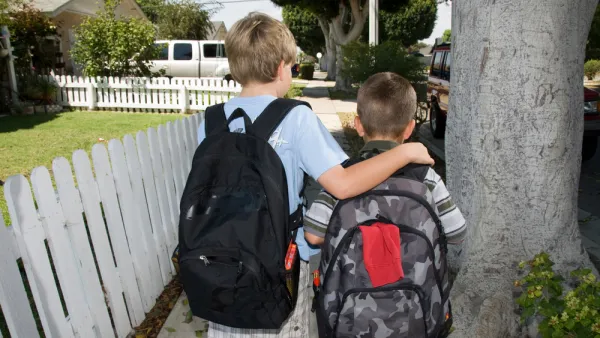
5 Good Reasons Why Children Should Walk To School
Susan Elkin points to alarmingly low statistics on the number of children who walk to school, especially when compared with historic rates. She lays out some “blindingly obvious” and “child-centered” reasons why this trend needs to be reversed.
New Home Construction Shows More Porches, Fewer Garages Per 2011 Census Data
As if to show that "walkable" is the new mobility in America, even with single-family-homes, new census findings show two-thirds of homes constructed last year had front porches while the number of garages or carports decreased to late 1990 levels.
Mixed-Use for the Mixed-Up
What exactly is defined by mixed-use is often somewhat up to debate. Howard Blackson of Better Cities & Towns helps us clarify what the term "mixed-use" should really mean.
Higher Vacancy Rates in Walkable Neighborhoods
In comparing data collected during the 2010 Census, walkable neighborhoods are shown to have greater vacancy rates than the cities they're in.

FREE Course: Walkable City 1: Why Walkability?
After describing his path towards focusing on walkability as the essence of good planning, Jeff Speck marches through his five principal reasons for making more walkable places.
Reinventing Malls: Planning Alchemy—Turning Gray Fields Into Gold
The course focuses on the opportunities and imperatives that shape reinvention of mall sites.

Eagle County Government
Harvard University Graduate School of Design
Nashville Planning Department
The Architects Foundation
University of Cincinnati Online
The Pocatello Development Authority
The Urban Renewal Agency of the City of Pocatello
Journal of the American Planning Association