Vancouver's exploding housing prices are caused by income inequality, housing scarcity, and a housing bubble, not by foreign investors and vacant housing units.


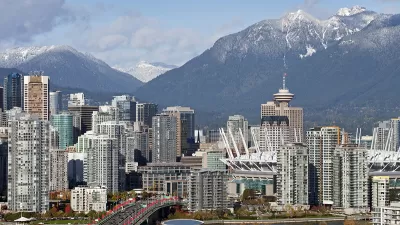
This post by Dan Bertolet discusses the rising home prices in Vancouver and Seattle. In particular, it rejects a common claim: that Vancouver's home price explosion is caused by foreign investors who buy units and then leave them vacant. In fact, the City of Vancouver regularly "assesses 'non-occupancy' based on abnormally low power consumption. The study concluded that between 2001 and 2014 the non-occupancy rate in city of Vancouver has remained flat at just under 5 percent, and that the city rate is consistent with the rate for the entire Vancouver region."
So what does cause Vancouver's problem? Bertolet points out that the number of families earning over $250,000 has increased by over 20 percent in recent years, thus increasing demand for high-end housing. In addition, the city's high ratio of home prices to rents suggests a housing bubble—that is, people are willing to pay more for housing because they think housing will continue to become more expensive. Seattle home prices are rising less rapidly, due to the fundamentals that often cause home prices to rise: job growth and income growth.
FULL STORY: Stop Blaming Foreign Home Buyers

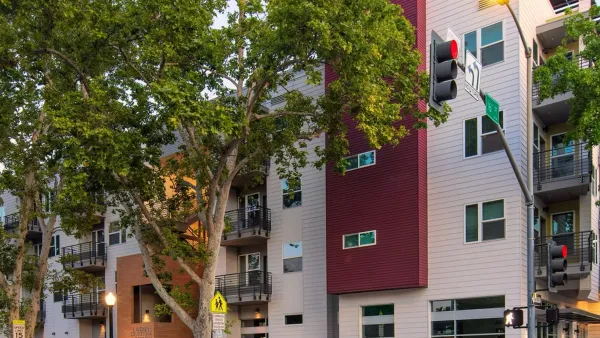
New Washington State Law Lets Cities Give Social Housing Developers City-owned Land
In its current form, HB 1687, which authorizes local governments to assist social housing agencies with land or other resources, only applies to Seattle.
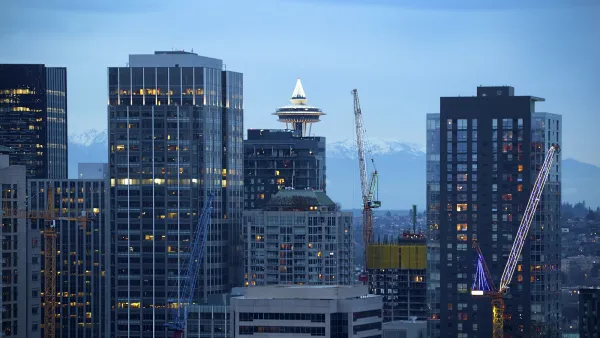
Seattle has Built Over 14,000 Affordable Units Since 2020 — More Than Any Other US Metro
Despite being ahead of other cities, Seattle is still short more than 150,000 affordable units.
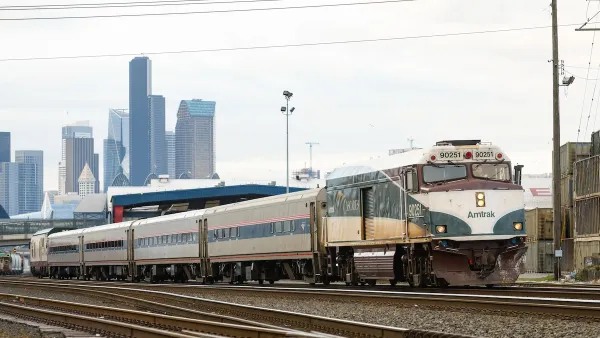
Amtrak Cascades Line Breaks Ridership Record
The route linking Portland, Seattle, and Vancouver, BC served nearly one million riders in 2024.

The state-sanctioned urbicide of Austin
People don’t kill cities. Freeways do.

US to reduce Colorado River water deliveries to Mexico
A new Colorado Treaty amendment reduces Mexico’s Colorado River water allocation by 250,000 acre feet.

New Jersey’s second-largest city bans standalone data centers
Jersey City will continue to allow co-location facilities, such as those meant for research institutions that store their own data.

Amtrak not solely to blame for New Jersey commuter rail's unreliability, report finds
A new study from the Garden State Initiative found that NJ Transit’s budget grew 20% across a 4 year period, but reliability declined significantly over the same period.

EPA erases limits on planet-warming pollution from power plants
Under Monday’s plan, power plants would still have some limits on how much mercury, arsenic and other contaminants they can emit.

Phoenix announces new on-demand transit service, more frequent RAPID buses
Both new services will launch in October, and are part of Phoenix's Project Effective Access Solutions for Easing Congestion.

FREE Course: Walkable City 1: Why Walkability?
After describing his path towards focusing on walkability as the essence of good planning, Jeff Speck marches through his five principal reasons for making more walkable places.
Reinventing Malls: Planning Alchemy—Turning Gray Fields Into Gold
The course focuses on the opportunities and imperatives that shape reinvention of mall sites.

Eagle County Government
Harvard University Graduate School of Design
Nashville Planning Department
The Architects Foundation
University of Cincinnati Online
The Pocatello Development Authority
The Urban Renewal Agency of the City of Pocatello
Journal of the American Planning Association