The population of Nagoro, Japan has declined in recent years from 300 to just 30 people. Local artist Tsukimi Ayano has populated the village with scarecrows to replace some of the familiar community figures who are now gone.


"Japan's population is declining. And the signs of that are easiest to see in rural areas, like the mountainous interior of the southern island of Shikoku. For example, the village of Nagoro used to have around 300 residents. Now it has 30," reports Ina Jaffe.
"Visitors know they've arrived when they see the three farmers in floppy hats resting against a telephone pole by the side of the road. They're always there. They're scarecrows, life-sized figures made of cloth and stuffed with cotton and newspapers."
"All of these figures are the work of 67-year-old Tsukimi Ayano. She's been making them for more than a decade," explains Jaffe, before describing more of what the scarecrows mean for the abandoned town, and the attention they've gained.
Read the full story: A Dying Japanese Village Brought Back To Life — By Scarecrows

Abandonment and Opportunity in Rural Areas
As the world's population urbanizes, rural areas are being abandoned. But they don't have to sit empty and unused, according to this piece from GOOD.
An Inside Look at the Decline of America's Rural Communities
Rural areas have been losing population for decades, creating what some are calling a "rural brain drain". According to this article, the hollowing out of these rural areas will have negative impacts beyond the borders of those small towns.
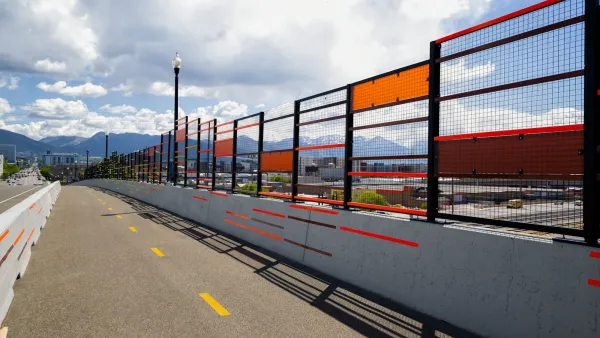
Salt Lake City opens protected bike path on viaduct trail
The 400 South Viaduct Trail features the state's longest continuous piece of public art.

Planetizen Federal Action Tracker
A weekly monitor of how Trump’s orders and actions are impacting planners and planning in America.

Amtrak, CN end decades-long dispute with eight-year agreement
The new operating agreement establishes an updated framework for the companies to work together, including processes to resolve disputes.

Judges permit Denver to divert 77,000 acre feet from the Colorado River for reservoir expansion
Overuse and climate change have caused the Colorado River’s water levels to plummet.

NYC DOT wants faster, more permanent street upgrades
The city is examining ways to build more concrete infrastructure without getting entangled in 'decades-long' projects.

'Something we’ve never seen before:' rising utility rates could strain city finances nationwide
Data centers, climate change and other factors have caused utility rates in the United States to increase by 38% since 2020.

Trump to overrule local leaders, lease millions of acres of America’s Pacific Island territories’ seafloors to mining companies
International law says that the Indigenous people of America’s territories have a right to prior and informed consent regarding projects that impact their countries.

FREE Course: Walkable City 1: Why Walkability?
After describing his path towards focusing on walkability as the essence of good planning, Jeff Speck marches through his five principal reasons for making more walkable places.
Reinventing Malls: Planning Alchemy—Turning Gray Fields Into Gold
The course focuses on the opportunities and imperatives that shape reinvention of mall sites.

Harvard University Graduate School of Design
KFH Group Inc.
Greater Baltimore Committee
The Architects Foundation
University of Cincinnati Online
The Pocatello Development Authority
The Urban Renewal Agency of the City of Pocatello