Pittsburgh mayor Bill Peduto thinks Section 8 housing subsidies could get two birds with one stone: help low-income households find affordable housing and reduce blight.


Chris Potter reports on a new proposal by Pittsburgh Mayor Bill Peduto to use Section 8 funds to subsidize home ownership. The "Bridges Beyond Blight" program would take "the anticipated value of 30 years’ worth of one household’s vouchers to purchase and renovate a home." Normally the money provided by those vouchers would help subsidize rental housing for low-income households.
Under the Bridges Beyond Blight program, "[p]ublic housing officials would select the homes and finance the work, then set up buyers with a mortgage whose payments would also be set at 30 percent of their income," according to Potter. Mayor Peduto hopes that redirecting that funding from rental subsidies to ownership subsidies would achieve an extra goal beyond helping low-income households find affordable housing—it would also reduce blight by getting people into vacant homes.
The article includes more information about the political support the policy might find, both from local organizations and the federal government.
FULL STORY: Peduto administration pitches use of Section 8 funds to subsidize home ownership


Housing Vouchers as a Key Piece of Houston’s Housing Strategy
The Houston Housing Authority supports 19,000 households through the housing voucher program.
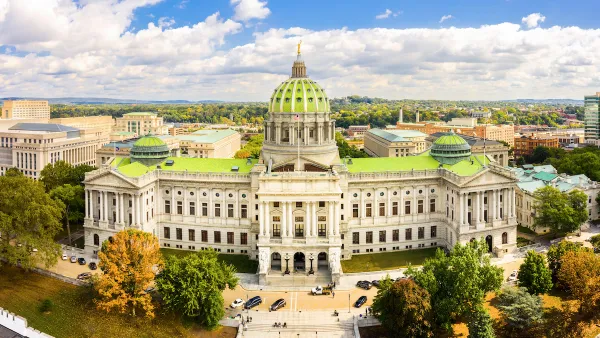
Pennsylvania Law Removes Obstacles to Blight Reduction
“We don’t need every old coal miner’s house” to stay standing, says Sen. David Argall (R-Schuylkill).

Pittsburgh Revitalization Plans Stuck on Blight
The Pittsburgh Post-Gazette recently published an investigation of the city's efforts to buy and rehabilitate vacant properties in the troubled neighborhood of Homewood.

Planetizen Federal Action Tracker
A weekly monitor of how Trump’s orders and actions are impacting planners and planning in America.

The state-sanctioned urbicide of Austin
People don’t kill cities. Freeways do.

US to reduce Colorado River water deliveries to Mexico
A new Colorado Treaty amendment reduces Mexico’s Colorado River water allocation by 250,000 acre feet.

Mamdani overhauls NYC's Vision Zero plan with 100 new policy goals
The overhaul aims to reduce traffic deaths and make streets safer for pedestrians, cyclists and drivers through lower speed limits, new safety infrastructure and more.

Amtrak not solely to blame for New Jersey commuter rail's unreliability, report finds
A new study from the Garden State Initiative found that NJ Transit’s budget grew 20% across a 4 year period, but reliability declined significantly over the same period.

EPA erases limits on planet-warming pollution from power plants
Under Monday’s plan, power plants would still have some limits on how much mercury, arsenic and other contaminants they can emit.

FREE Course: Walkable City 1: Why Walkability?
After describing his path towards focusing on walkability as the essence of good planning, Jeff Speck marches through his five principal reasons for making more walkable places.
Reinventing Malls: Planning Alchemy—Turning Gray Fields Into Gold
The course focuses on the opportunities and imperatives that shape reinvention of mall sites.

Eagle County Government
Harvard University Graduate School of Design
Nashville Planning Department
The Architects Foundation
University of Cincinnati Online
The Pocatello Development Authority
The Urban Renewal Agency of the City of Pocatello
Journal of the American Planning Association