Steep views command steep prices in other big cities, but they can't seem to work in San Francisco, where there are plenty of beautiful views available for free.


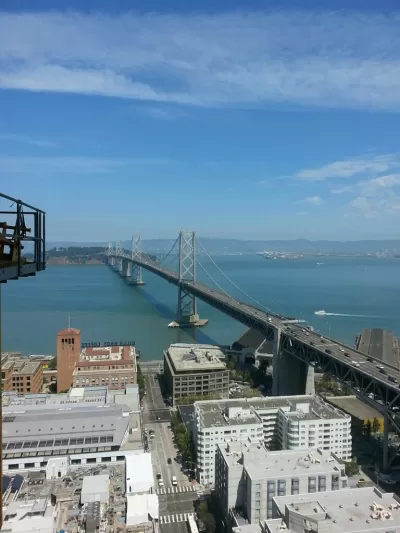
Architecture critic John King chronicles the rise and fall of observation decks in San Francisco. He argues that the city has so much to offer at ground level that tourists aren't interested in paying for the towering vistas that are so popular in cities like New York and Chicago. "All it really does it whet your appetite to return downstairs and begin to explore the terrain on your own two feet," King writes.
Buildings like the Empire State Building and Sears Tower command high prices, and visitors brave long lines and cramped conditions to take pictures from their decks. But in San Francisco, observation floors in high-rise buildings can't sustain a profit. "Most big cities make their own geography, hanging their visual images on architectural peaks that demand to be scaled. Here? Not so."
King counts "only three remaining top-floor venues where you can buy a drink, at least in the districts east of Van Ness Avenue," and finds no prospects in the plethora of high-rises being built downtown.
Read the full story: S.F. doesn’t suffer from lack of high-rise observation decks

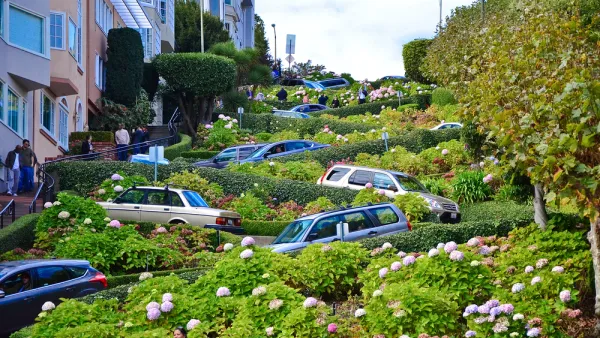
Crowds of Pedestrians Prompt Lombard Street Study
San Francisco is looking for ways to manage—and protect—the masses of tourists who want to walk "the World's Crookedest Street."
Airbnb Draws Tourists Off the Beaten Path
Airbnb connects travelers from around the world to unique rentable spaces. With the recent launch of a "Neighborhoods" feature, Airbnb has the potential to redirect tourist spending to often overlooked areas.
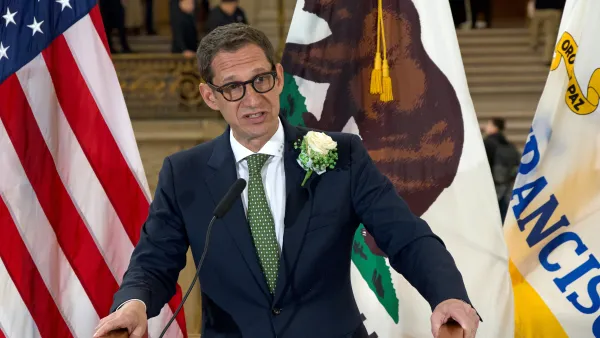
As prices skyrocket, San Francisco Mayor declares rent emergency
Landlords in San Francisco have initiated over 2,400 evictions since January, putting the city on track to see more evictions this year than during any year in the past decade.

Planetizen Federal Action Tracker
A weekly monitor of how Trump’s orders and actions are impacting planners and planning in America.

Amtrak, CN end decades-long dispute with eight-year agreement
The new operating agreement establishes an updated framework for the companies to work together, including processes to resolve disputes.

Judges permit Denver to divert 77,000 acre feet from the Colorado River for reservoir expansion
Overuse and climate change have caused the Colorado River’s water levels to plummet.

NYC DOT wants faster, more permanent street upgrades
The city is examining ways to build more concrete infrastructure without getting entangled in 'decades-long' projects.

'Something we’ve never seen before:' rising utility rates could strain city finances nationwide
Data centers, climate change and other factors have caused utility rates in the United States to increase by 38% since 2020.

Trump to overrule local leaders, lease millions of acres of America’s Pacific Island territories’ seafloors to mining companies
International law says that the Indigenous people of America’s territories have a right to prior and informed consent regarding projects that impact their countries.

FREE Course: Walkable City 1: Why Walkability?
After describing his path towards focusing on walkability as the essence of good planning, Jeff Speck marches through his five principal reasons for making more walkable places.
Reinventing Malls: Planning Alchemy—Turning Gray Fields Into Gold
The course focuses on the opportunities and imperatives that shape reinvention of mall sites.

Harvard University Graduate School of Design
KFH Group Inc.
Greater Baltimore Committee
The Architects Foundation
University of Cincinnati Online
The Pocatello Development Authority
The Urban Renewal Agency of the City of Pocatello