Every year we analyze all of the tweets from the APA Conference and tell you about the trends in planning. With 2,884 people tweeting from the APA Conference, there is a lot of great ideas, links, and pictures that we can all learn from.



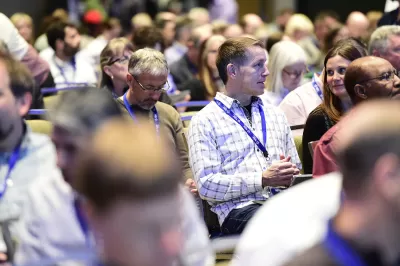
The APA Conference in Seattle, Washington had so much going on! This is the fifth year that I, @evanscowley, along with @edgarzebulan, have analyzed the tweets from the APA National Conference (see the analysis of the 2014 conference, 2013 conference, and 2012 conference, with @b_kubinski, and 2011 conference, with @cubitplanning). I looked at what topics have continued to trend and new emerging topics. Using the official hashtag #APA15, I collected and analyzed what planners talked about at the conference. There were over 6,400 planners in attendance at the conference between April 18th through the 21st, which is an increase of 1,500 more planning professionals from last year. More than 45 percent of conference attendees were tweeting, up 50 percent from last year.
Those in attendance were actively tweeting before, during, and even many days after the conference. There were more than 2,000 tweets in the first day of the conference alone. Between the 18th and 22nd there were 2,334 different topics surrounding the APA Conference.
Topics of Conversation
Below are the most retweeted tweets of the conference (excluding retweets about announcing an event or session). For Twitter newbies, retweeting is like forwarding an email or message to someone who you are following and is following you. A "RT" to use the parlance of the platform, @evanscowley means that you are forwarding a Tweet from a user, in this example me. There were over 1,600 retweets this year.
Of all these hot talked about topics , the most retweeted topic this year was a quote actually. The quote was made by Donald Shoup saying, "We’ve got it all wrong, by providing free housing for cars, and expensive housing for people." Some of the other most talked about topics at the conference on Twitter was the Tech Zone at the Conference, the diminishing number of children over the years, how the build environment has become the leading cause of death, the event's Hackathon, and environmental sustainability.
Among the local news outlets the hottest topic was not only the APA Conference itself, but also it was noted how the planners set a record for use of the bikeshare system there. @AustenAllred had the most retweeted image of the conference. This demographic shows how far children were thought to be allowed to safely walk on their own over the years. This image sparked a lot of great debating, over if the area is just that unsafe, or are people more protective of children than they were in years past.

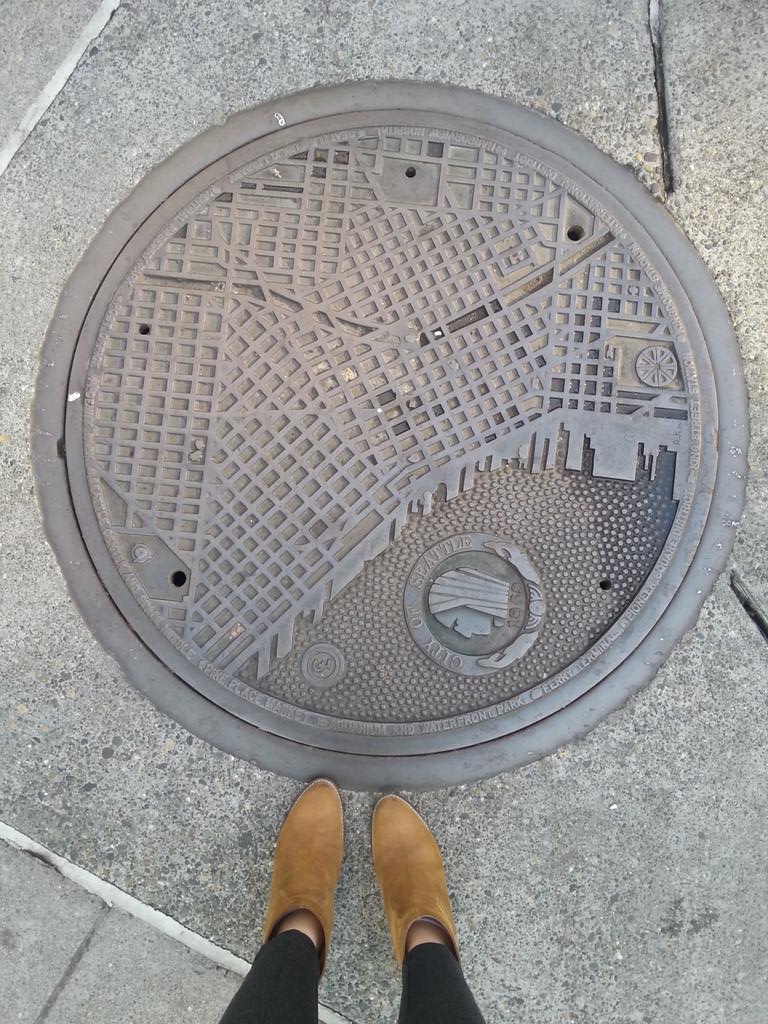
Planners were sharing images constantly, from slides to what they have seen in Seattle, for example a popular image shared was of the city maps shown on every Seattle manhole cover.
| # of retweets | Tweet |
| 166 | RT @transportdata: The diminishing range of children over the years http://t.co/4uRJBbphm2 #cplan #phealth #APA15 |
| 89 | RT @urbandata: "We've gotten it all wrong, by providing free housing for cars and very expensive housing for people." @DonaldShoup #APA15 #cplan |
| 29 | RT @BrentToderian: Small details matter. RT @jasminmoore: #Seattle street maps on manhole covers. #APA15 #mapseverywhere http://t.co/mzfHd5qIyy |
| 28 | RT @urbandata: "Employees work 10-hr days at a desk & don't want to be in the middle of nowhere." http://t.co/N3ECrojxN1 #econdev #cplan #APA15 v @rpuentes |
| 13 | RT @christofspieler: 95% of transit experience is 3 things: service, built environment, street design. Municipalities control 2/3. - @humantransit #APA15 |
The above five tweets were the most retweeted of the conference.
Conference Influencers
There were clearly key influencers at the conference whose tweets were frequently retweeted. The top influencers at the conference are also influencers all year round with more than 1,000 followers on Twitter: @BrentToderian (tweeting on planning and urbanism), @urbandata (tweeting on urban data), @UrbanistOrg (tweeting on urbanism), @transportdata(tweeting on transportation), @mitchell_silver (tweeting on planning), @stateofplaceorg (tweeting on place making), @BrentToderian (urbanism), @AL_Research (tweeting about active living research), @DrUrbanPolicy (tweeting about urban policy), @ryangravel (tweeting about infrastructure and culture) @mobileplanning (tweeting about technology), and @APA_Planning(tweeting on behalf of the APA).
Resources from the Conference
Conference attendees did a great job sharing links to all kinds of content. Here are just five of the resources shared at the conference.
Making the Case for Designing Active Cities
Companies Trade Suburbs for City Life
Neighborhood Traffic Operations: Traffic Circle Program
Rebuilding Infrastructure Toolkit
A New Neighborhood Approach: Industrial Main Street
Are there any urban planning trends that surprised–either by being here or by not being here? What were the trends at the APA 2015 conference not captured by Twitter? Let me know in the comments.
My takeaway from the use of Twitter at the conference is that a significant number of people use this medium to share and engage in conversations around planning topics that resonate with them. It provided a platform to engage in social conversations that helped people meet each other both on and off line. What more could we ask for from social media in a conference? I look forward to even more participation at the 2016 conference in Phoenix.

Students a Bright Light for the Future of Planning at the APA National Conference
The American Planning Association has invited students to contribute blog posts on their reactions to the APA National Conference. Their thoughts so far have revealed holistic concerns and creative thinking—positive signs for the next generation.
Welcome to a New Era of Planning: the APA National Conference Draws a Crowd
The American Planning Association's 2015 National Conference has launched in Seattle, with more attendees than any event since before the recession.
The 2019 National Planning Conference Is Underway
Couldn't make it to San Francisco for the 2019 National Planning Conference? Live vicariously through the magic of the Internet.

Planetizen Federal Action Tracker
A weekly monitor of how Trump’s orders and actions are impacting planners and planning in America.

Amtrak, CN end decades-long dispute with eight-year agreement
The new operating agreement establishes an updated framework for the companies to work together, including processes to resolve disputes.

Northwest rail fans eager for Sept. 30 debut of Amtrak’s Airo fleet
Get ready for that new train smell and more seats. But they won’t go faster or run more frequently on the Cascades route in Washington and Oregon.

Brightline Florida files for bankruptcy
The transit company is over $5 billion in debt.

St. Louis Metro to test if single-car trains can reduce operating costs, maintain rider satisfaction
The pilot program will run from October to spring 2027, and begin with one single-car train operating on Metrolink’s Red and Blue lines.

Pennsylvania is building data centers in abandoned mines
Housing data centers in mines provides an alternative to destroying local forests and may spare residents from data centers’ noise and air pollution.

FREE Course: Walkable City 1: Why Walkability?
After describing his path towards focusing on walkability as the essence of good planning, Jeff Speck marches through his five principal reasons for making more walkable places.
Reinventing Malls: Planning Alchemy—Turning Gray Fields Into Gold
The course focuses on the opportunities and imperatives that shape reinvention of mall sites.

City of Thousand Oaks
City of Wisconsin Rapids
Harvard University Graduate School of Design
The Architects Foundation
University of Cincinnati Online
The Pocatello Development Authority
The Urban Renewal Agency of the City of Pocatello

